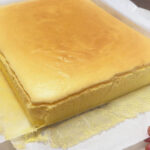
Easy Castella Cake (Water Bath Method for Perfect Results Every Time)
This Old-Fashioned Castella Cake is a soft, moist dessert that uses a hot dough method and water bath baking to create a delicate texture. It's a simple yet rewarding recipe that results in a light, airy cake.
Servings 6
Calories 573kcal
Ingredients
- 140 g corn oil must be heated to 70-80°C
- 185 g cake flour sifted twice
- 130 g whole milk room temperature, added in portions
- 12 egg yolks approx. 180g, from 12 eggs
- 12 egg whites approx. 360g
- 140 g granulated sugar divided into 3 portions
- 2 g salt
- 5-6 drops lemon juice or white vinegar
- 300 ml warm water for water bath
Instructions
Preparation:
- Separate and Chill Eggs: Separate the egg whites and yolks. Place the egg whites in a clean, dry bowl (no water or oil) and refrigerate. Put the egg yolks into another bowl.
- Sift Dry Ingredients: Sift the cake flour twice to ensure there are no lumps and to make the batter smooth.
- Preheat Oven and Prepare Water Bath: Preheat your oven to 140°C (top and bottom heat) and prepare the water bath. Pour warm water into a larger tray (300ml).
Make Egg Yolk Mixture (Hot Dough Method):
- Heat the Corn Oil: In a pan, heat the corn oil over low heat until small bubbles form around the edges (70-80°C). Use a thermometer for accuracy, then immediately remove from heat.
- Mix the Hot Dough: Pour the heated oil into the sifted cake flour. Use a spatula to stir rapidly in a "Z" motion until no dry flour remains, creating a smooth, thick dough with a light yellow color.
- Add Milk and Egg Yolks: Gradually add the milk to the dough, mixing until smooth. Then, add the egg yolks and continue stirring in a "Z" motion until the batter is smooth and free of lumps. Set aside.
Whip Egg Whites into Meringue (Soft Peak Stage):
- Pre-whip on Low Speed: In the chilled egg whites, add salt and lemon juice (or vinegar). Whip on low speed for about 30 seconds until "fish-eye" bubbles appear.
- Gradually Add Sugar: Add 1/3 of the sugar (47g) and whip on medium speed until the foam becomes fine and smooth. Add the second batch of sugar (47g) and continue whipping until the meringue is thick and forms short curved peaks.
- Add the remaining sugar (46g) and whip on high speed until the meringue is glossy and forms long curved peaks (soft peak stage). The meringue should not flow when the bowl is tilted.
Combine Batter (Prevent Air Loss):
- First Mixing: Take 1/3 of the meringue and gently fold it into the egg yolk mixture using a spatula. Stir in an up-and-down motion (like stir-frying) until no large meringue chunks remain. About 20 folds.
- Second Mixing: Pour the mixture back into the remaining meringue and gently fold with a cutting and folding motion (insert the spatula in the center, scoop from the bottom, and fold over). Mix until completely combined, creating a smooth, glossy batter.
- Note: Avoid stirring in circles or over-folding, as this could deflate the meringue and cause the cake to collapse.
Bake and Demold (Water Bath to Prevent Cracking):
- Pour into Pan and Tap Out Air Bubbles: Line the baking pan with parchment paper. Pour the batter from a height (about 20cm) into the pan to help release air bubbles. Smooth the top with a spatula. Tap the pan gently to release any remaining air bubbles, then use a toothpick to pop any small ones on the surface.
- Water Bath Baking: Place the cake pan into a larger tray and pour hot water into the tray. Put the cake into the middle of the oven and bake at 140°C for 65 minutes. When the cake surface turns light golden, cover with foil to prevent over-browning, then continue baking.
- Check for Doneness: Lightly press the surface of the cake; it should spring back. Insert a skewer into the center—if it comes out clean, the cake is done.
- Cool and Demold: After baking, gently tap the pan to release steam and cool it on a wire rack for about 1 hour. Once completely cooled, peel off the parchment paper and invert the cake to remove it from the pan. Cut it into squares to serve.
Nutrition
Calories: 573kcal | Carbohydrates: 50g | Protein: 17g | Fat: 34g | Saturated Fat: 6g | Polyunsaturated Fat: 9g | Monounsaturated Fat: 18g | Trans Fat: 0.1g | Cholesterol: 391mg | Sodium: 255mg | Potassium: 227mg | Fiber: 1g | Sugar: 26g | Vitamin A: 556IU | Vitamin C: 10mg | Calcium: 84mg | Iron: 1mg