
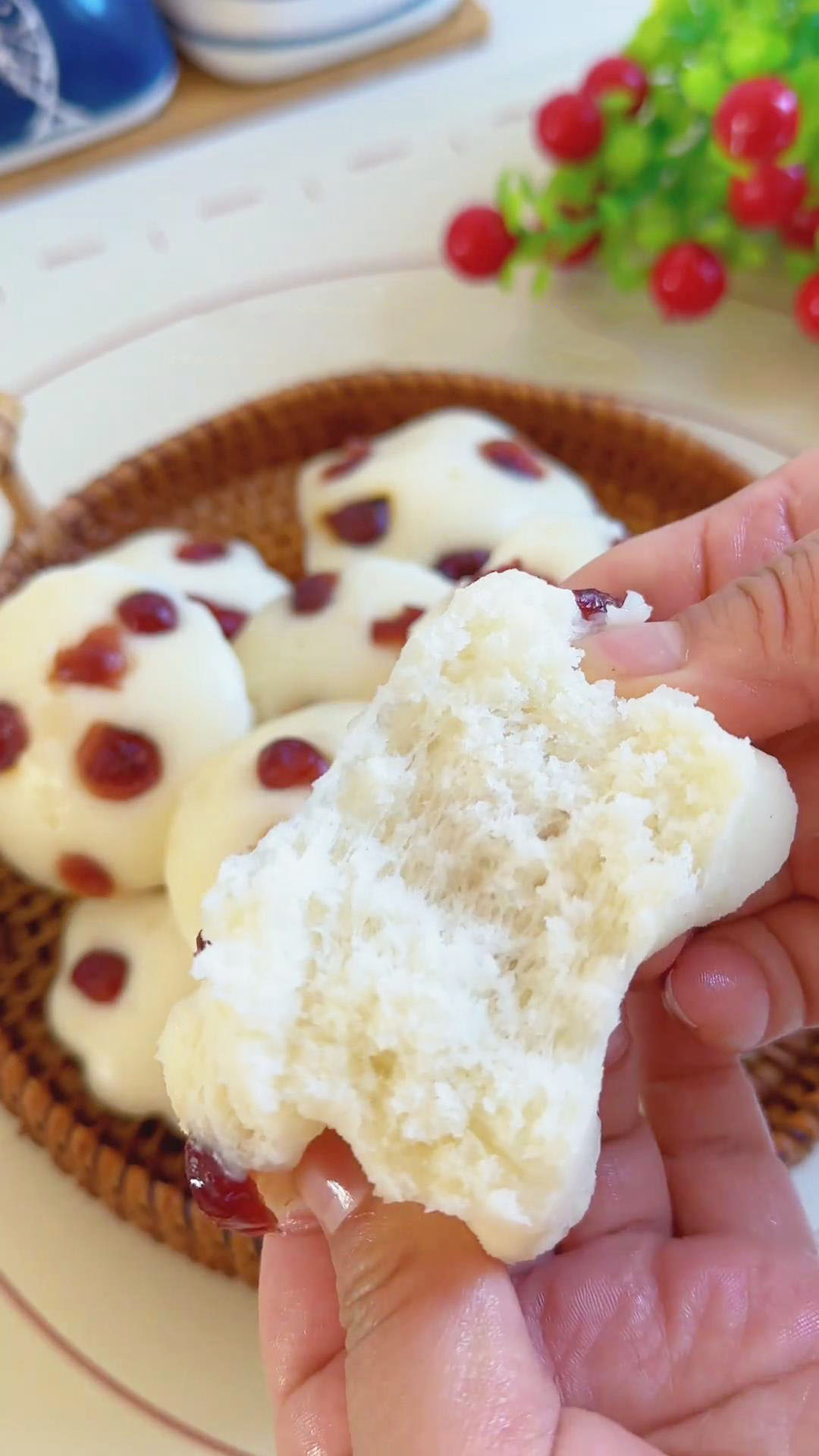
This steamed rice cake is a true comfort food! With just a few simple ingredients, this recipe creates a soft, slightly sweet treat that’s perfect for breakfast or a snack. If you’ve never tried it before, you’re in for a treat!
Steamed Rice Cakes
While Western cuisine often relies on baking, people in China love steamed cakes, and I’m no exception.
In fact, I absolutely love making steamed cakes for my family, and my children are particularly fond of the ones I prepare, like Steamed Brown Sugar Cake and Steamed Red Date Cake.
These cakes are soft, fragrant, and full of tradition, offering that perfect combination of comforting flavors.
A few days ago, I shared a Fermented Rice Cake recipe, but some readers mentioned they didn’t have Jiu Niang (Sweet Fermented Rice). So, I created this Steamed Rice Cake recipe, which is easier to make and uses simple ingredients—just rice instead of rice flour.
Key Ingredients and Tips
Use Fresh Yeast:
Always check that your yeast is not expired. Fresh yeast ensures proper fermentation and a fluffy texture.
Fermentation Method:
Place the batter in a warm environment to ferment. I like to place a bowl of hot water (30 – 40°C) in the steamer and then put the cake molds on the rack above it. Cover and let it ferment. This method works especially well in winter. If your oven has a fermentation function, you can use that instead.
Adjust the Sugar:
The amount of sugar can be adjusted to your taste. I prefer a lightly sweetened cake, but you can add more or less depending on your preference.
Choose Your Molds:
I use silicone molds for this recipe, but you can also use paper cups or any heatproof container. If you’re using a different container, adjust the steaming time accordingly. For guidance, check out my Rice Flour Fa Gao recipe.
Steaming the Cake:
Steam the cake until it’s soft and fluffy. Avoid opening the lid during steaming to prevent the cake from collapsing.
Ingredients:
- 300g rice
- 150g water
- 40g flour
- 30g white sugar
- 3g yeast
- Dried cranberries (to taste)
Instructions:
Soak the rice:
Rinse 300g of rice under clean water and place it in a large bowl. Add enough water to fully submerge the rice and let it soak overnight (around 8-12 hours). After soaking, the rice should easily break apart when gently pressed, indicating it has soaked properly.
Make rice batter:
Drain the soaked rice and rinse it a few times with clean water. Place the rice into a blender, add 150g of water, and blend on a high-speed or fruit/vegetable mode for 2-3 minutes, until the rice becomes a smooth, fine batter. The rice batter should flow smoothly and be free from noticeable grains. If there are still grains, blend them a little longer.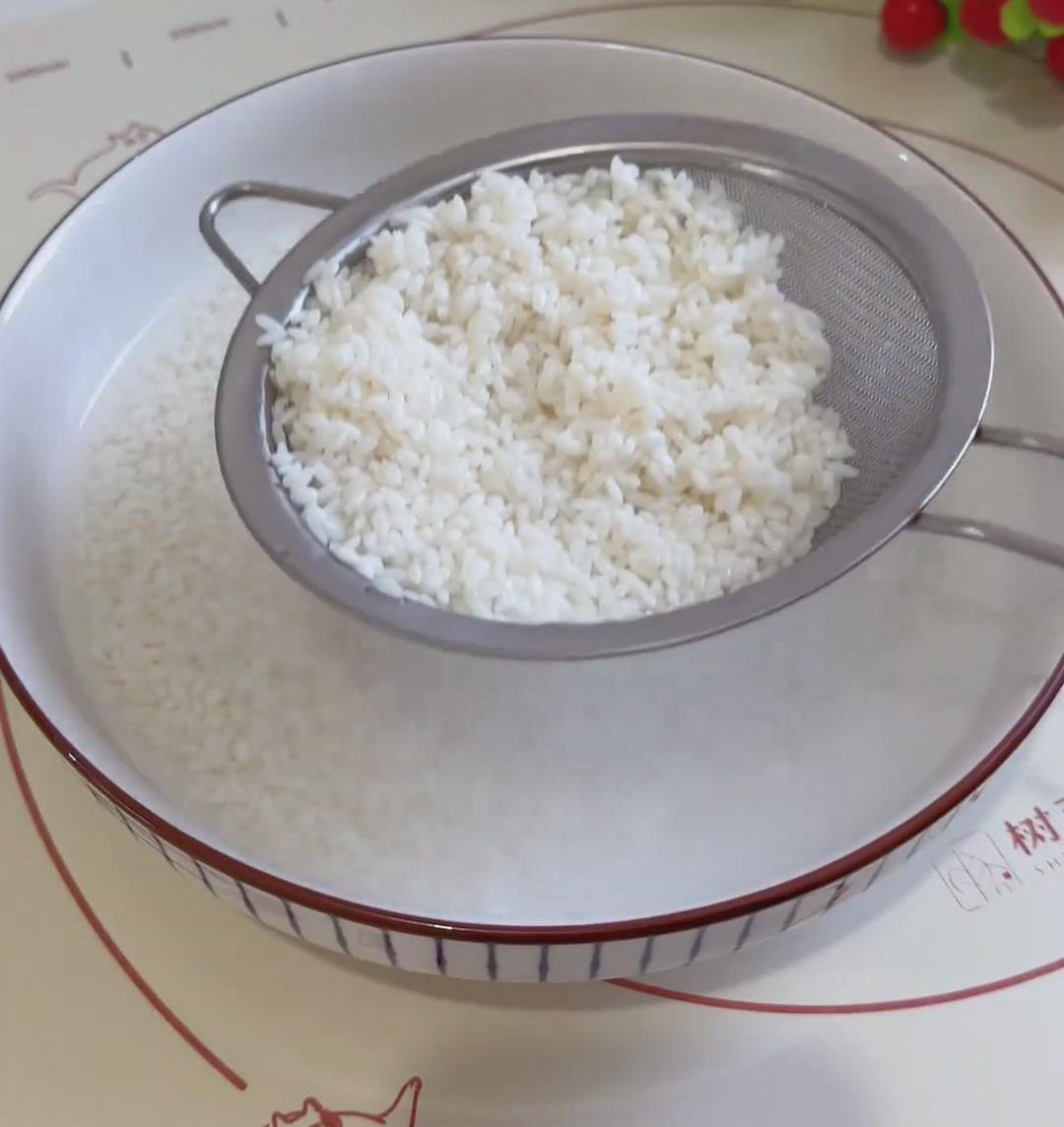

Mix the ingredients:
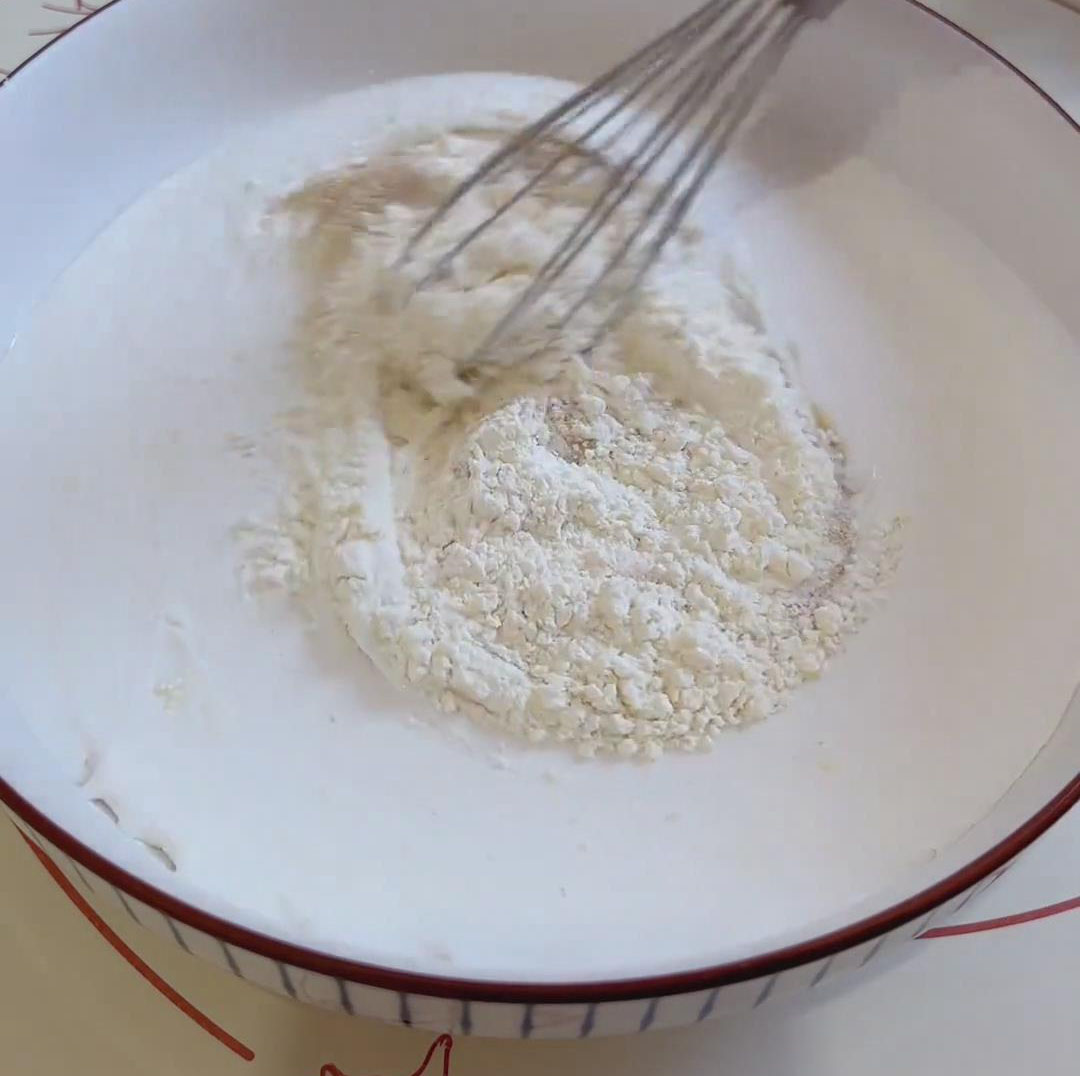
Pour the rice batter into a mixing bowl. Add 40g of flour, the desired amount of sugar (use more if you prefer it sweeter), and 3g of yeast. Mix everything thoroughly until well combined. The batter should be thick but still flowable.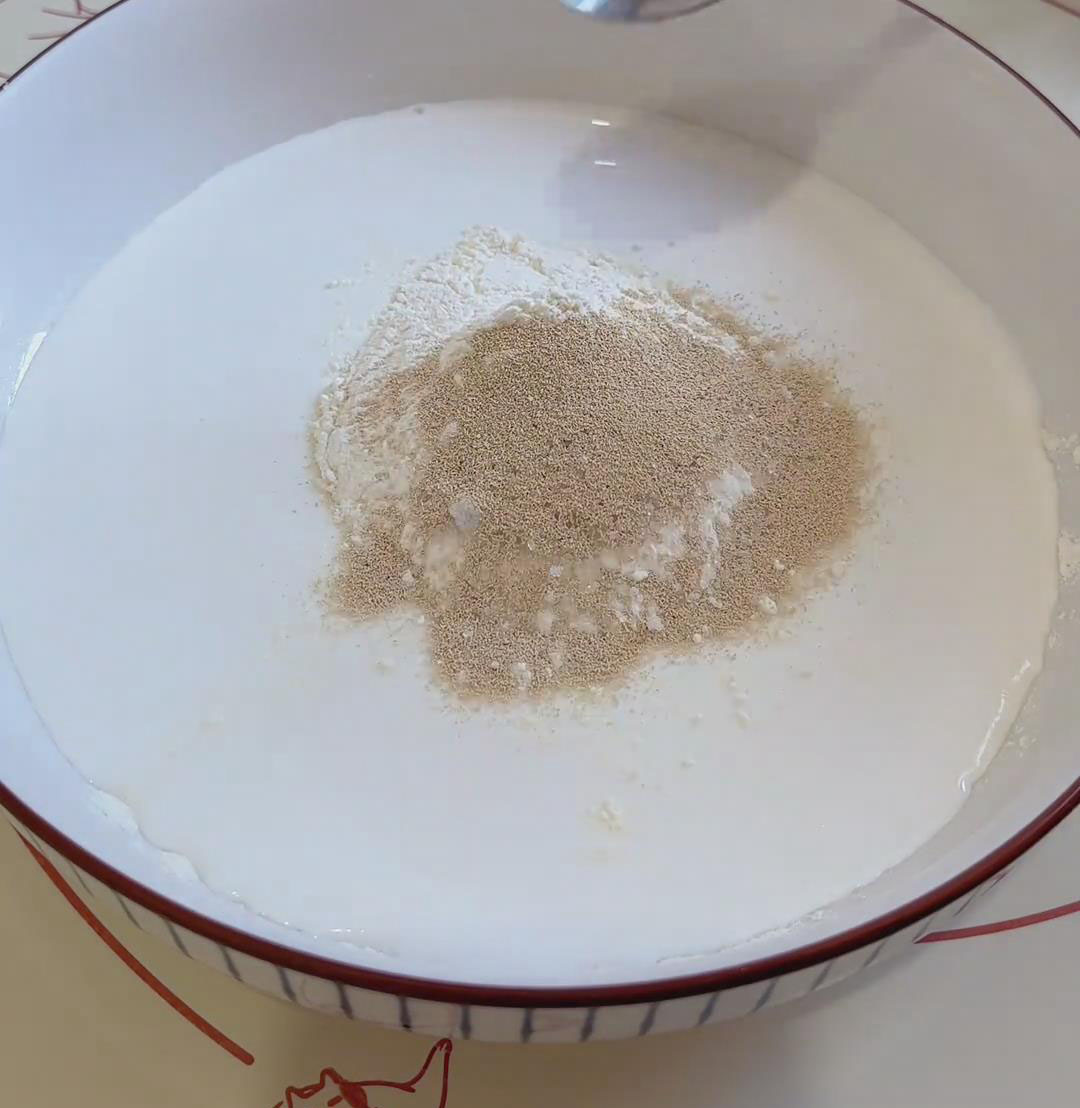
First proofing:
Cover the mixing bowl with plastic wrap and place it in a warm area for proofing. A warm environment helps the yeast to ferment faster. The ideal room temperature is 25-30°C. If the room is cooler, place the bowl in a pot with warm water (water temperature should not exceed 40°C to avoid killing the yeast), or near a heater. The proofing time is around 1-1.5 hours. When the batter has doubled in size and many small bubbles appear on the surface, the first proofing is complete.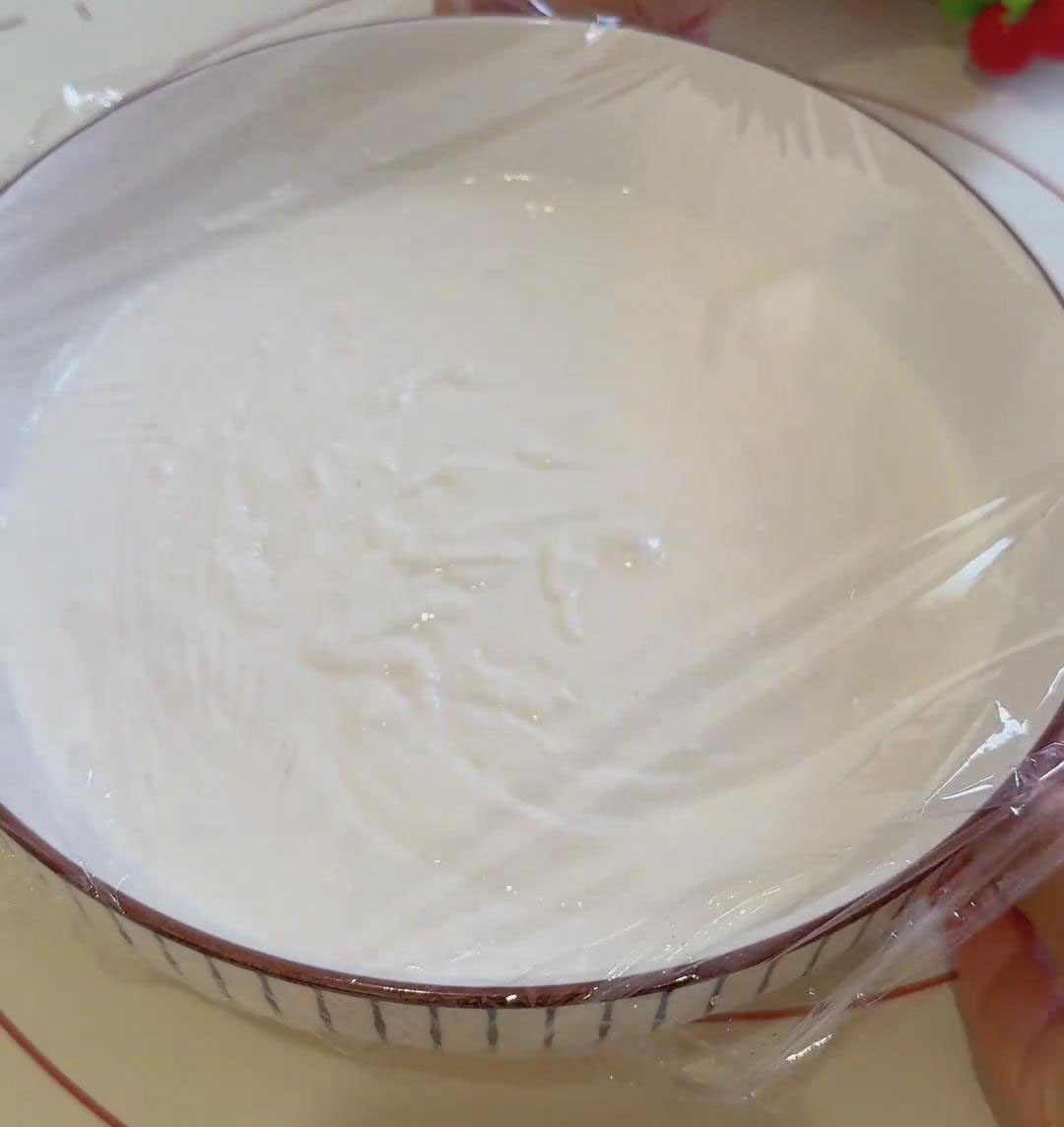
Deflate the batter:
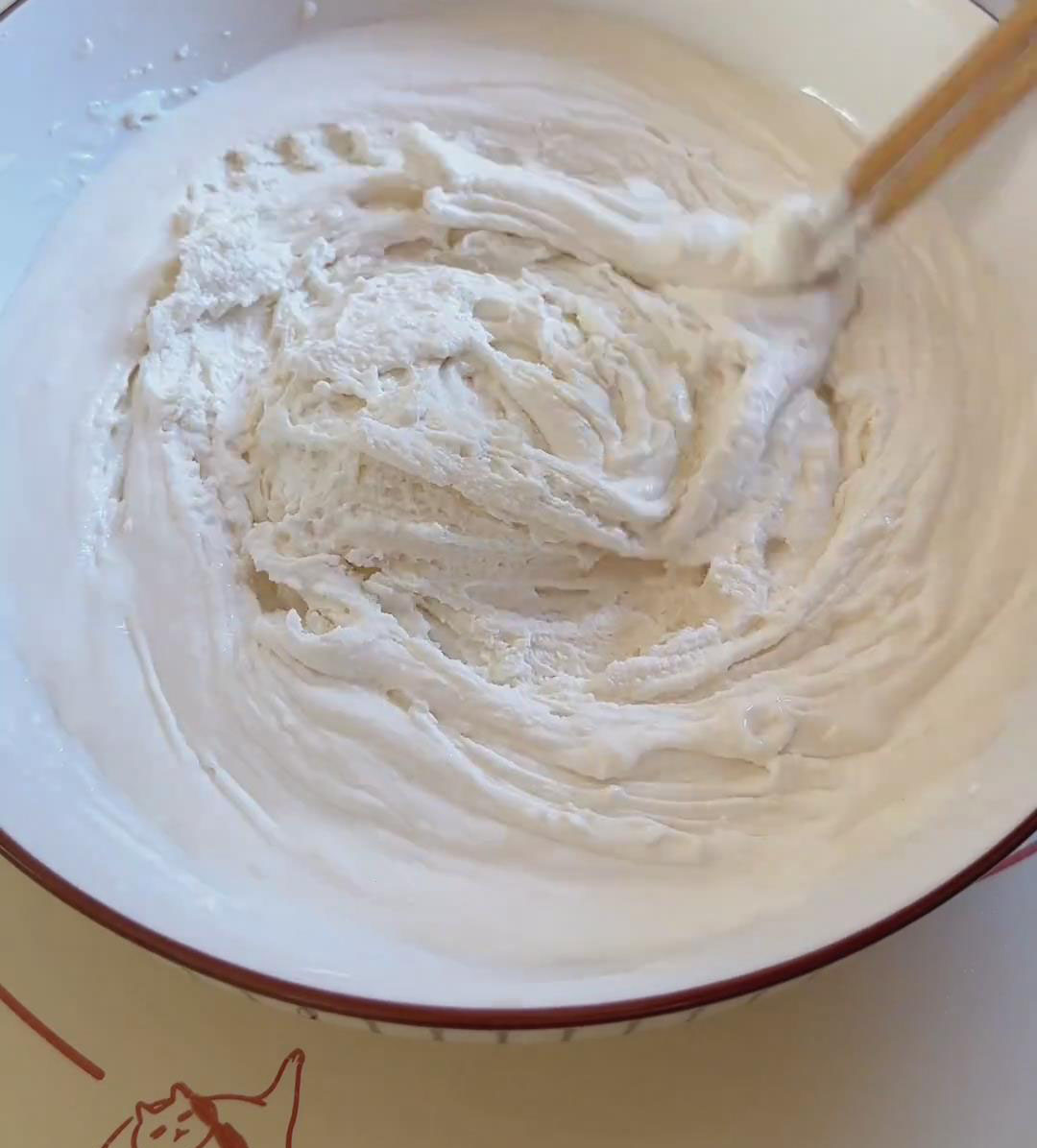
The batter will have many bubbles after proofing. Use chopsticks to stir the batter and release the bubbles, making the batter firmer. Stir until the surface of the batter is free of visible bubbles.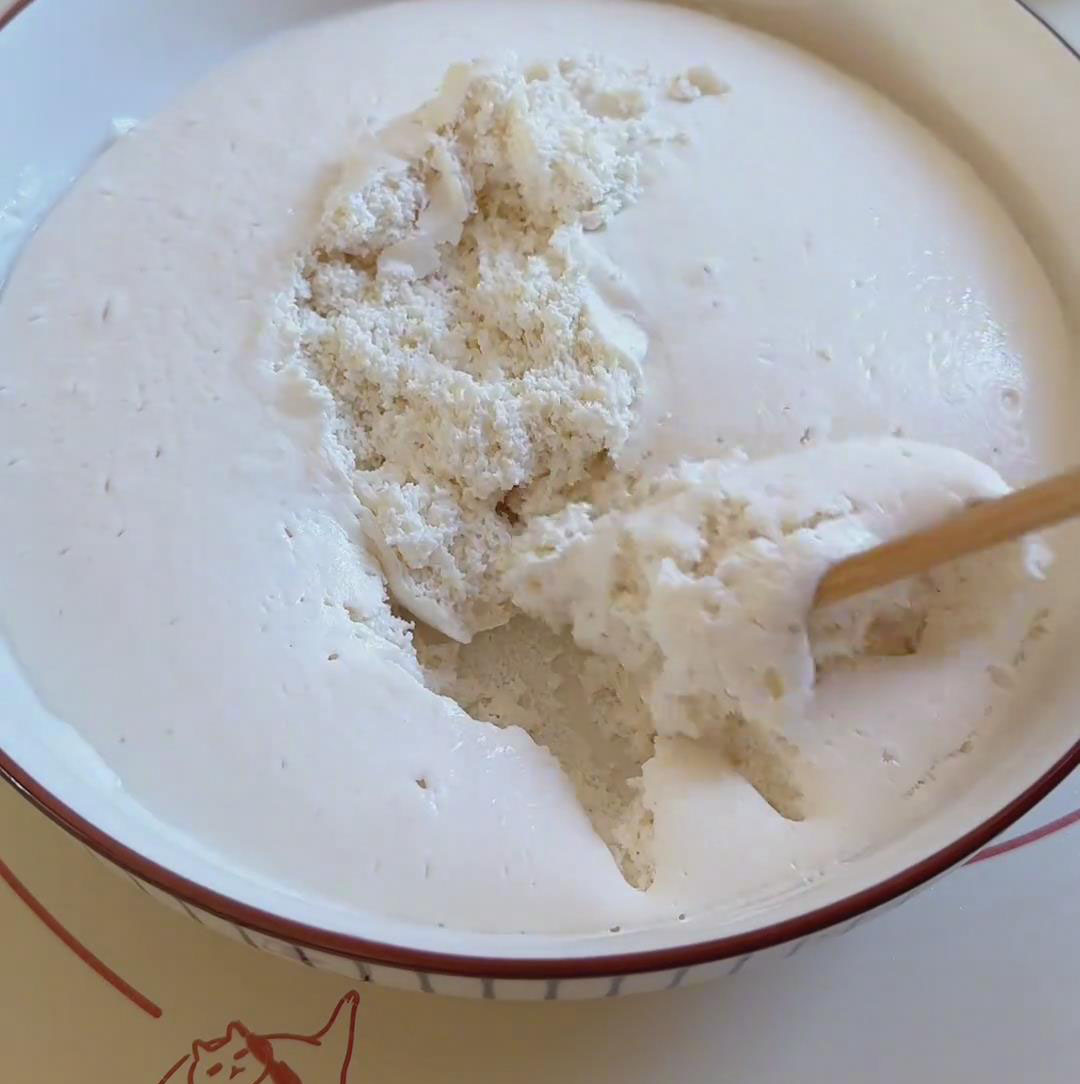
Pour into the mold:
Pour the prepared batter into a mold, filling it about 70-80% full (do not fill it too much, as the batter will rise further during the second proofing and steaming). If you don’t have a mold, you can pour the batter directly into a container lined with parchment paper and spread it evenly. Add dried cranberries on top as decoration.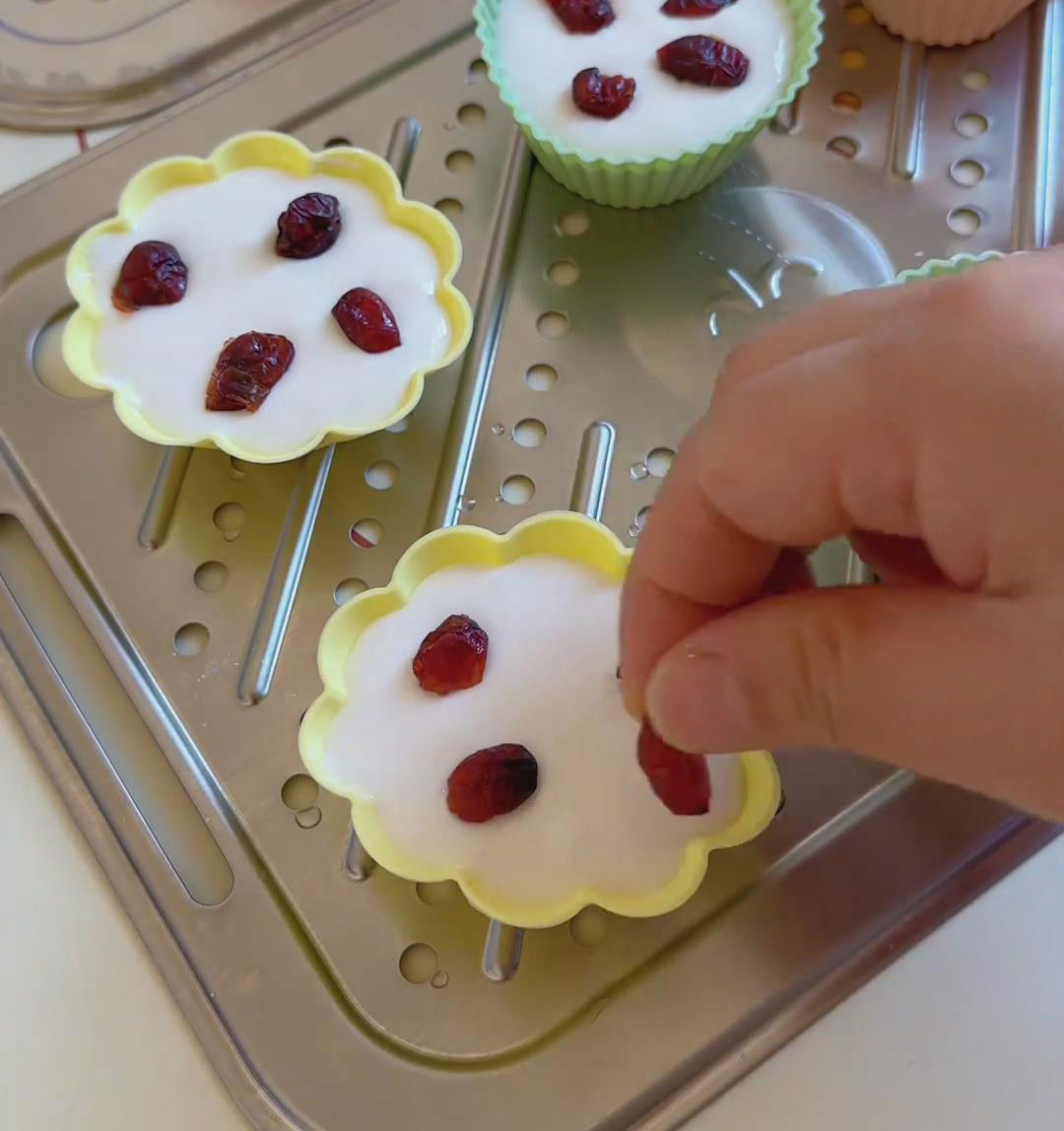
Second proofing:
Place the mold with the batter into a steamer, add enough warm water to the steamer (water temperature should be around 30-40°C), and cover the steamer without turning on the heat. Let the batter proof for an additional 15-20 minutes. The batter will rise again, becoming even fluffier.
Steam the rice cake:
After the second proofing, bring the steamer to a boil over high heat. Once the water is boiling, reduce the heat to medium and steam the cake for 30 minutes. If you’re using smaller molds, you may shorten the steaming time; for larger molds, you may need to steam for a bit longer. Keep the lid on the steamer sealed during the process to prevent steam from escaping, which can affect the cake’s fluffiness.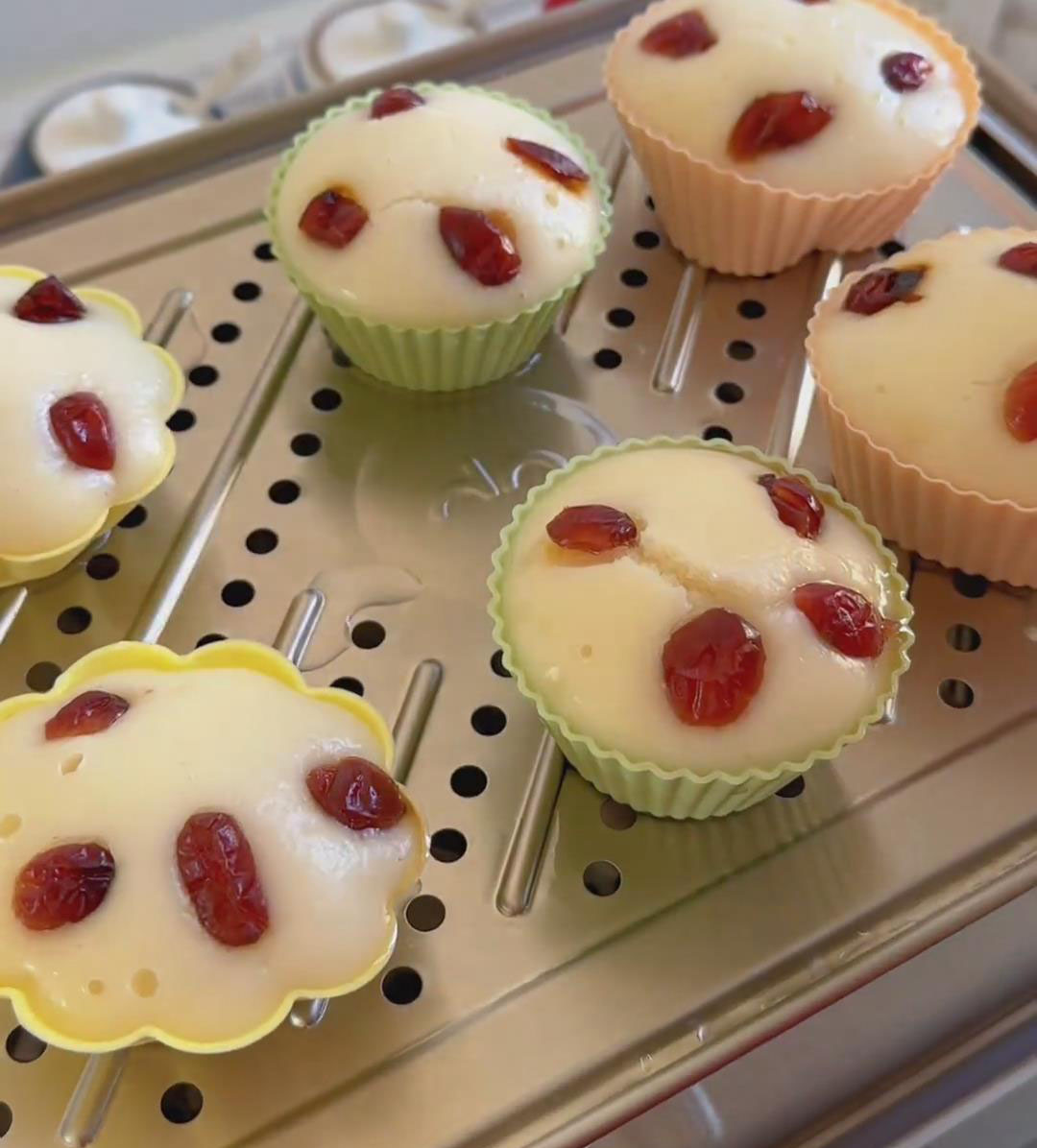
Let cool and serve:
Allow the rice cake to cool slightly before removing it from the mold. Once it’s cool enough to handle, remove it from the mold and enjoy! It’s perfect as a light snack or dessert.
Frequently Asked Questions
Can I substitute rice with rice flour?
I wouldn’t recommend it for this particular recipe, as the soaked rice creates a smoother texture. However, if you’re looking for a rice flour version, you can refer to the Fa Gao Recipe (Rice Flour Version) for guidance.
Can I make this recipe without yeast?
The yeast is essential for the rise and fluffiness of the rice cake. If you leave it out, the cake will be denser and less airy.
What if I don‘t have a steamer?
If you don’t have a traditional steamer, you can use a large pot with a lid and a steaming rack. Just make sure the water doesn’t touch the batter, and cover the pot tightly while steaming.

Simple and Delicious Steamed Rice Cake
Ingredients
- 300 g rice
- 150 g water
- 40 g flour
- 30 g white sugar
- 3 g yeast
- Dried cranberries to taste
Instructions
Soak the rice:
- Rinse 300g of rice under clean water and place it in a large bowl. Add enough water to fully submerge the rice and let it soak overnight (around 8-12 hours). After soaking, the rice should easily break apart when gently pressed, indicating it has soaked properly.
Make rice batter:
- Drain the soaked rice and rinse it a few times with clean water. Place the rice into a blender, add 150g of water, and blend on a high-speed or fruit/vegetable mode for 2-3 minutes, until the rice becomes a smooth, fine batter. The rice batter should flow smoothly and be free from noticeable grains. If there are still grains, blend it a little longer.
Mix the ingredients:
- Pour the rice batter into a mixing bowl. Add 40g of flour, the desired amount of sugar (use more if you prefer it sweeter), and 3g of yeast. Mix everything thoroughly until well combined. The batter should be thick but still flowable.
First proofing:
- Cover the mixing bowl with plastic wrap and place it in a warm area for proofing. A warm environment helps the yeast to ferment faster. The ideal room temperature is 25-30°C. If the room is cooler, place the bowl in a pot with warm water (water temperature should not exceed 40°C to avoid killing the yeast), or near a heater. The proofing time is around 1-1.5 hours. When the batter has doubled in size and many small bubbles appear on the surface, the first proofing is complete.
Deflate the batter:
- The batter will have many bubbles after proofing. Use chopsticks to stir the batter and release the bubbles, making the batter firmer. Stir until the surface of the batter is free of visible bubbles.
Pour into the mold:
- Pour the prepared batter into a mold, filling it about 70-80% full (do not fill it too much, as the batter will rise further during the second proofing and steaming). If you don't have a mold, you can pour the batter directly into a container lined with parchment paper and spread it evenly. Add dried cranberries on top as decoration.
Second proofing:
- Place the mold with the batter into a steamer, add enough warm water to the steamer (water temperature should be around 30-40°C), and cover the steamer without turning on the heat. Let the batter proof for an additional 15-20 minutes. The batter will rise again, becoming even fluffier.
Steam the rice cake:
- After the second proofing, bring the steamer to a boil over high heat. Once the water is boiling, reduce the heat to medium and steam the cake for 30 minutes. If you're using smaller molds, you may shorten the steaming time; for larger molds, you may need to steam for a bit longer. Keep the lid on the steamer sealed during the process to prevent steam from escaping, which can affect the cake's fluffiness.
Let cool and serve:
- Allow the rice cake to cool slightly before removing it from the mold. Once it's cool enough to handle, remove it from the mold and enjoy! It's perfect as a light snack or dessert.


Leave a Reply