
This Green Bean Sweet Potato Sugar Water (Tong Sui) is a classic Chinese sweet soup made effortlessly in a rice cooker. Naturally sweet, soothing, and beginner-friendly — no watching the pot required. Enjoy it warm or chilled.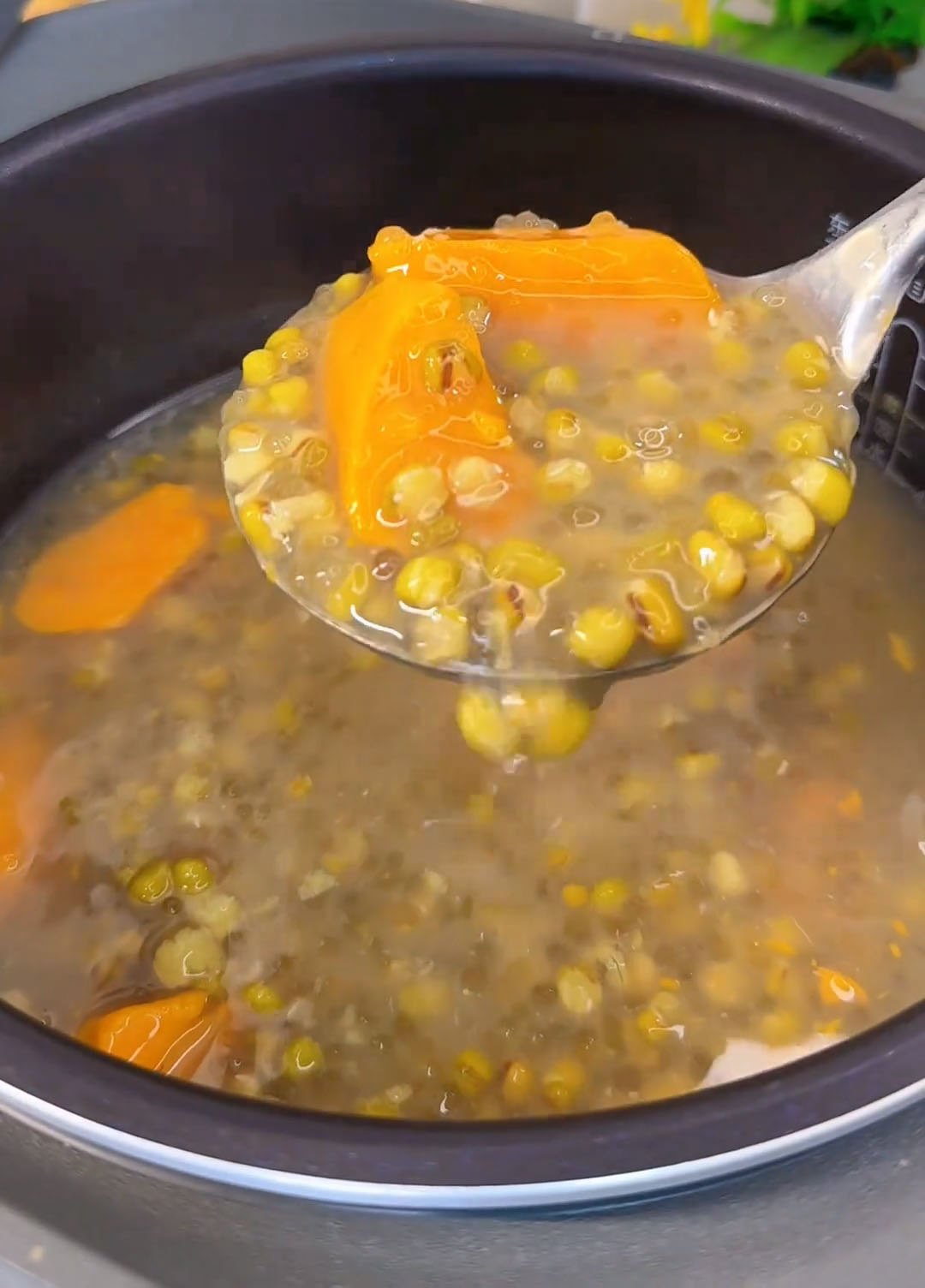
Sugar water desserts (also known as tong sui, the Cantonese term for Chinese sweet soups) are a big favorite in my home.
Whether it’s a chilled bowl to cool down in the summer or a warm, comforting one for the cooler months, homemade sugar water always has a gentle, natural sweetness that everyone loves.
Just like the green bean sago dessert I shared before, this version is made entirely in the rice cooker.
There’s no need to watch the pot or deal with complicated steps — everything goes in at once and the rice cooker does the rest.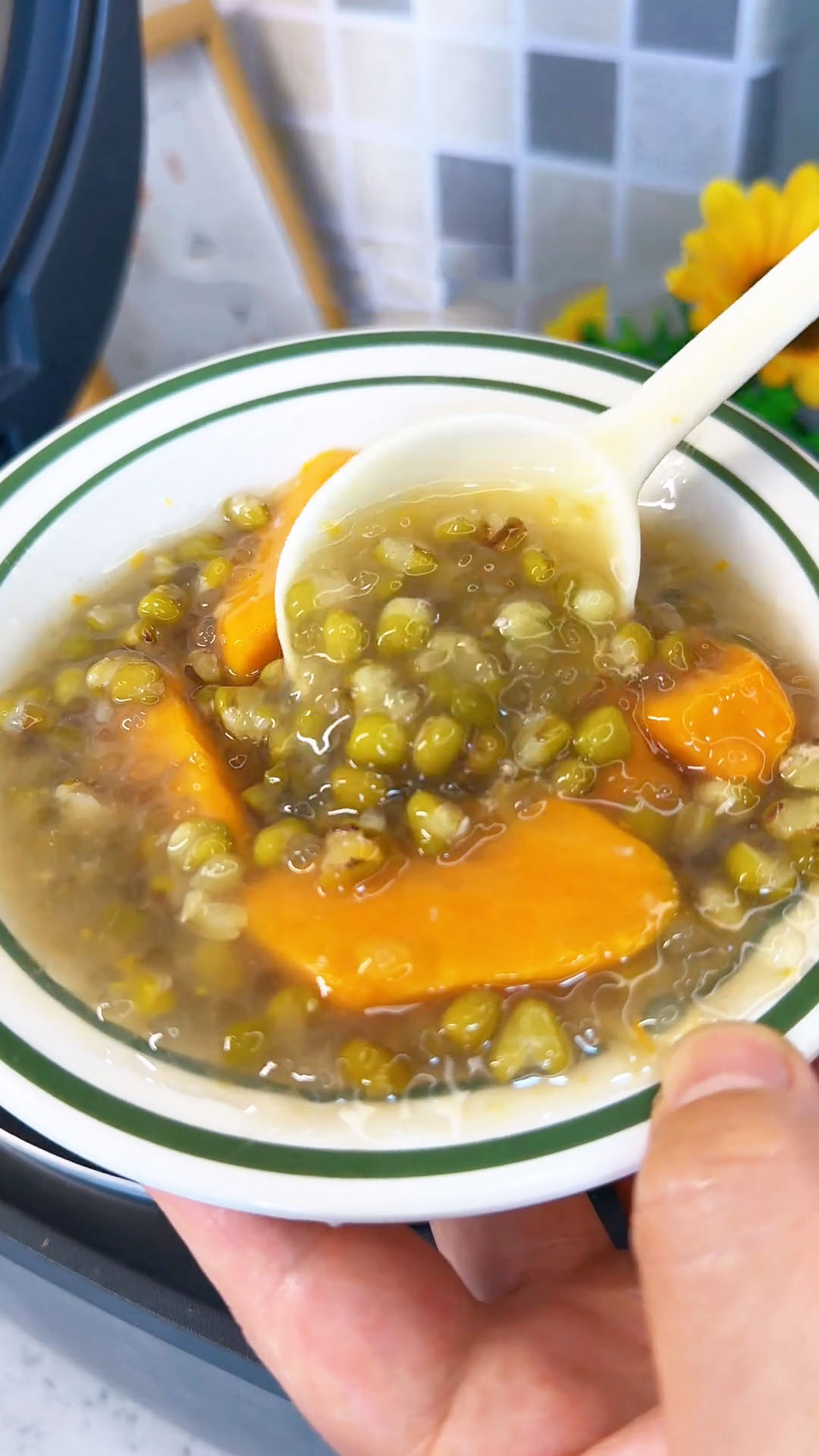
Why You‘ll Love This Recipe
- This recipe is truly lazy and beginner-friendly — everything cooks together in the rice cooker with no complicated steps.
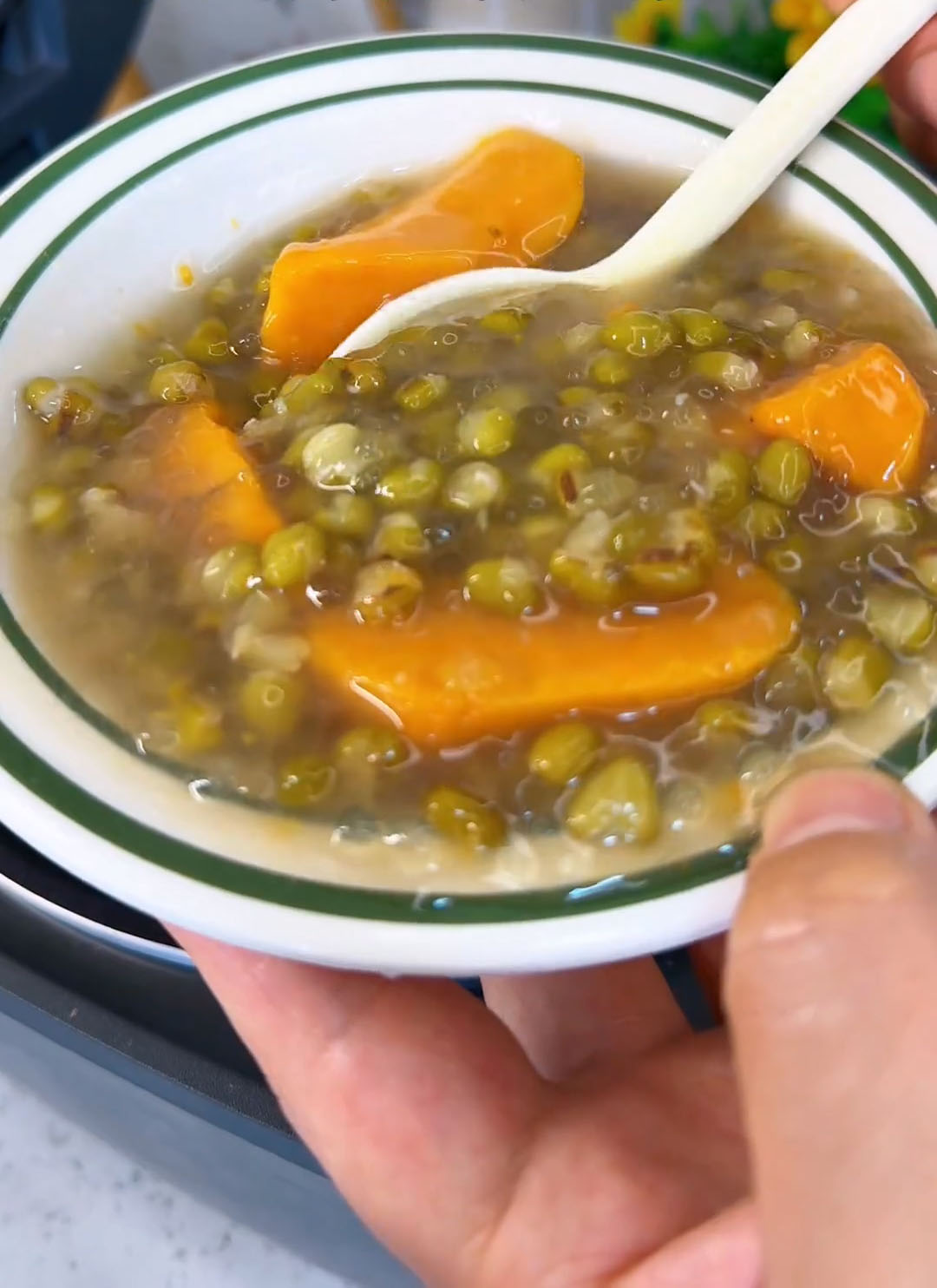
- The texture is incredibly satisfying: creamy green beans, soft sweet potatoes, and pleasantly chewy sago all in one bowl.
- It’s naturally sweet and light, with the sweetness coming mainly from the ingredients themselves.
- You can enjoy it hot or chilled, making it perfect for all seasons, especially summer.
- It’s budget-friendly and makes a big pot with just a few simple pantry ingredients.
Ingredients and Substitutions
- Green beans (mung beans) – I recommend soaking them for at least 2 hours so they absorb enough water and cook until soft and creamy. If you don’t have time, peeled or split mung beans work beautifully and give an even smoother texture.
- Sweet potatoes – Choose naturally sweet varieties like honey sweet potatoes or Japanese sweet potatoes. I always cut them into rolling chunks so they cook evenly without falling apart.
- Sago pearls – Small to medium sago works best here. Do not rinse them before cooking, as washing can damage the surface and cause them to break apart or clump during cooking.
- Rock sugar – This adds a clean, gentle sweetness that lets the natural flavours shine. You can adjust the amount based on your preference since the sweet potatoes and green beans already bring natural sweetness.
- Boiling water – This must be freshly boiled. Using hot water helps the sago cook properly and prevents chalky centers.
How to Make Green Bean Sweet Potato Soup
Preparation
Soak the green beans in clean water for at least 2 hours. If you have more time, soaking them overnight will make them even creamier and reduce cooking time. Once soaked, drain well and set aside.
Wash and peel the sweet potatoes, then cut them into rolling chunks about 2 cm in size. Cutting them evenly helps them cook through without turning mushy.
Place the sago pearls directly into a bowl and set aside. Do not rinse them, as this can cause them to fall apart during cooking.
Cooking in the Rice Cooker
Add the soaked green beans, sweet potato chunks, and sago pearls into the rice cooker. Add the rock sugar directly — there’s no need to dissolve it beforehand.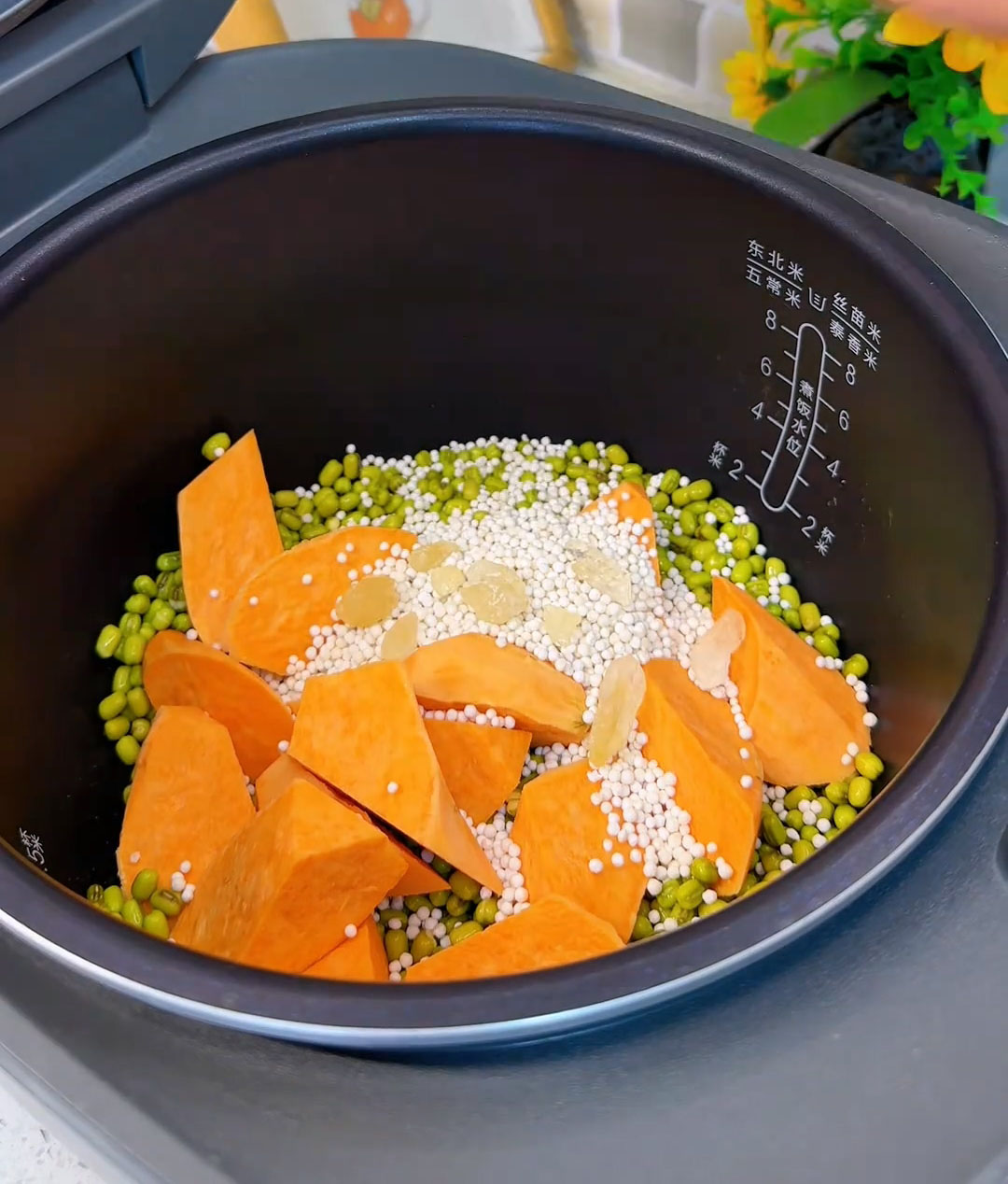
Pour in the freshly boiled water, making sure all the ingredients are submerged with about 3–4 cm of water above them.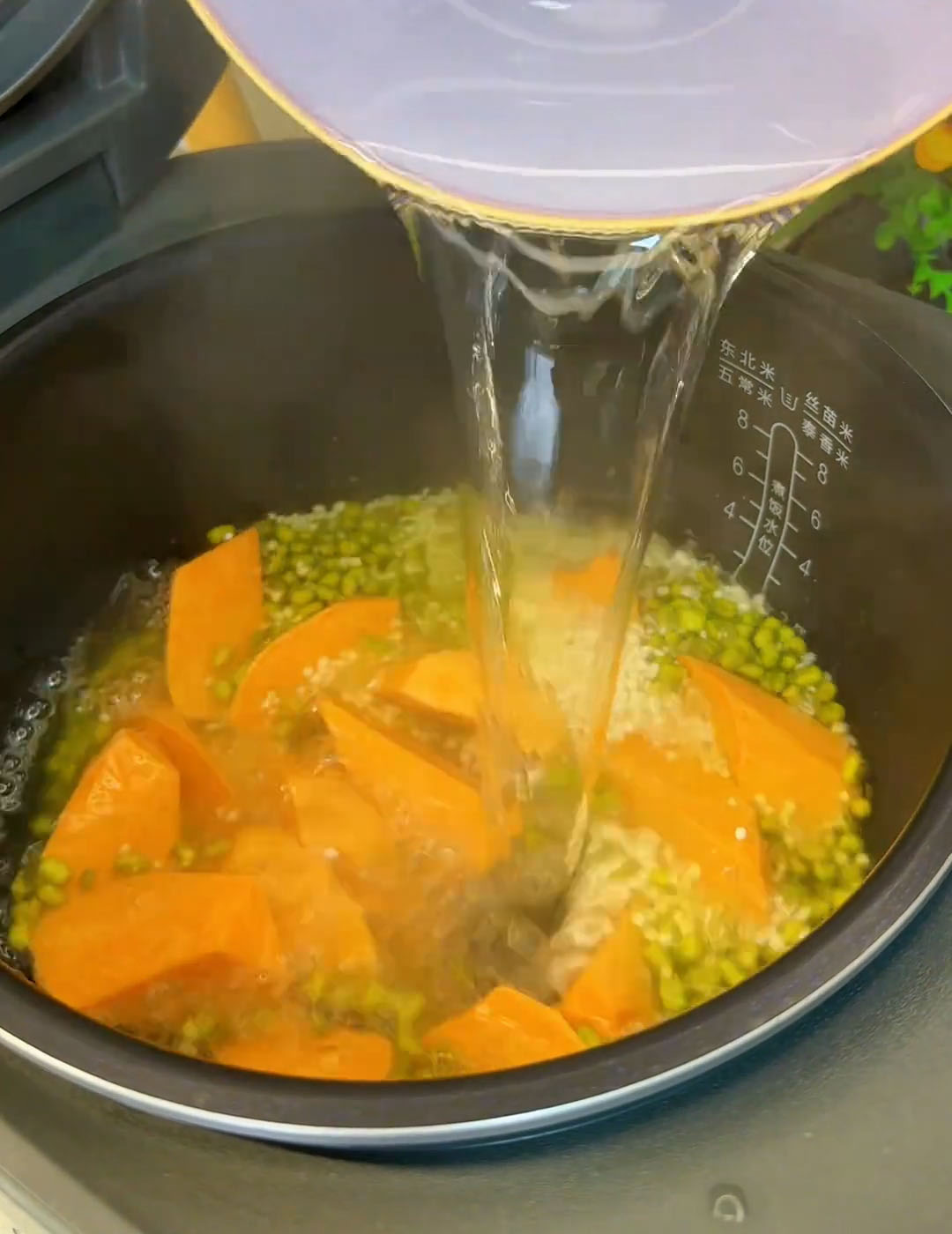
Gently stir to help the sugar begin dissolving and to distribute the ingredients evenly.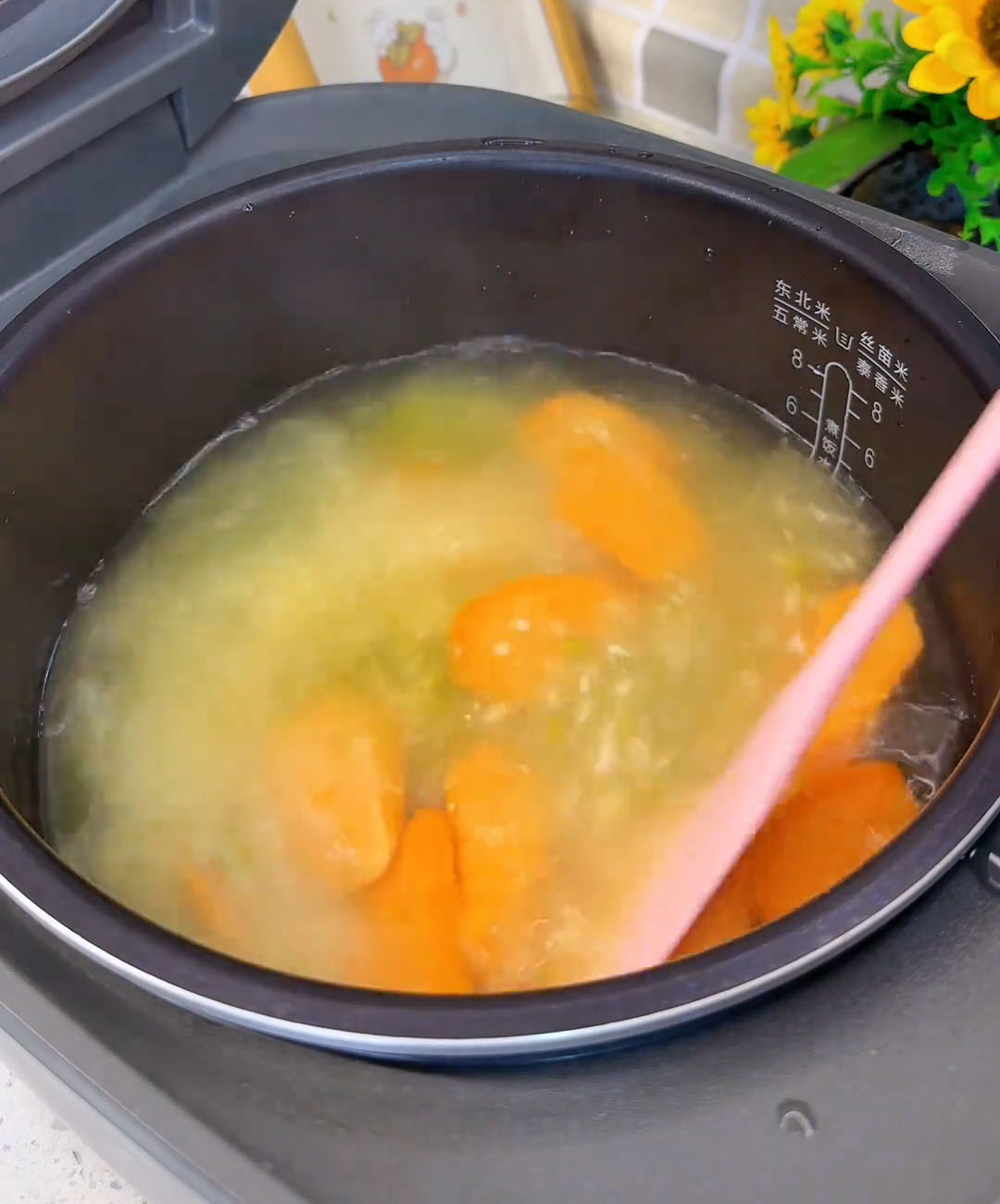
Close the lid and select the “Porridge” function. Cook for about 1 hour, adjusting slightly depending on your rice cooker’s power, until the green beans are soft, the sweet potatoes are tender, and the sago pearls are mostly translucent.
During cooking, you can open the lid once or twice to gently stir. This helps prevent the sago from sticking to the bottom and the sweet potatoes from sticking to the sides. Stir carefully to avoid breaking the sweet potatoes.
Resting and Serving
Once cooking is finished, keep the lid closed and let the soup rest for 5 minutes. This allows the sago and green beans to absorb more liquid and improves the overall texture.
Open the lid and gently stir.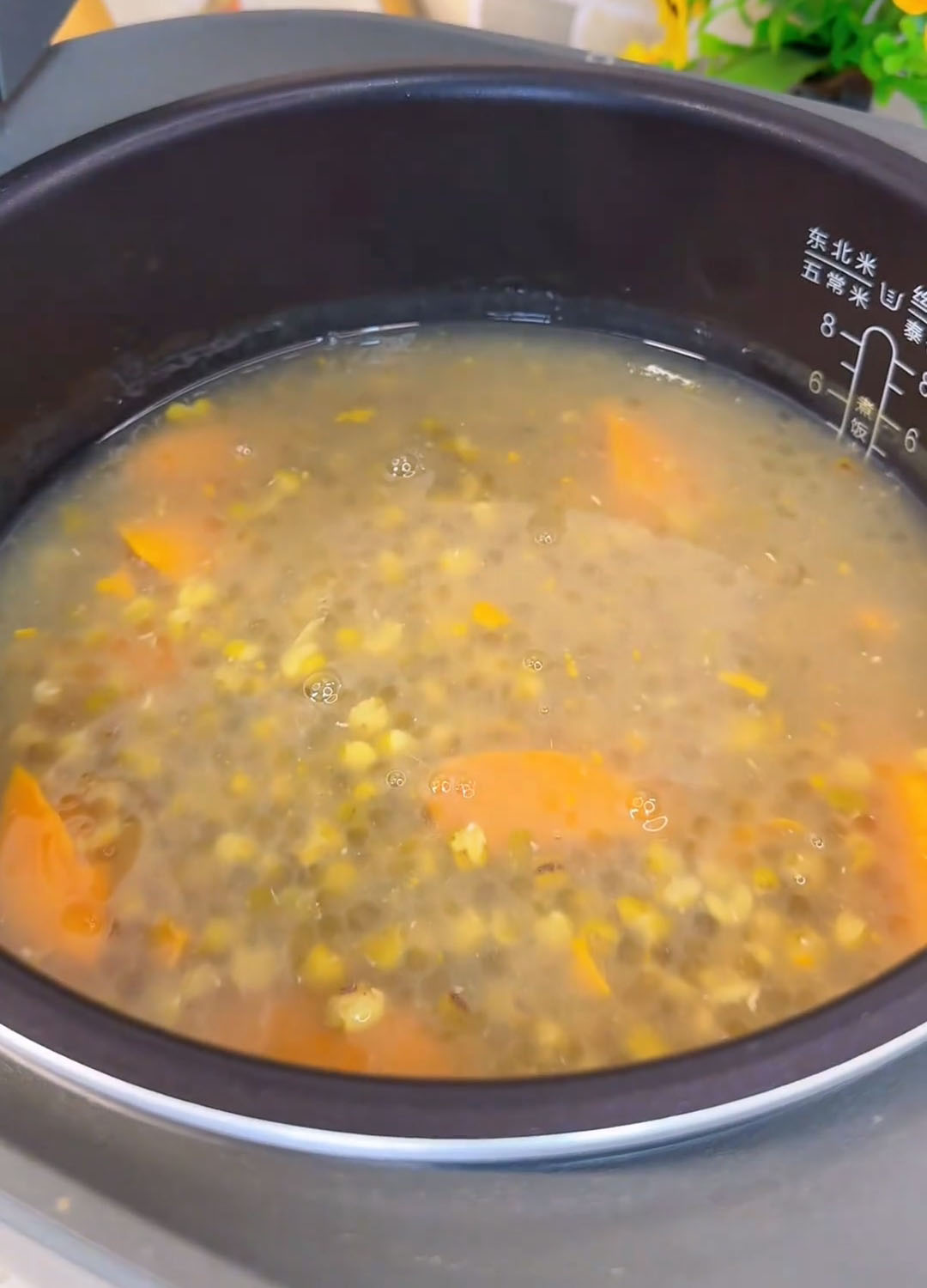
Serve warm, or let it cool completely before refrigerating for 30 minutes if you prefer a chilled, refreshing version.
Tips & Tricks
- Soak the green beans properly. Unsoaked beans may still have a hard center even after an hour of cooking. If you’re short on time, soaking them in boiling water for 30 minutes helps speed things up.
- Always use boiling water. This is key for cooking the sago evenly and preventing undercooked centers.
- Don‘t rinse the sago. Washing damages the outer layer and increases the chance of clumping.
- Stir gently. Sweet potatoes are soft once cooked, so light stirring helps maintain their shape.
- Use residual heat if needed. If a few sago pearls still have white centers, simply close the lid and let the soup sit for another 10 minutes — the remaining heat will finish cooking them.
- Adjust Sweetness at the End: Taste the soup after the resting period. If you prefer it sweeter, you can stir in a little more dissolved rock sugar or simple syrup at this point.
Frequently Asked Questions
My sago pearls are still hard and white in the center after cooking. What went wrong?
This usually means there wasn’t enough water, or the water wasn’t hot enough when added. The sago needs to be fully submerged in boiling water to cook properly. If this happens, add an extra 1/2 cup of boiling water to the pot, close the lid, and let it sit on the “Keep Warm” function for another 20-30 minutes.
Can I use other types of beans or potatoes?
Yes! Adzuki beans would be a classic alternative to mung beans. For the potato, purple sweet potato or even diced taro would be delicious. Just note that cooking times may vary slightly with different ingredients.
My sweet potato completely dissolved into the soup. How can I prevent this?
You likely cut the pieces too small or stirred too vigorously during cooking. For this recipe, aim for larger, sturdier chunks (2cm is ideal) and limit stirring to just once or twice with a gentle hand.
Can I make this on the stovetop instead?
Absolutely. The process is similar: soak the beans, combine everything in a pot with boiling water, bring to a simmer, then cook over low heat, partially covered, for about 45-60 minutes, stirring occasionally to prevent sticking, until everything is tender.

Lazy Rice Cooker Sugar Water (Green Bean & Sweet Potato)
Ingredients
- 150 g green beans mung beans, soaked
- 1–2 sweet potatoes about 300 g, peeled and cut into chunks
- 80 g sago pearls
- 40–60 g rock sugar
- 1200–1500 ml boiling water
Instructions
Preparation
- Soak the green beans in clean water for at least 2 hours. If you have more time, soaking them overnight will make them even creamier and reduce cooking time. Once soaked, drain well and set aside.
- Wash and peel the sweet potatoes, then cut them into rolling chunks about 2 cm in size. Cutting them evenly helps them cook through without turning mushy.
- Place the sago pearls directly into a bowl and set aside. Do not rinse them, as this can cause them to fall apart during cooking.
Cooking in the Rice Cooker
- Add the soaked green beans, sweet potato chunks, and sago pearls into the rice cooker. Add the rock sugar directly — there's no need to dissolve it beforehand.
- Pour in the freshly boiled water, making sure all the ingredients are submerged with about 3–4 cm of water above them.
- Gently stir to help the sugar begin dissolving and to distribute the ingredients evenly.
- Close the lid and select the “Porridge” function. Cook for about 1 hour, adjusting slightly depending on your rice cooker's power, until the green beans are soft, the sweet potatoes are tender, and the sago pearls are mostly translucent.
- During cooking, you can open the lid once or twice to gently stir. This helps prevent the sago from sticking to the bottom and the sweet potatoes from sticking to the sides. Stir carefully to avoid breaking the sweet potatoes.
Resting and Serving
- Once cooking is finished, keep the lid closed and let the soup rest for 5 minutes. This allows the sago and green beans to absorb more liquid and improves the overall texture.
- Open the lid and gently stir.
- Serve warm, or let it cool completely before refrigerating for 30 minutes if you prefer a chilled, refreshing version.



Leave a Reply