
Learn how to make soft, fluffy, and lightly sweet mini red bean steamed buns at home! Perfect for breakfast, snacks, or dessert. Step-by-step guide included.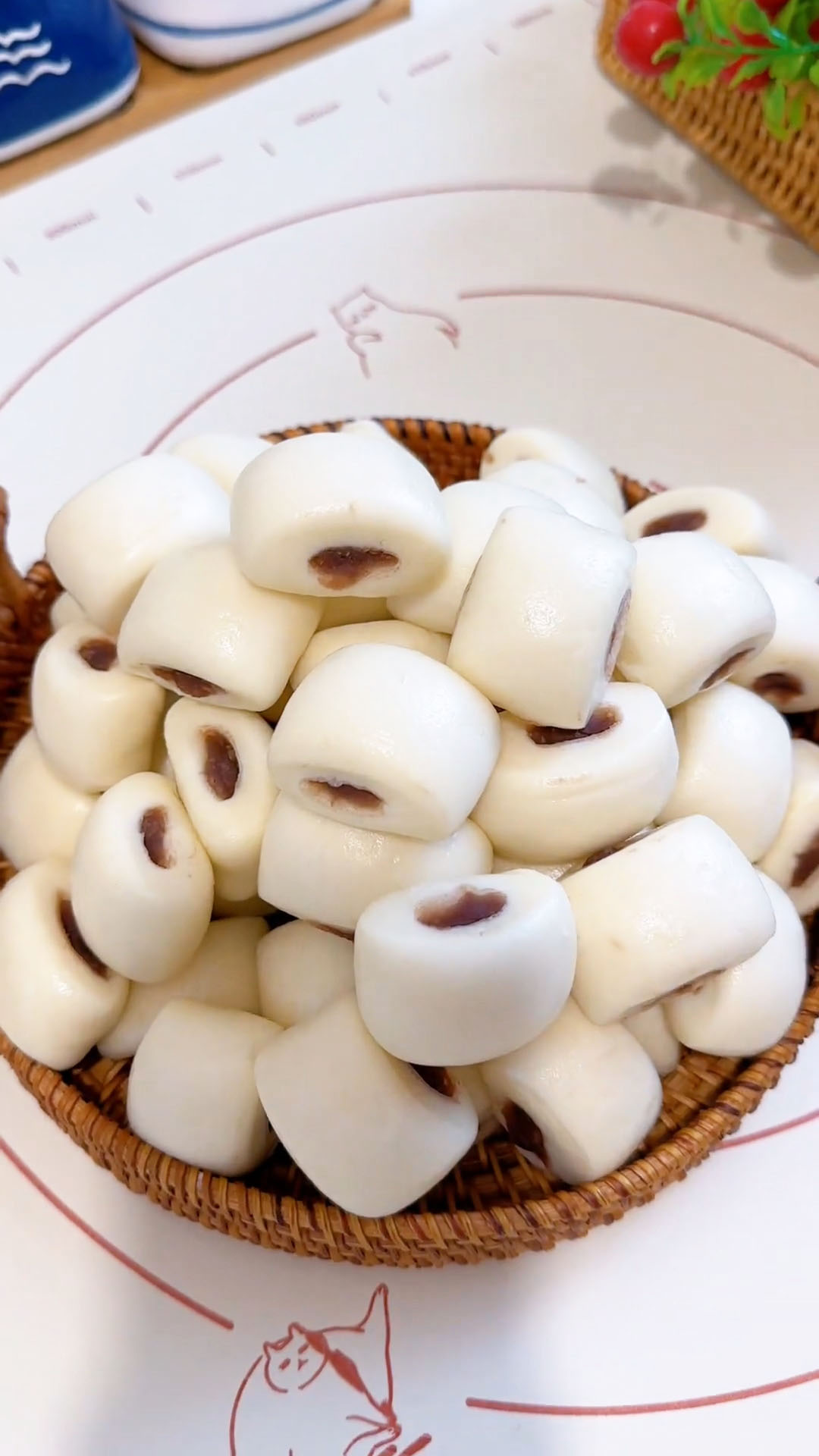
As someone who absolutely loves all kinds of dough-based treats, buns are almost always making an appearance on my table.
From fluffy steamed buns to golden baked buns, I can never get enough of their soft, comforting texture.
Among all the varieties I make, these Mini Red Bean Steamed Buns are a definite favorite in our household—especially with my kids!
They’re a playful twist on the classic red bean steamed buns we all know and love, but in a perfectly bite-sized version.
What makes them extra special is their mini, one-bite size—just right for little hands to hold and enjoy.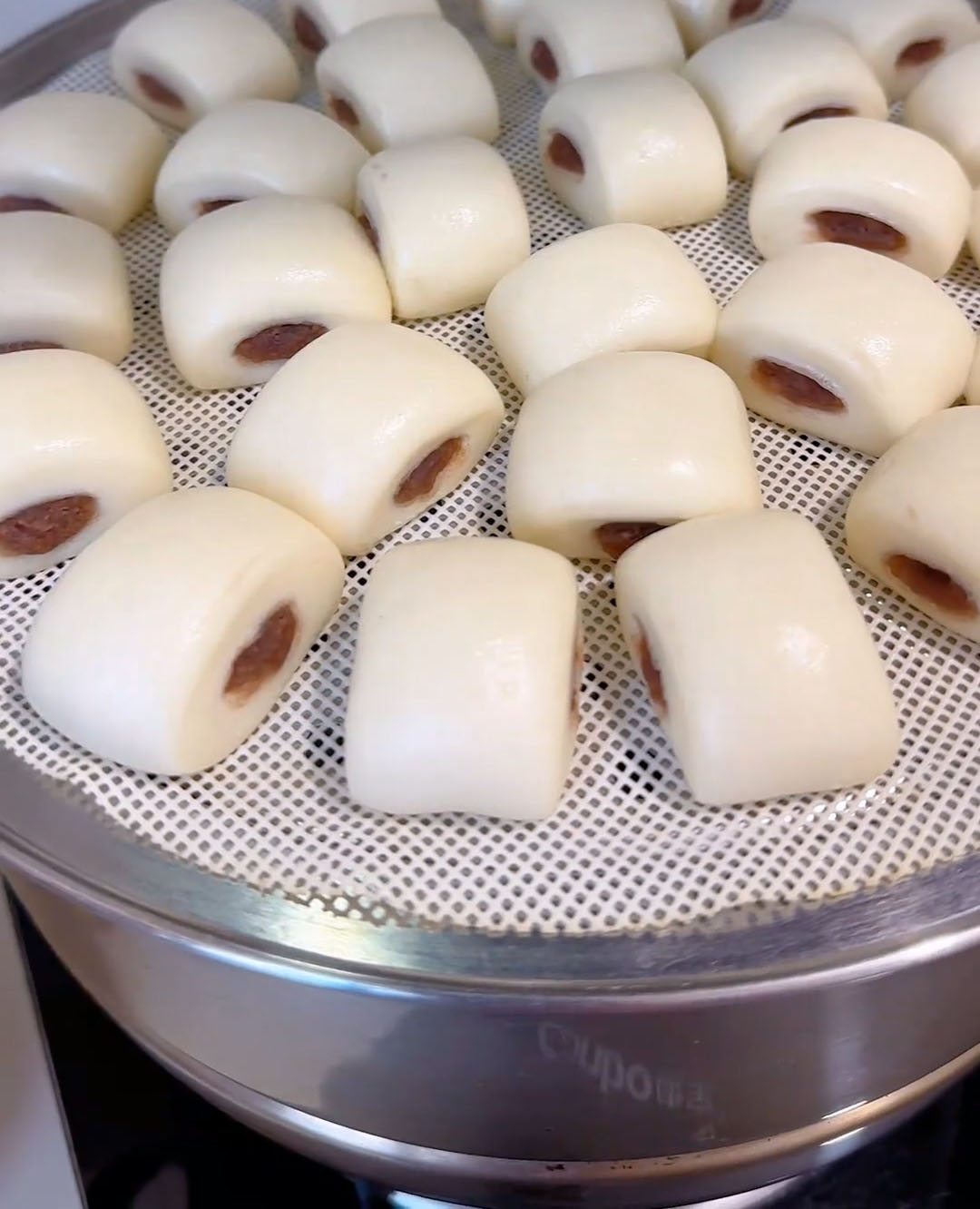
Why You’ll Love This Recipe
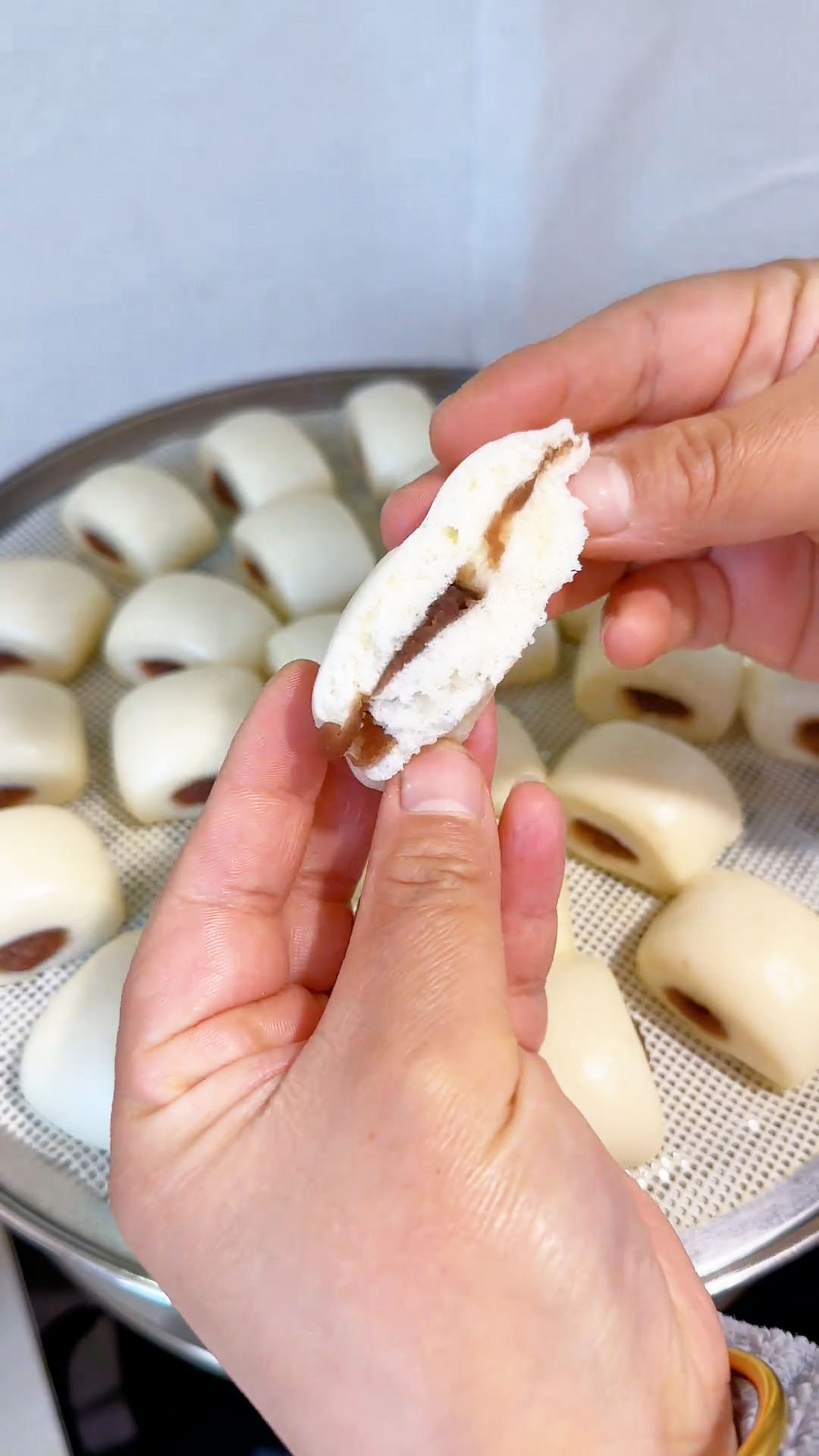
- These buns are soft, fluffy, and perfectly bite-sized—ideal for kids and adults alike.
- The red bean filling is smooth and sweet without being overwhelming, making every bite satisfying.
- The dough is tender and light thanks to a combination of lard and precise kneading.
- You don’t need to pre-activate the yeast, making this recipe simple and convenient.
- Perfect for making ahead and freezing, then steaming whenever you want fresh buns.
Ingredients and Substitutions
- All-Purpose Flour – I recommend using a good quality all-purpose flour. Its medium protein content is perfect for creating a soft yet structured bun that can hold its shape during steaming and remain pleasantly chewy.
- Granulated Sugar – We use just a tiny amount. Its primary role here is to provide a tiny bit of food for the yeast to kickstart fermentation, not to make the dough sweet. The sweetness comes from the filling.
- Active Dry Yeast – You can use the kind that gets mixed directly with the dry ingredients (“instant” or “quick-rise”). Make sure it’s fresh for the best rise.
- Lard – This is the traditional fat used in many Chinese steamed buns. It creates a uniquely tender, moist crumb and adds a subtle richness that keeps the buns soft long after they cool. Vegetable oil can be substituted, but the texture will be slightly different. Check out my guide on how to make lard for the best results.
- Warm Water – The temperature is crucial. Water that is too hot will kill the yeast; too cold will slow it down. Aim for water that feels warm to the touch (about 105-110°F or 40-43°C), like pleasant bath water.
- Red Bean Paste – You can use store-bought or homemade. I prefer a smooth paste for these small buns, but a slightly chunky one works too. Choose one that’s not overly sweet, as the contrast with the plain dough is lovely.
How to Make Mini Red Bean Steamed Buns
1. Mixing the Dough
In a large bowl, combine all the dry dough ingredients (flour, sugar, yeast, lard) and mix well to remove any clumps.
Gradually pour in the warm water while stirring with chopsticks until a coarse, sticky dough forms with no dry flour left.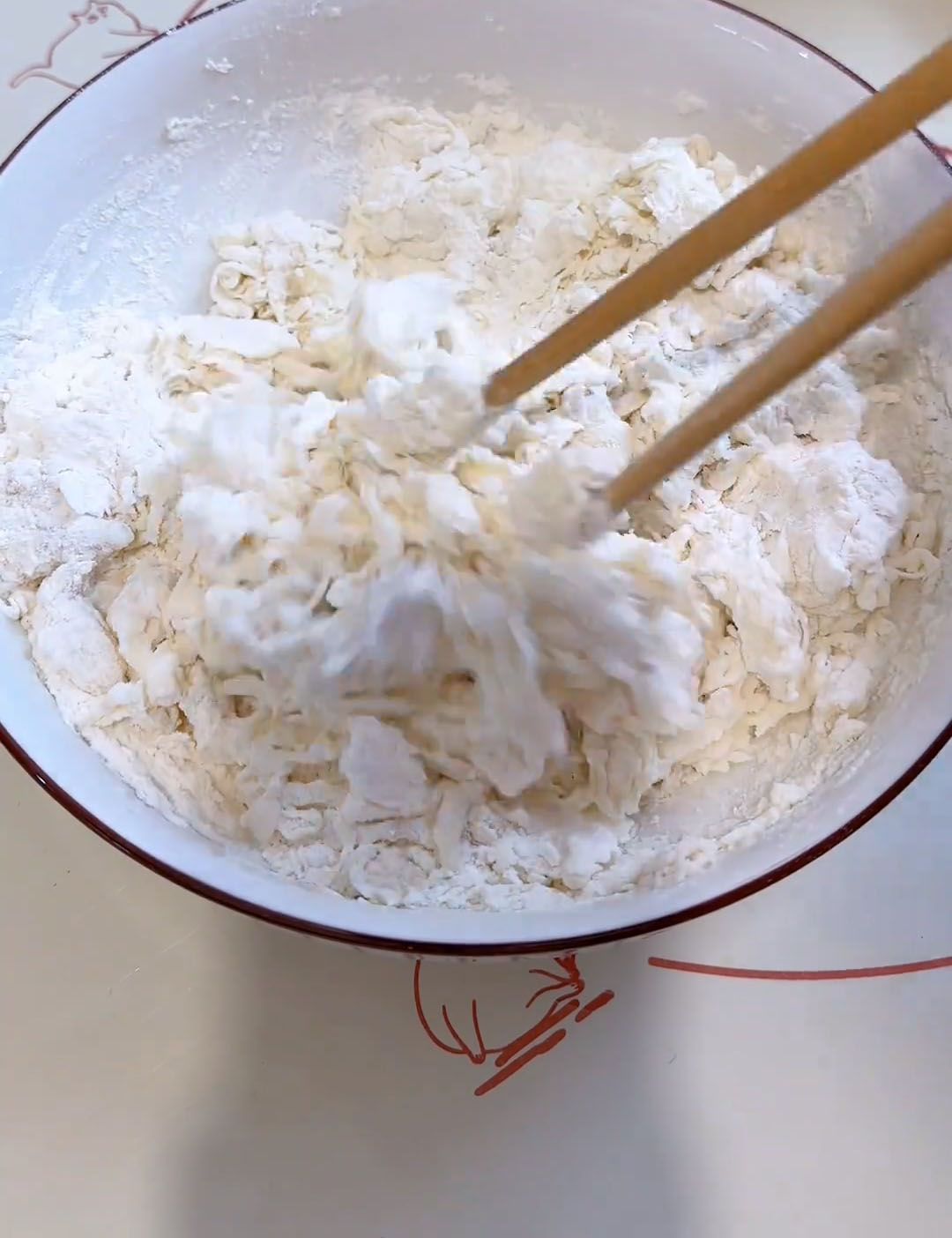
Using your hands, mix until a shaggy dough forms and no dry flour remains.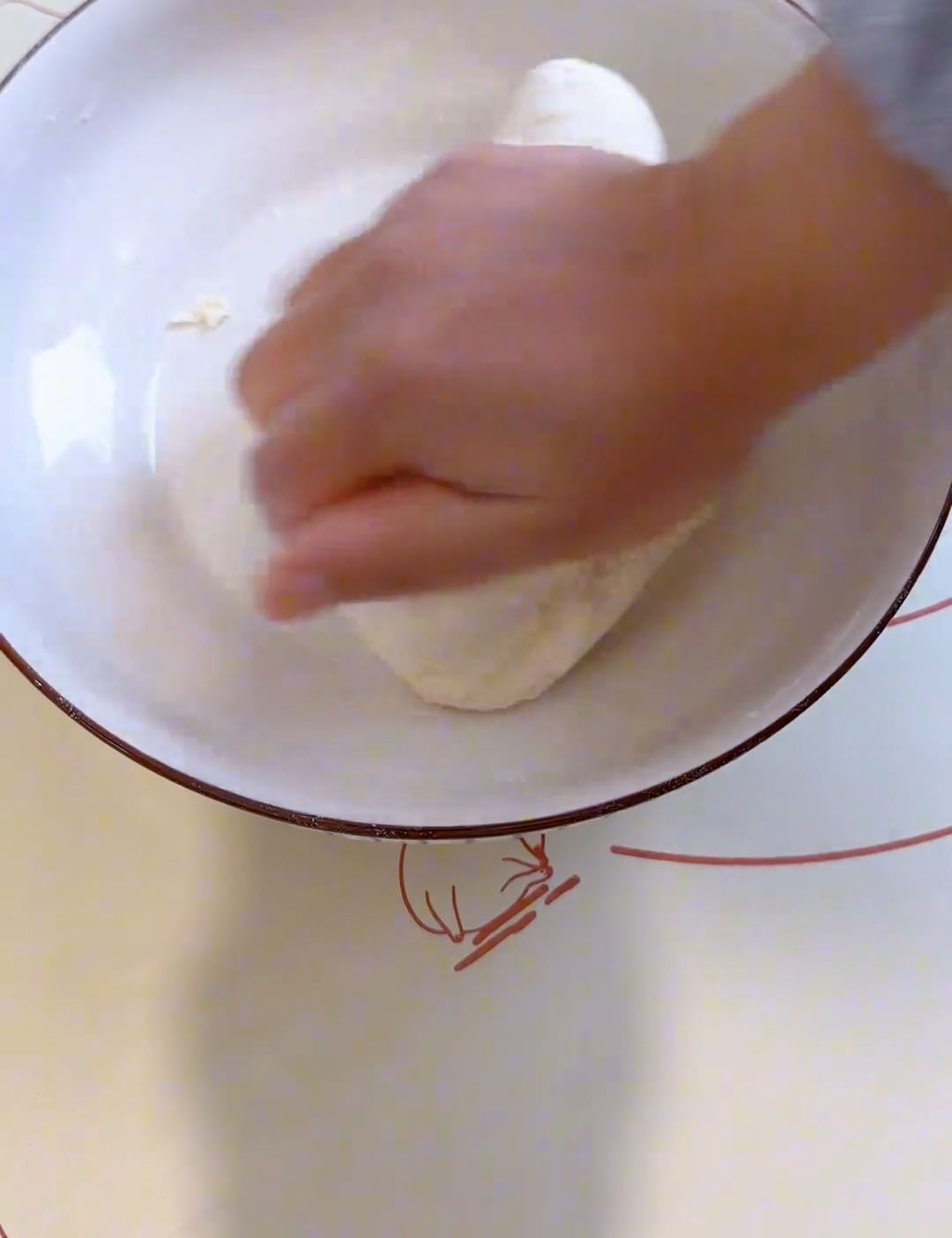
Turn the dough out onto a clean, un-floured work surface.
Begin kneading. The dough will be sticky at first. Use the heel of your hand to push the dough away from you, then fold it back over itself. Continue this motion.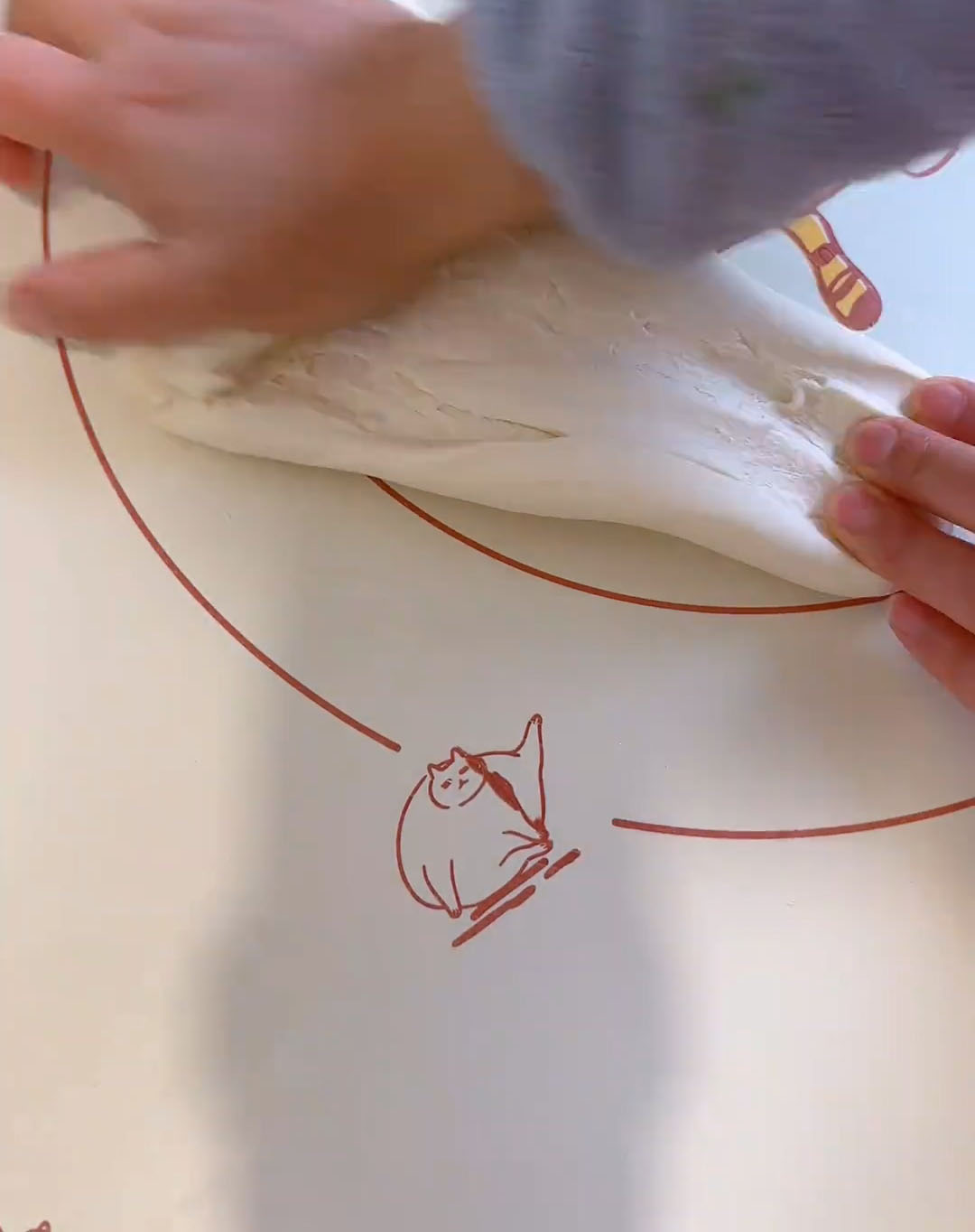
Knead vigorously for a full 12-15 minutes. This is the key to developing gluten for a smooth, elastic dough. It’s ready when it becomes very smooth, supple, and no longer sticks to your hands or the counter.
2. Shaping the Buns
Divide the dough into 2 portions.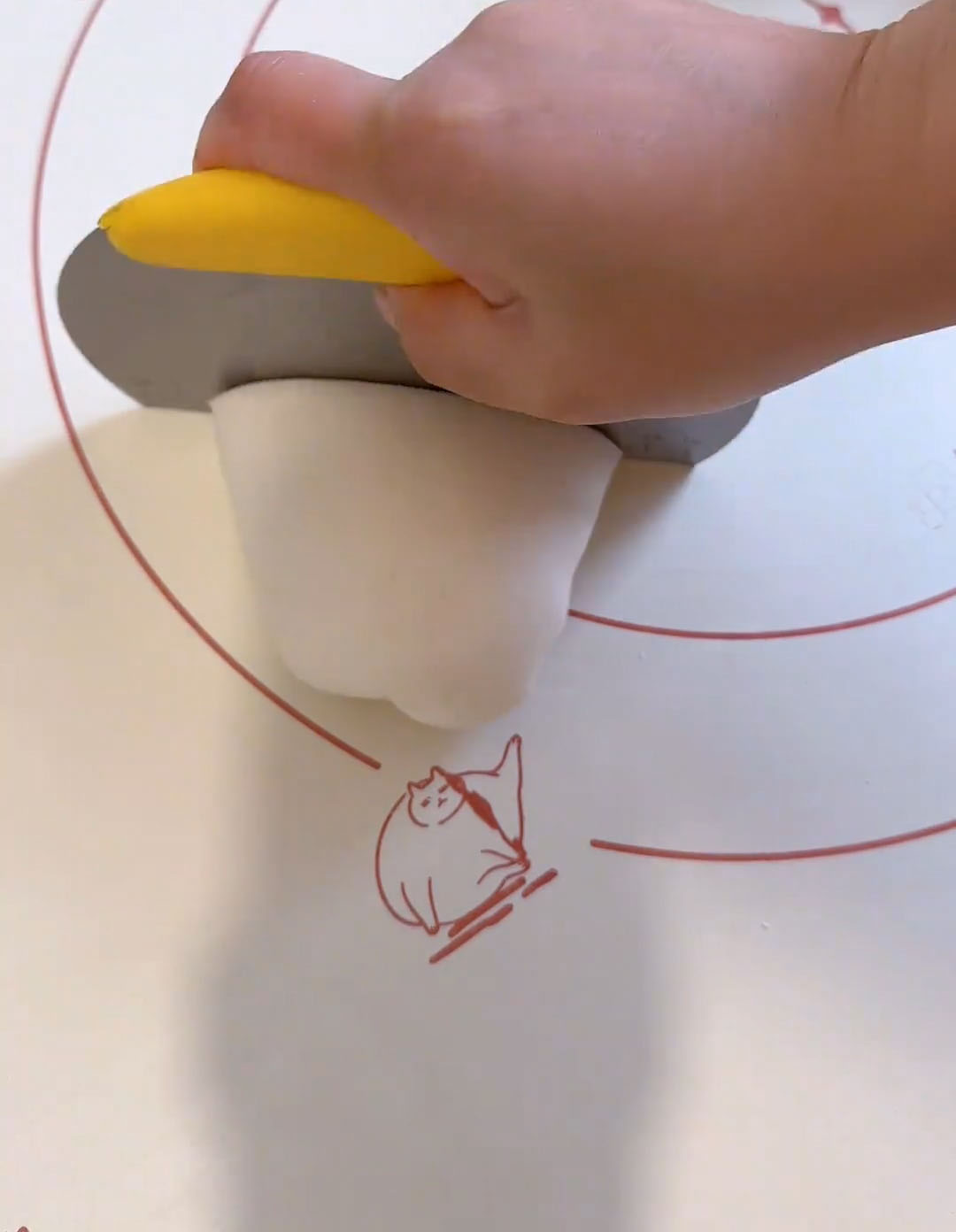
Take one portion and roll it into a strip.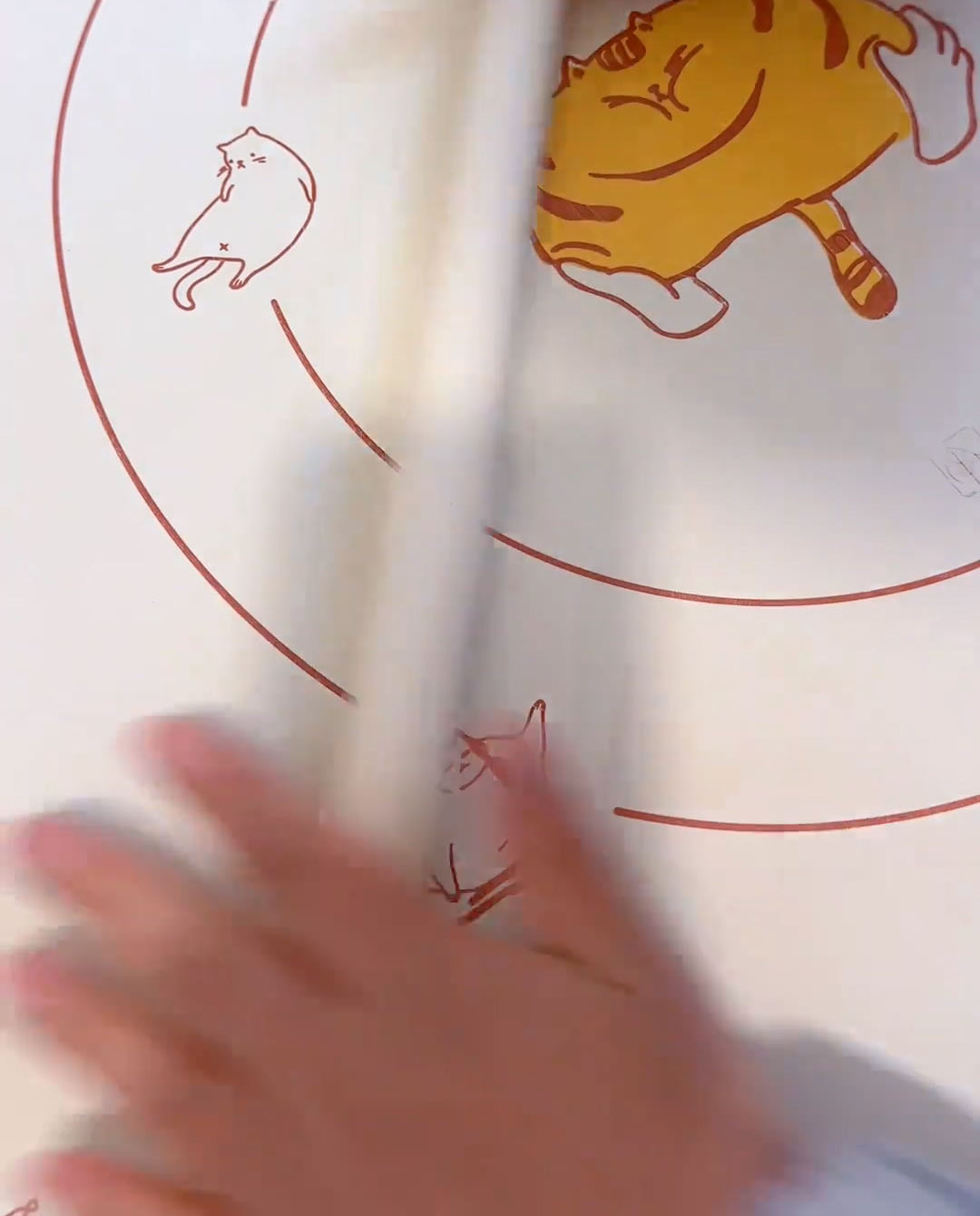
Flatten slightly with your palm and lightly roll with a rolling pin to about 5 cm wide, keeping the center slightly thicker and edges thinner.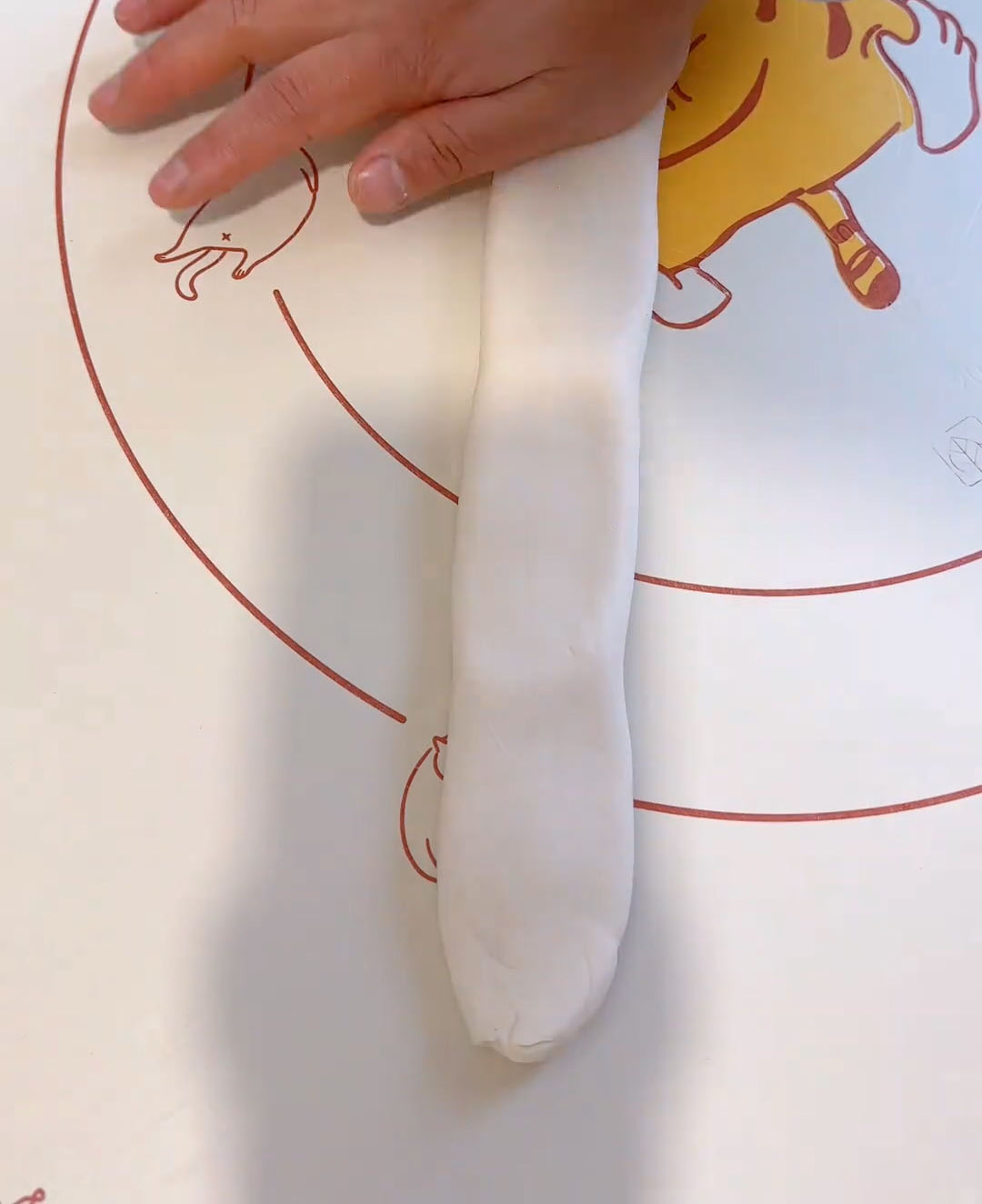
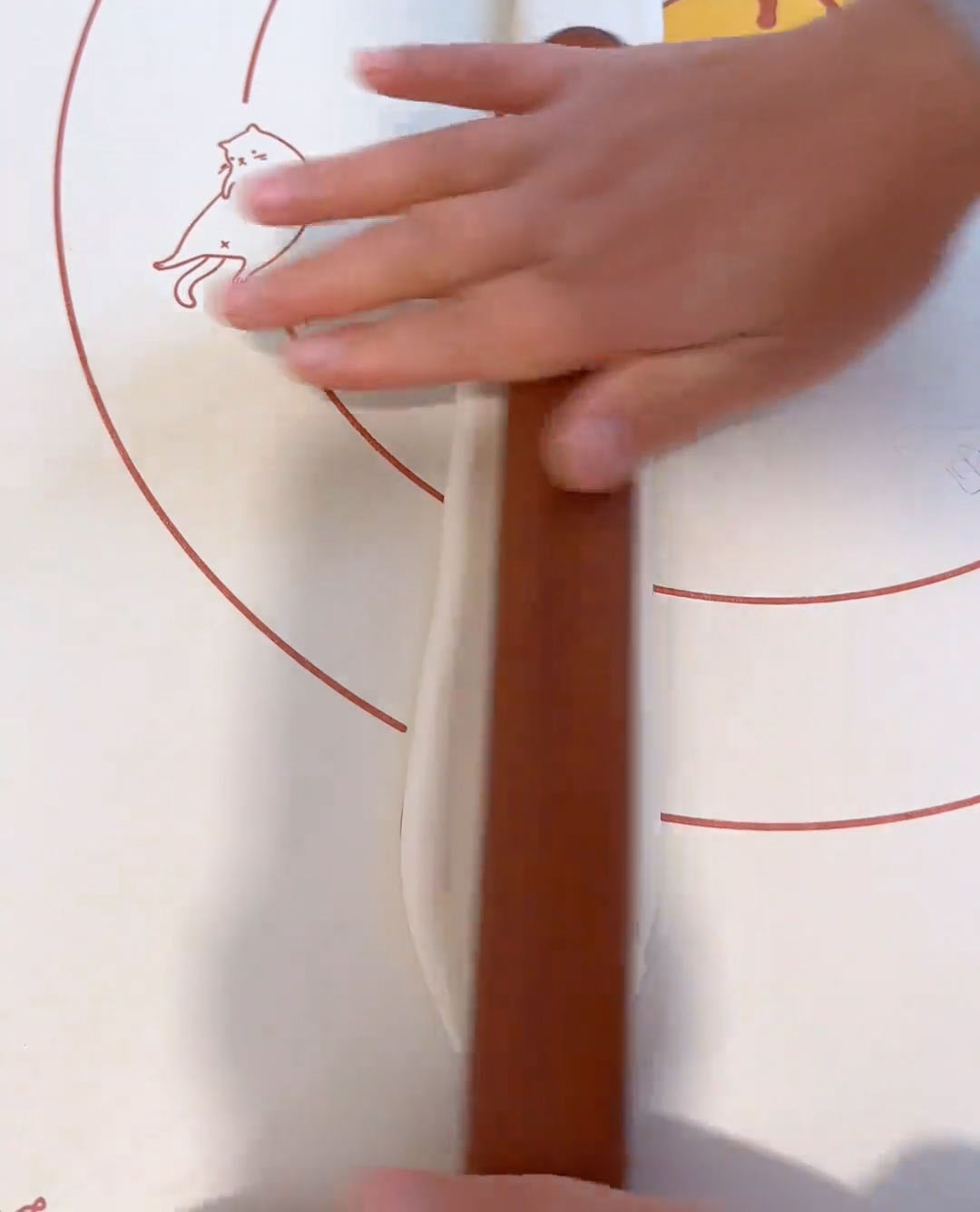 Roll the red bean paste into a strip the same length as the dough.
Place one bean paste rope down the center of the flattened dough strip.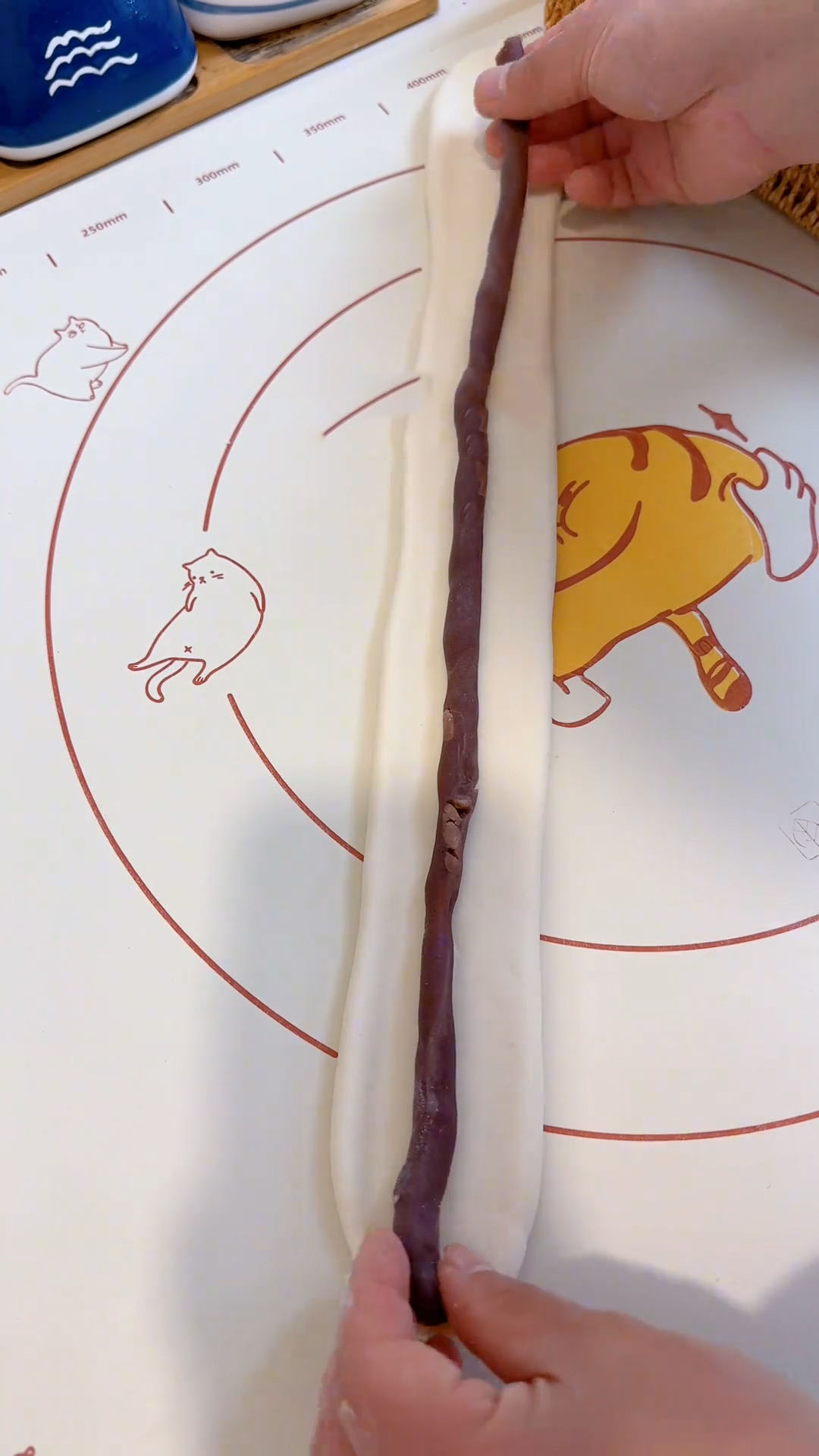
Bring the edges of the dough up and over the filling, pinching them together tightly to seal completely. You should now have a long, filled log.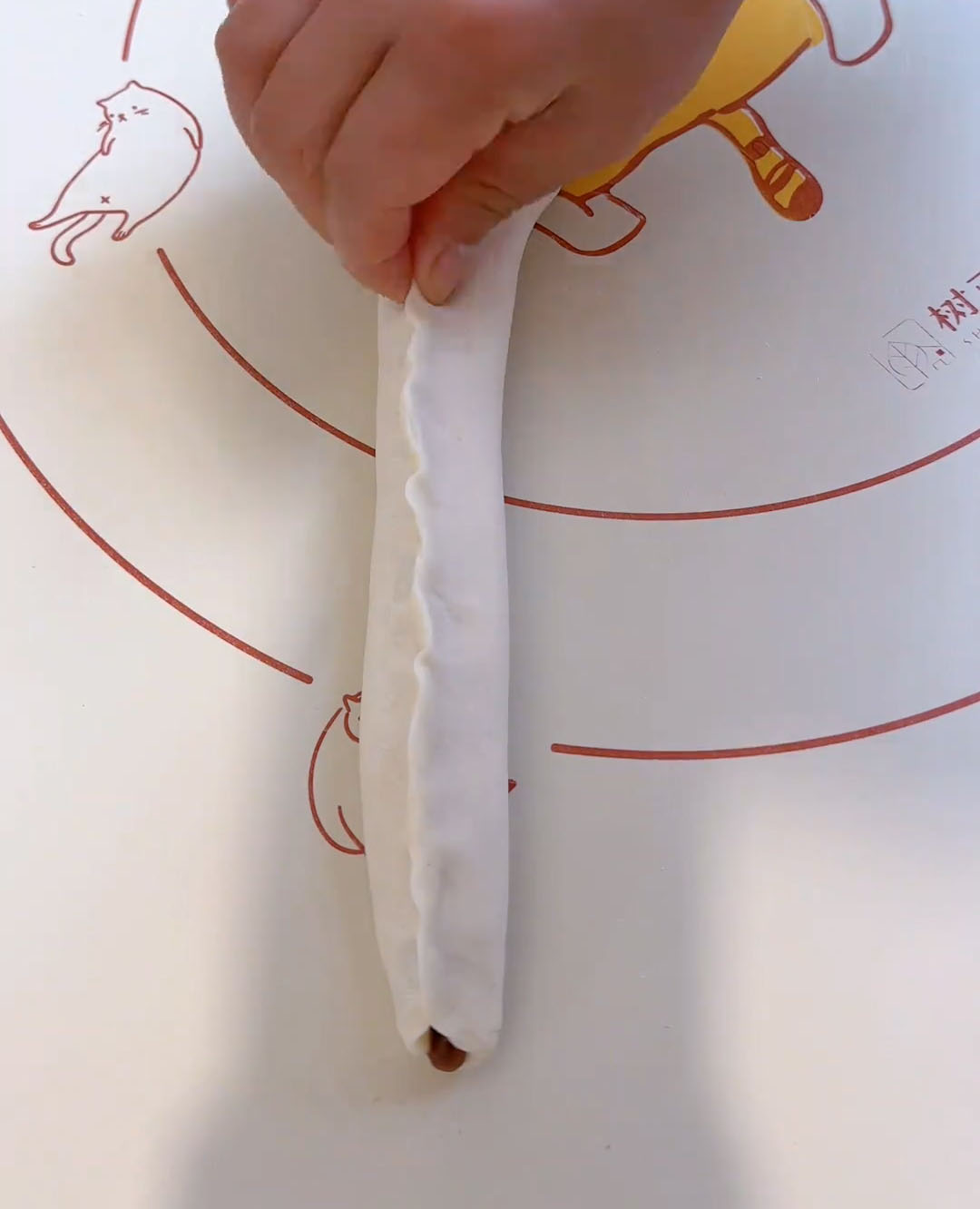
Flip the roll seam-side down.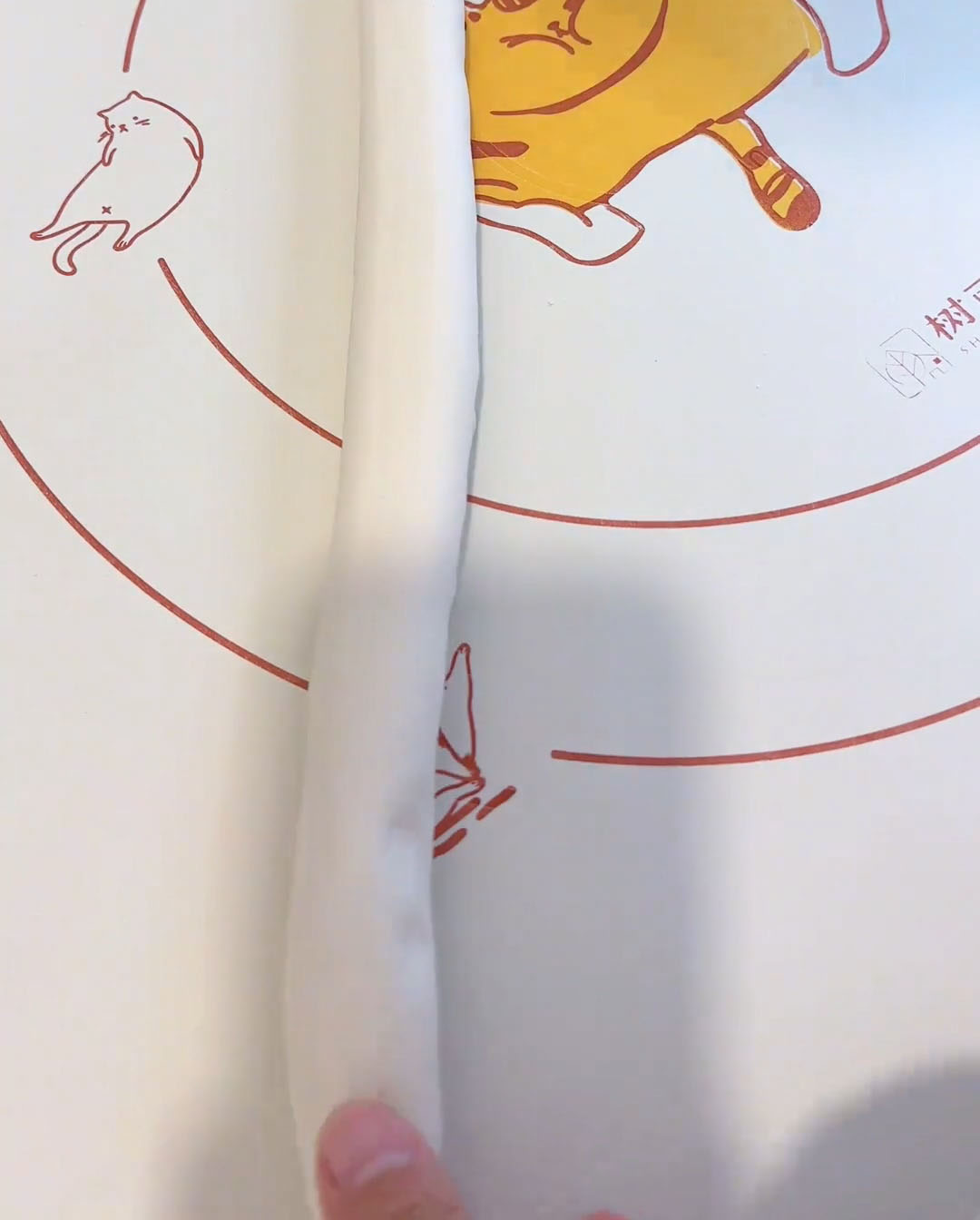
Gently roll this sealed log back and forth on the counter to even it out and create a smooth, uniform cylinder. Repeat the entire process with the second piece of dough and bean paste filling.
Using a scraper, cut into approximately 20 mini buns.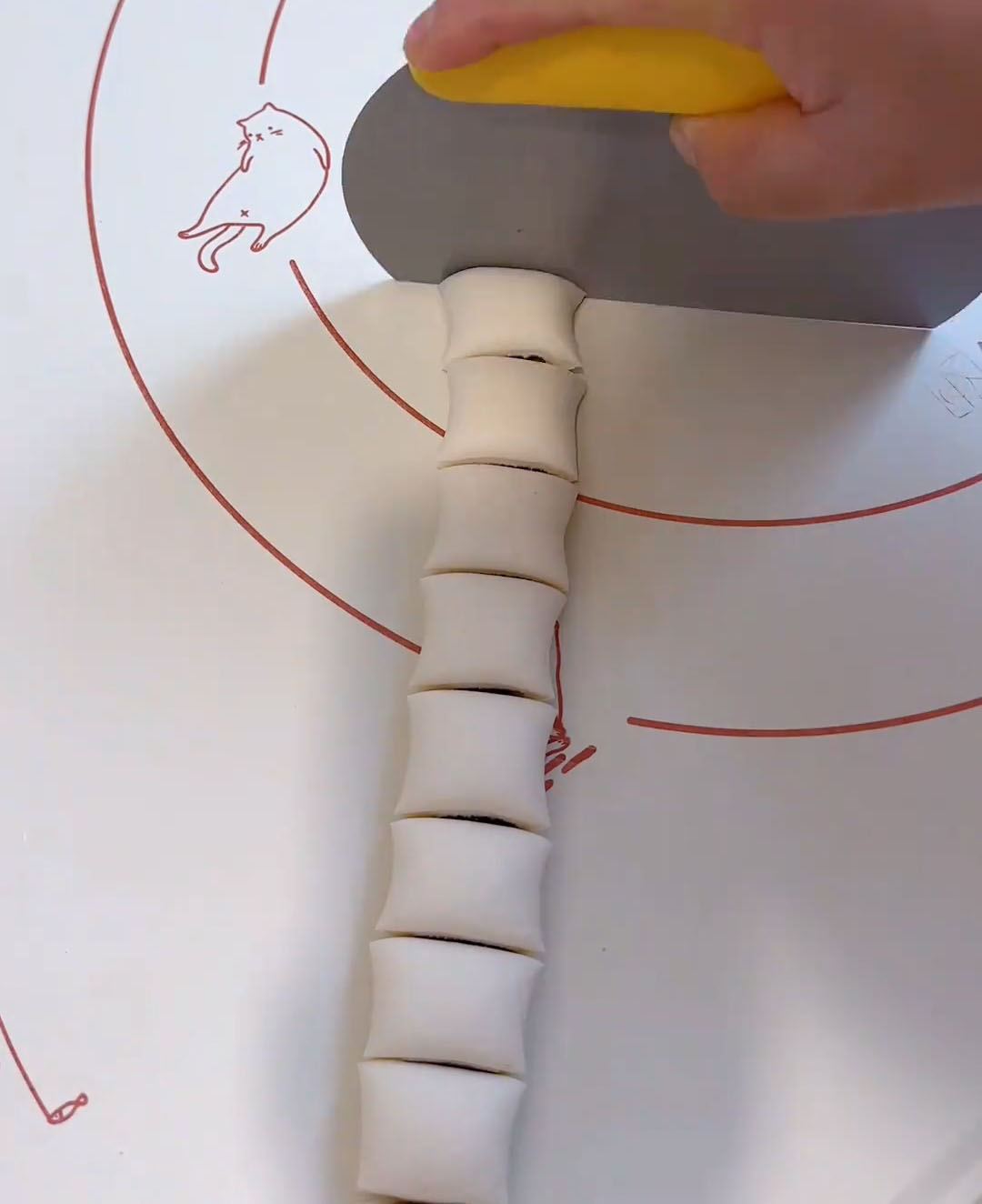
Line a steamer with a steaming cloth or parchment paper. Place the buns with about 2 cm spacing to prevent sticking. Cover and let proof over warm water until the dough volume increases by 1.5× and springs back lightly when pressed.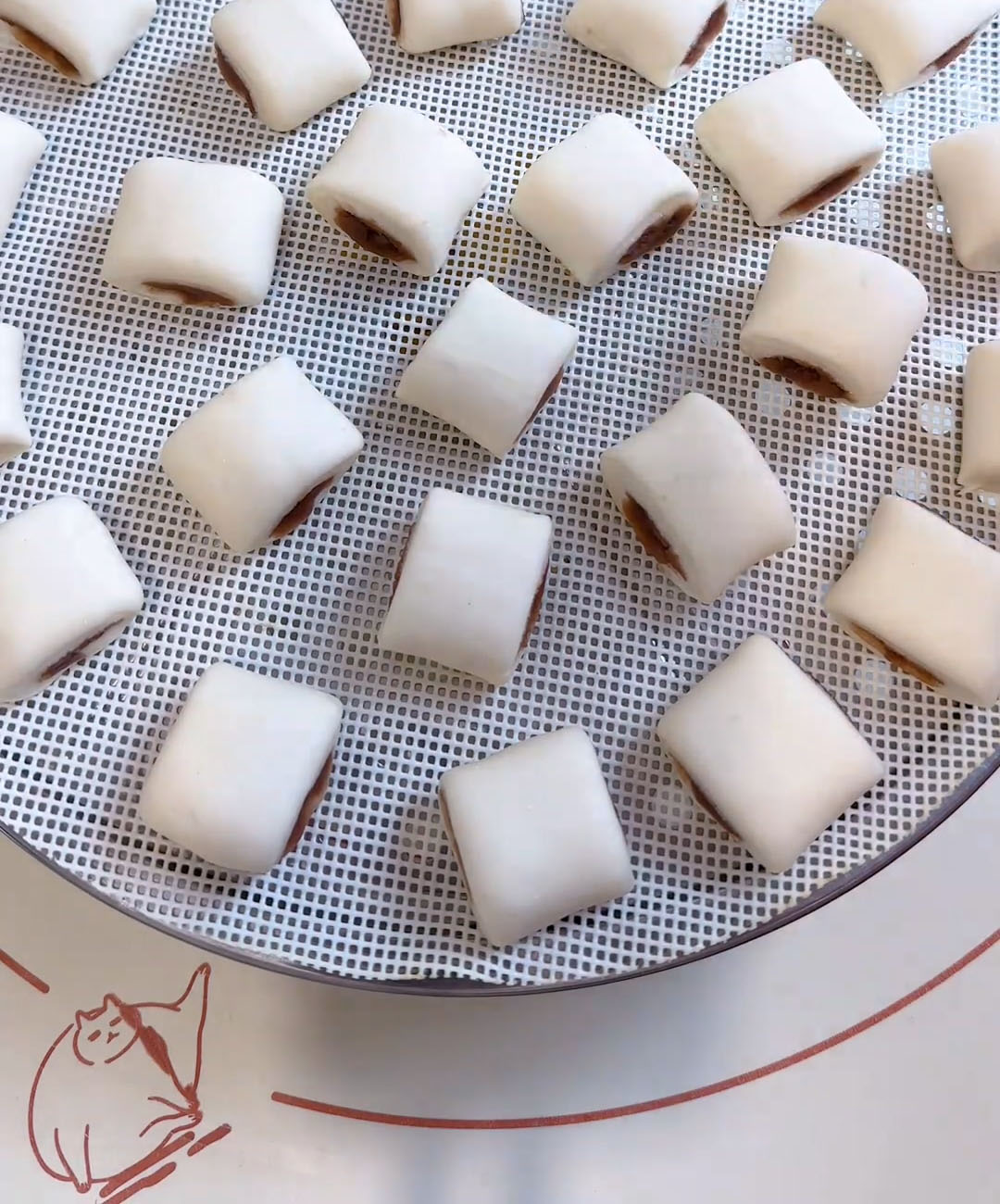
3. Steaming the Buns
Fill a steamer with enough cold water. Place proofed buns inside. Bring to a boil over high heat, then reduce to medium and steam for 13 minutes. Start timing once the water boils to ensure buns are fully cooked.
Turn off the heat but keep the lid on. Let the buns rest in residual heat for 3 minutes to ensure they stay soft and fluffy.
Carefully remove the lid and transfer buns to a plate. Let cool for 1 minute before serving. Freshly steamed buns are soft, sweet, and tender; they maintain their texture even after cooling.
Tips & Tricks
- Knead Until Truly Smooth: Don’t shortcut the kneading time. The 12-15 minutes of active kneading is what transforms a sticky mass into a silky, workable dough that will steam up beautifully.
- Seal the Filling Log Tightly: Take your time pinching the dough seam completely closed over the bean paste. Any gaps can cause the filling to leak out during steaming.
- Use Cold Water to Start Steaming: Starting with cold water allows the buns to heat up gradually with the rising steam, leading to a more even rise and preventing the outside from cooking too fast.
- The Rest is Crucial: The 3-minute rest after turning off the heat is non-negotiable. It allows the buns to set their structure and prevents them from wrinkling or collapsing.
- Don’t Overcrowd the Steamer: Give the buns plenty of room to expand. If they proof touching each other, they will bake together.
Frequently Asked Questions
My dough didn’t rise at all. What went wrong?
The most likely culprit is inactive yeast. Your water may have been too hot and killed it, or the yeast was past its expiration date. Always test yeast in a bit of warm water with a pinch of sugar—it should foam within 5-10 minutes.
The bean paste leaked out during steaming. How can I prevent this?
This happens if the dough seal wasn’t tight enough or if the dough was rolled too thin over the filling. Ensure you have a good dough “seam” and that the center of your dough strip is slightly thicker than the edges before adding the filling.
My buns came out dense and not fluffy. Why?
This could be due to a few reasons: 1) Under-kneading the dough, so gluten wasn’t developed. 2) Over-proofing the dough, which exhausts the yeast. 3) Opening the steamer lid during cooking, causing a temperature shock.

Easy Homemade Red Bean Buns – Bite-Sized & Perfect for Kids
Ingredients
For the Dough
- 300 g all-purpose flour
- 3 g granulated sugar about 3/4 tsp
- 3 g active dry yeast about 1 tsp
- 10 g lard about 2 tsp, softened
- 160 g warm water 30-35°C / 105-110°F
For the Filling & Assembly
- 150 g smooth red bean paste
Instructions
Mixing the Dough
- In a large bowl, combine all the dry dough ingredients (flour, sugar, yeast, lard) and mix well to remove any clumps.
- Gradually pour in the warm water while stirring with chopsticks until a coarse, sticky dough forms with no dry flour left.
- Using your hands, mix until a shaggy dough forms and no dry flour remains.
- Turn the dough out onto a clean, un-floured work surface.
- Begin kneading. The dough will be sticky at first. Use the heel of your hand to push the dough away from you, then fold it back over itself. Continue this motion.
- Knead vigorously for a full 12-15 minutes. This is the key to developing gluten for a smooth, elastic dough. It's ready when it becomes very smooth, supple, and no longer sticks to your hands or the counter.
Shaping the Buns
- Divide the dough into 2 portions.
- Take one portion and roll it into a strip.
- Flatten slightly with your palm and lightly roll with a rolling pin to about 5 cm wide, keeping the center slightly thicker and edges thinner.
- Roll the red bean paste into a strip the same length as the dough.
- Place one bean paste rope down the center of the flattened dough strip.
- Bring the edges of the dough up and over the filling, pinching them together tightly to seal completely. You should now have a long, filled log.
- Flip the roll seam-side down.
- Gently roll this sealed log back and forth on the counter to even it out and create a smooth, uniform cylinder. Repeat the entire process with the second piece of dough and bean paste filling.
- Using a scraper, cut into approximately 20 mini buns.
- Line a steamer with a steaming cloth or parchment paper. Place the buns with about 2 cm spacing to prevent sticking. Cover and let proof over warm water until the dough volume increases by 1.5× and springs back lightly when pressed.
Steaming the Buns
- Fill a steamer with enough cold water. Place proofed buns inside. Bring to a boil over high heat, then reduce to medium and steam for 13 minutes. Start timing once the water boils to ensure buns are fully cooked.
- Turn off the heat but keep the lid on. Let the buns rest in residual heat for 3 minutes to ensure they stay soft and fluffy.
- Carefully remove the lid and transfer buns to a plate. Let cool for 1 minute before serving. Freshly steamed buns are soft, sweet, and tender; they maintain their texture even after cooling.



Leave a Reply