
When I was younger, Chinese-style Swiss rolls were a treat I could only enjoy from bakery shops.
At that time, very few households owned an oven, so cakes like these felt extra special.
I still remember the soft, airy sponge and that familiar, comforting sweetness—it’s a flavor I’ve always been nostalgic about.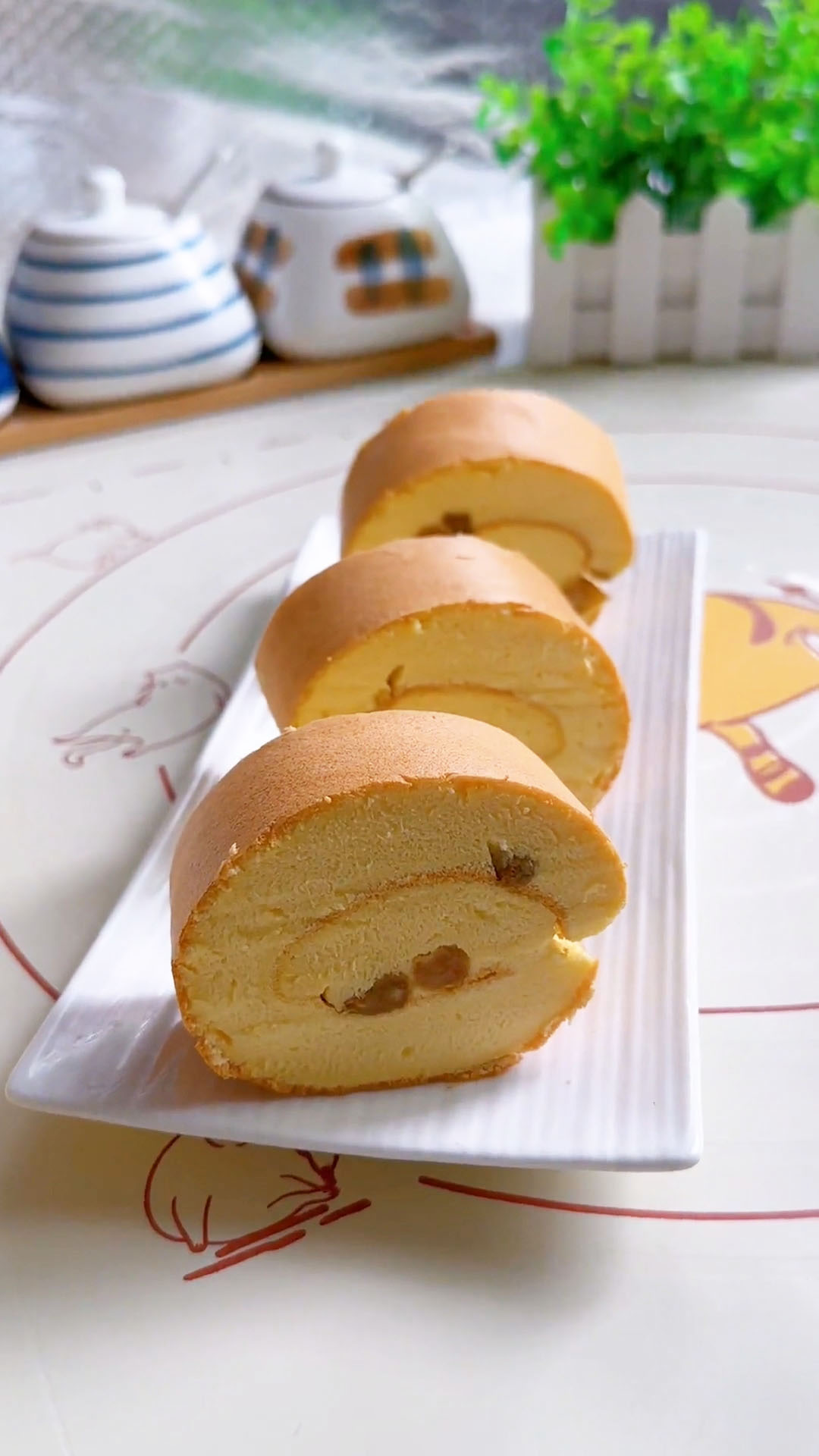
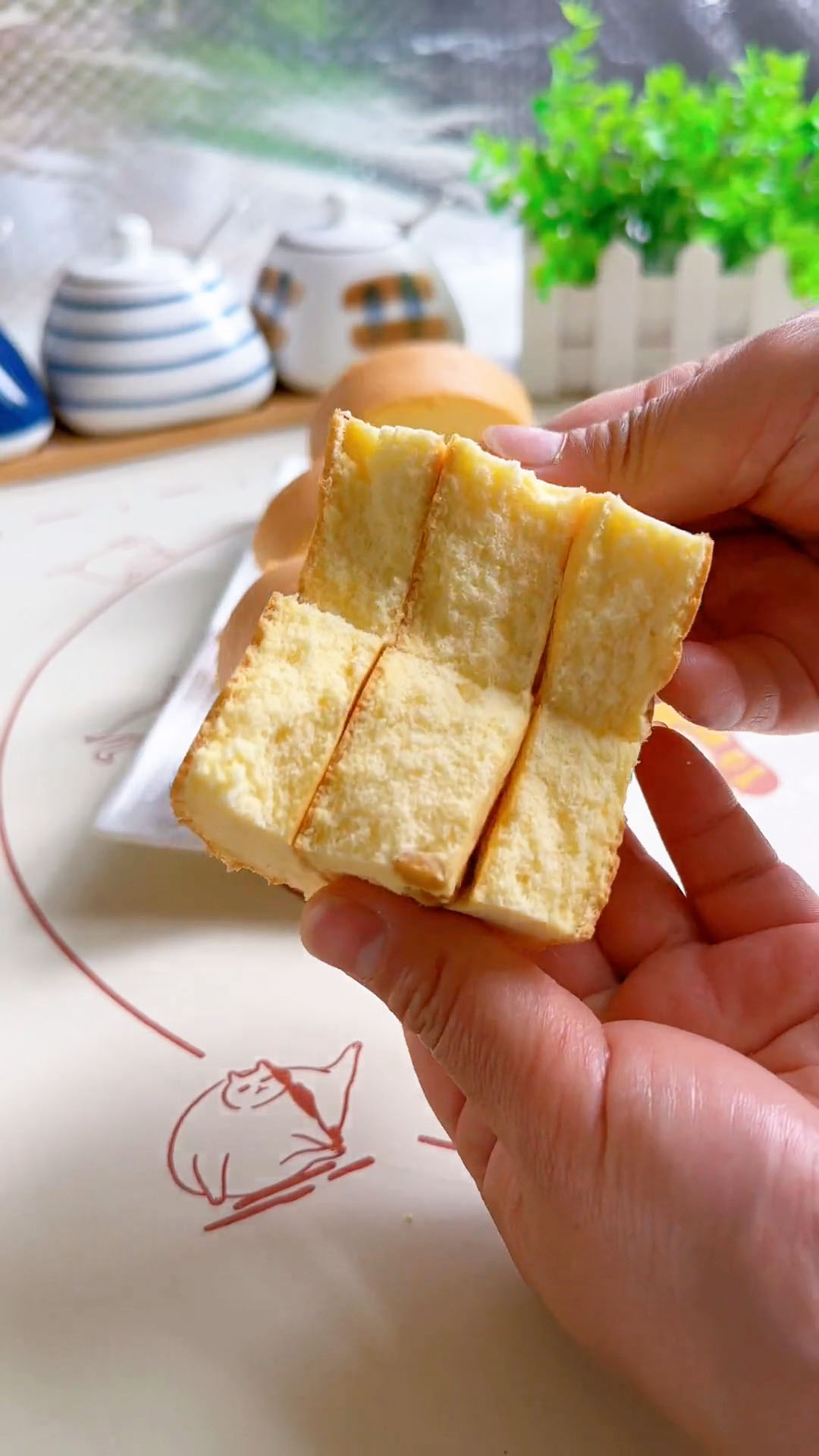
Now, I can make this kind of cake at home whenever I want, whether steamed or baked.
Being able to recreate that childhood taste in my own kitchen feels incredibly satisfying.
Even better, when I make it for my kids, they love it just as much, and watching them enjoy something that once meant so much to me makes it even more special.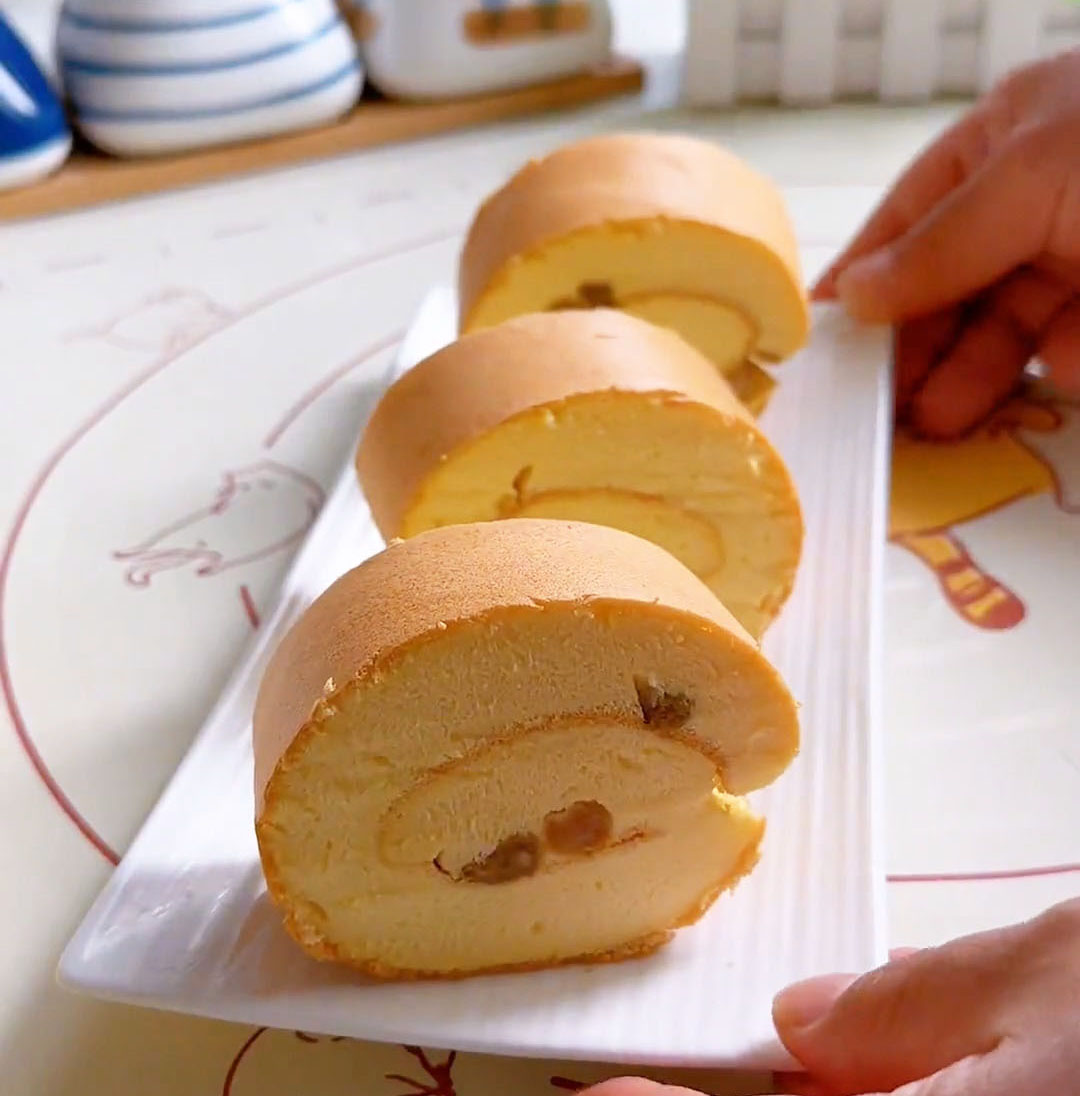
Ingredients and Substitutions
- Whole Milk – I recommend using whole milk for the richest flavor and to help create a tender, moist crumb. It’s the primary liquid that blends with the oil to form the base of our batter.
- Corn Oil – This neutral-tasting oil is perfect for keeping the cake incredibly moist and soft, even after refrigeration. Its light flavor won’t compete with the delicate taste of the sponge. Another neutral oil like sunflower or canola works as a fine substitute.
- Eggs – We’ll be separating the yolks and whites. The yolks add richness, color, and structure to the batter, while the whites, when whipped, are the key to the cake’s signature light and airy rise.
- White Vinegar / Lemon Juice – Just a few drops are a baker’s secret weapon. The acid helps stabilize the whipped egg whites (meringue), making them less likely to collapse when folded into the batter, which is essential for a tall, soft cake.
- Cake Flour – This is the non-negotiable flour for a tender Swiss roll. Its low protein content means less gluten forms, resulting in that signature soft, delicate texture that can bend without breaking. Using all-purpose flour will make the cake denser and more likely to crack.
- Granulated Sugar – We add all the sugar to the egg whites. Adding it gradually while whipping helps create a stable, glossy meringue that provides the cake’s structure and a light sweetness.
- Raisins – Soaking the raisins in warm water before baking is a crucial step. It plumps them up, making them juicy and tender in the final cake, and prevents them from burning or becoming hard, bitter nuggets during baking.
How to Make Raisin Chinese Swiss Roll
1. Preparation
Soak the raisins in clean water for 15 minutes, then drain well and set aside.
Line a baking tray with parchment paper, making sure it fits snugly against the sides.
Separate the egg yolks and egg whites into two bowls.
2. Make the Egg Yolk Batter
In a large bowl, combine the milk and corn oil. Whisk thoroughly until fully emulsified, with no visible oil droplets.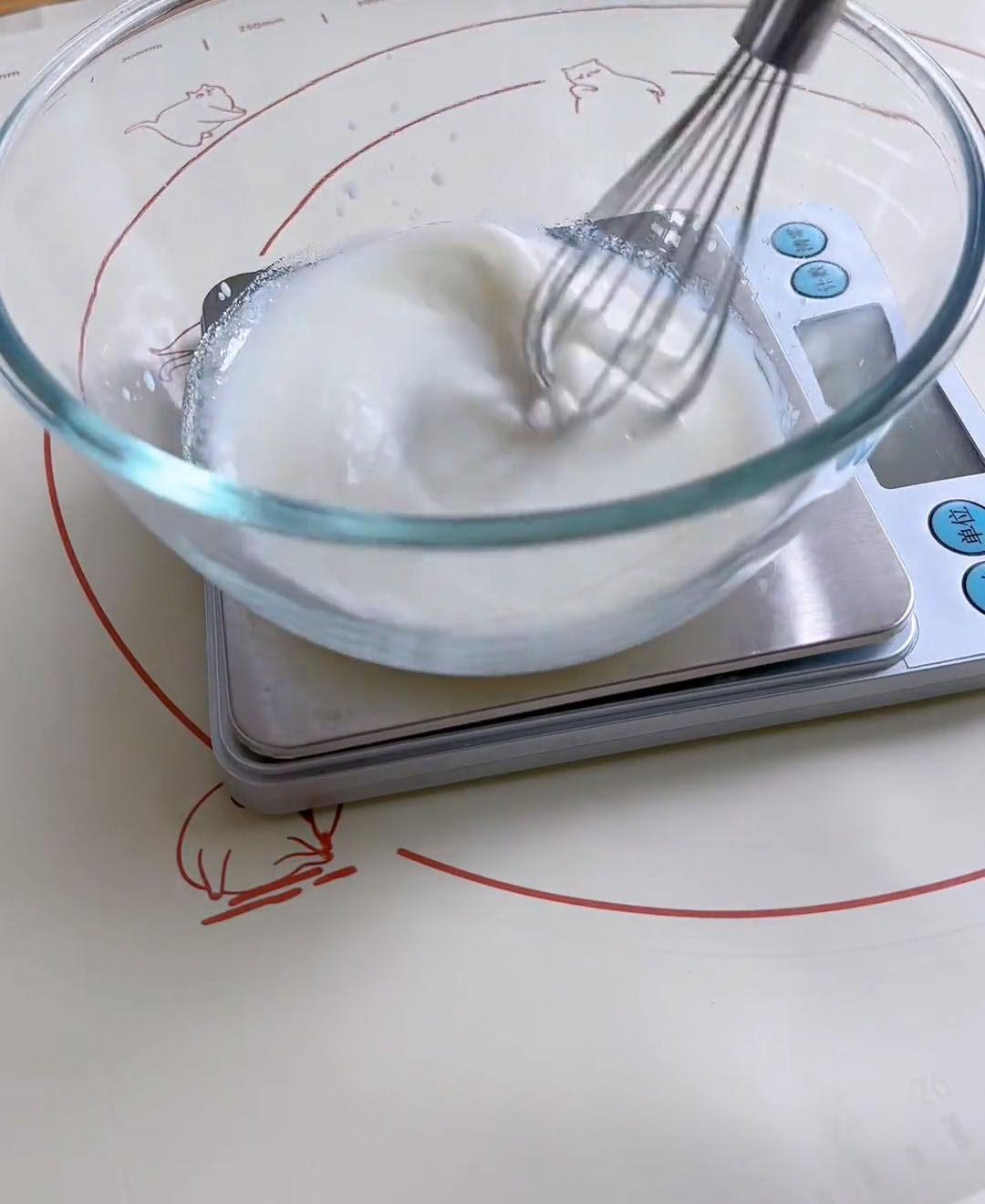
Sift the cake flour directly into the mixture and gently mix using a straight-line motion until no dry flour remains. Avoid circular stirring to prevent gluten development.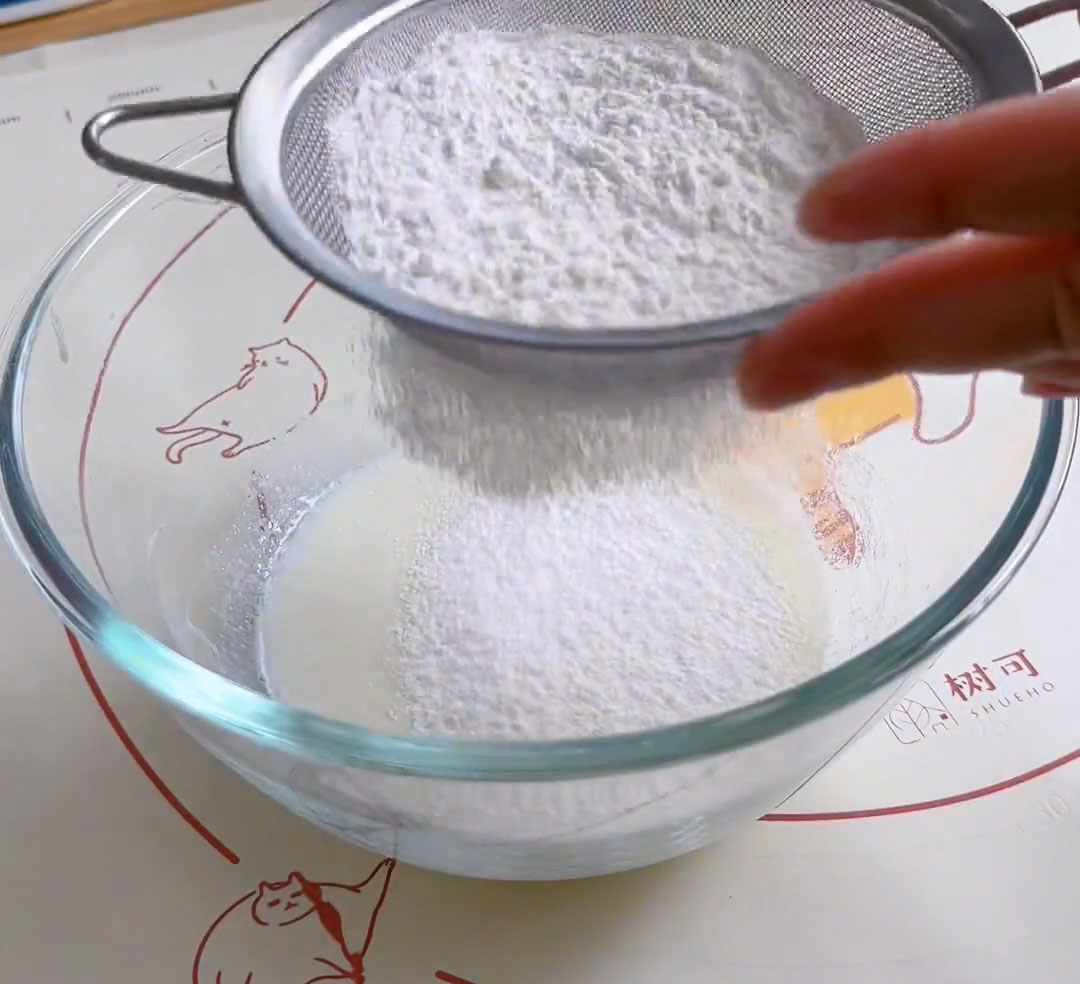
Add the egg yolks and continue mixing with the same motion until the batter is smooth, fine, and lump-free. Set aside.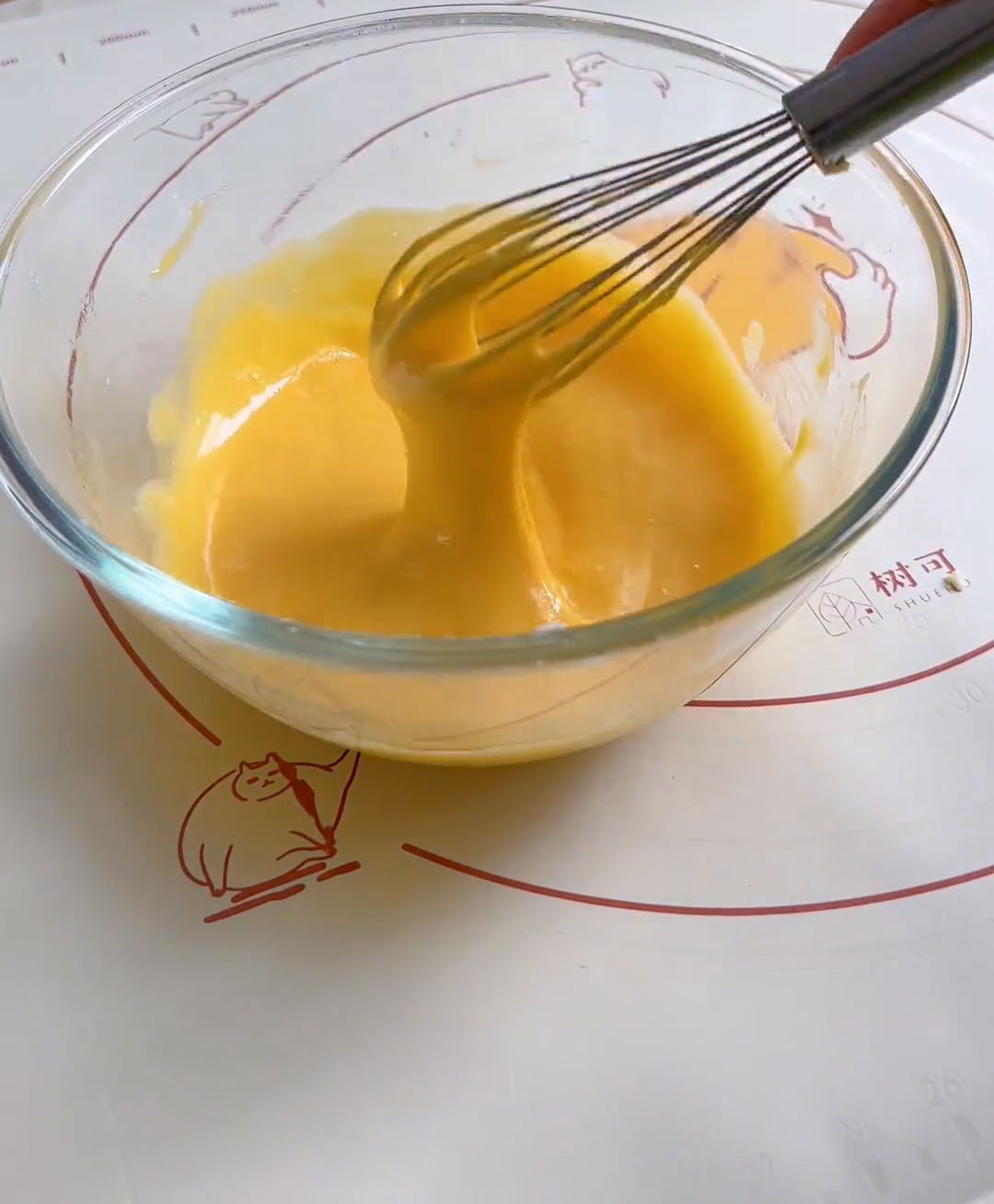
3. Whip the Egg Whites
Place the egg whites and vinegar or lemon juice into a clean, dry, oil-free bowl.
Using an electric mixer on low speed, beat for about 30 seconds until fine bubbles form.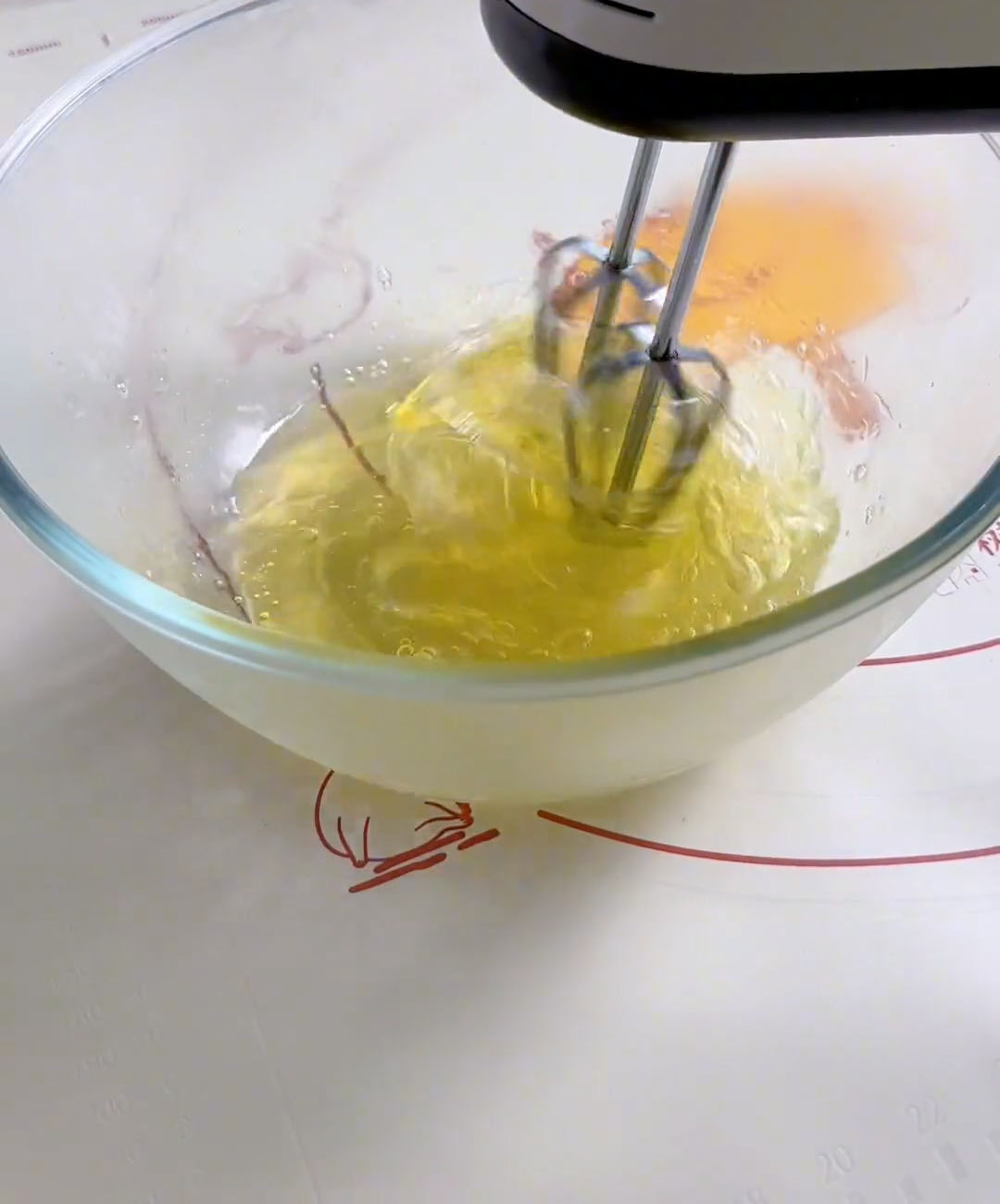
Add the sugar in three additions:
- First addition: beat on low speed until the bubbles disappear
- Second addition: beat on medium speed until fine lines appear
- Third addition: beat on high speed until soft peaks form
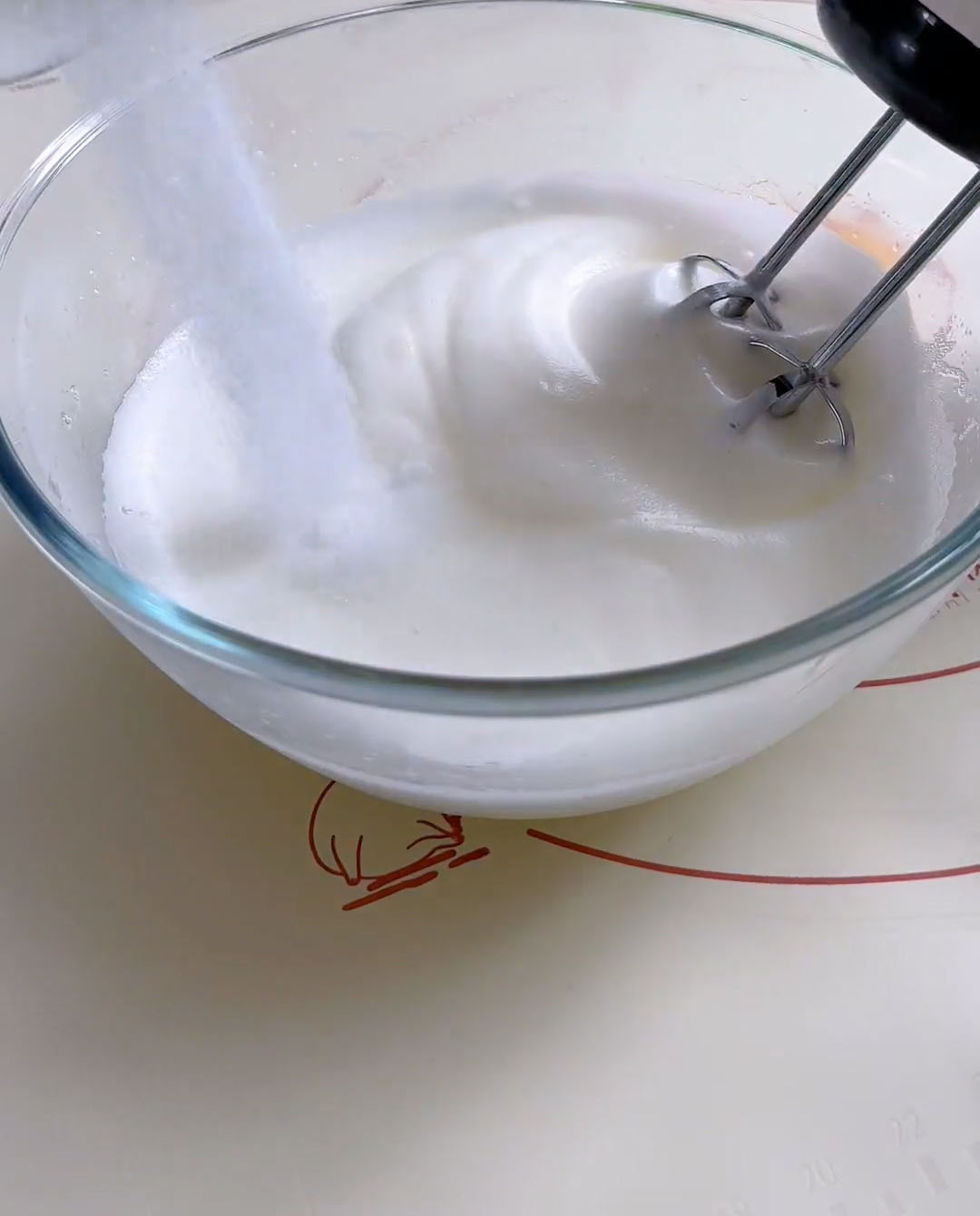
The meringue should form a large curved hook when lifting the whisk and should not slide when the bowl is inverted.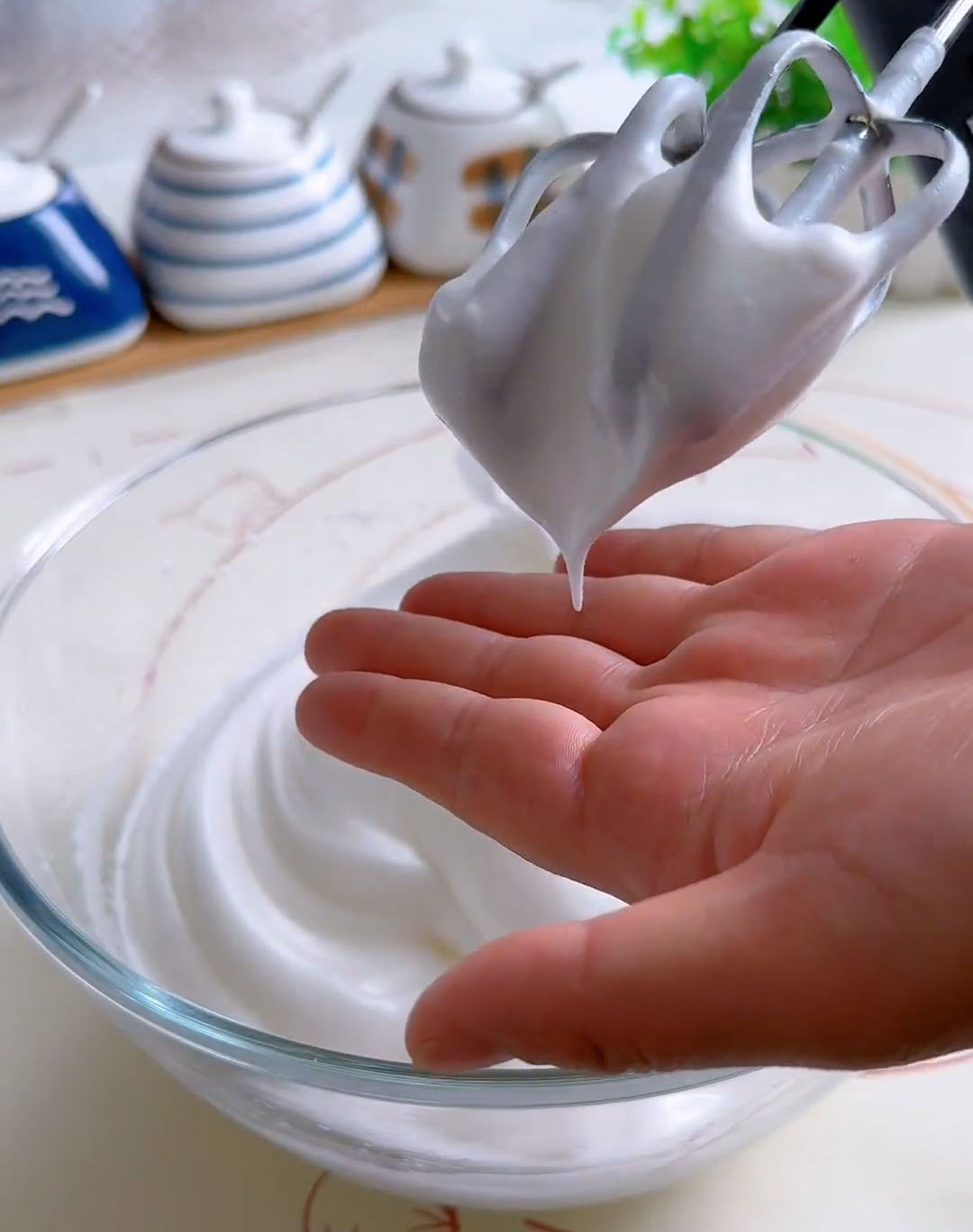
4. Combine the Batter
Fold one-third of the meringue into the egg yolk batter using a spatula, lifting gently from the bottom up to loosen the mixture.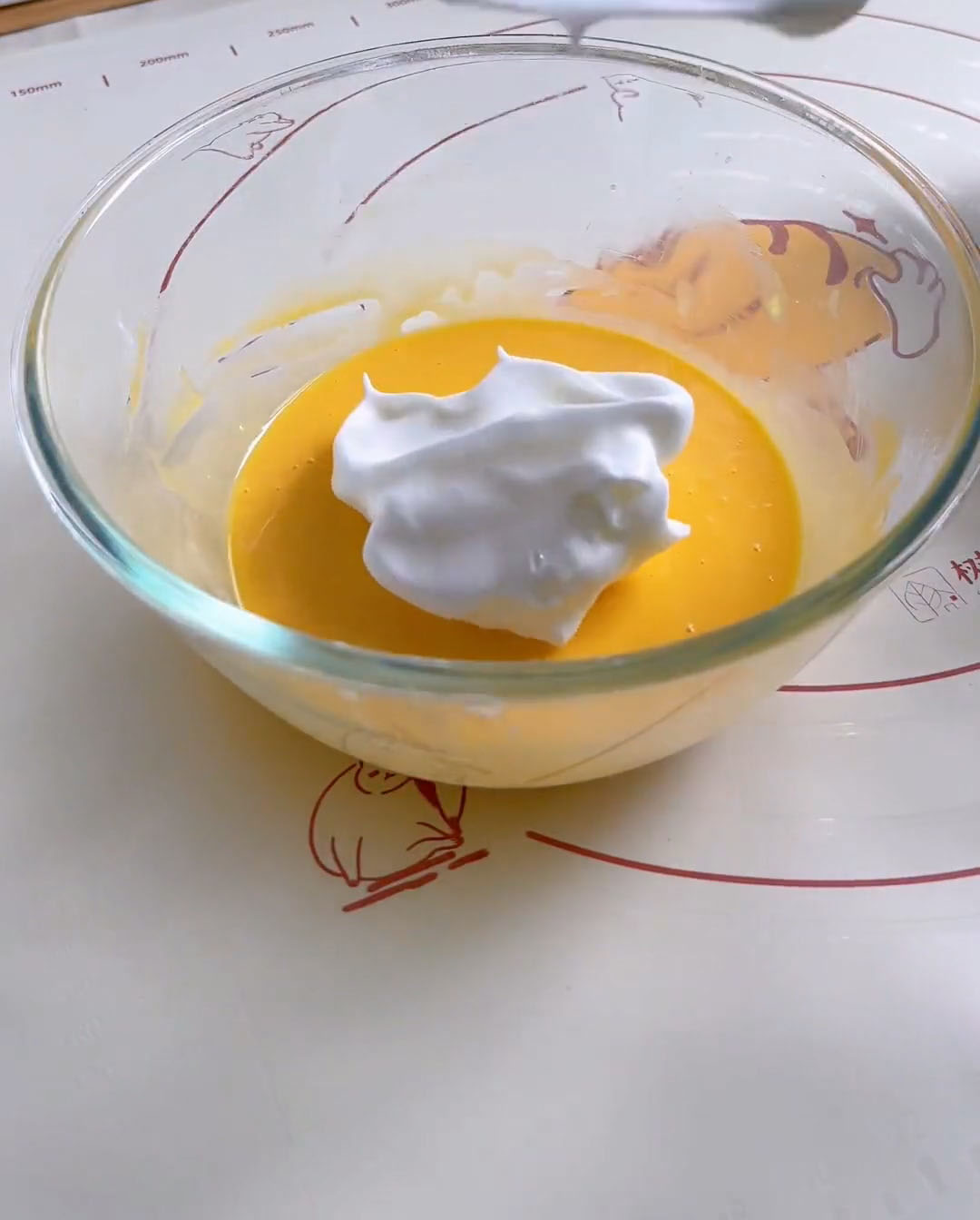
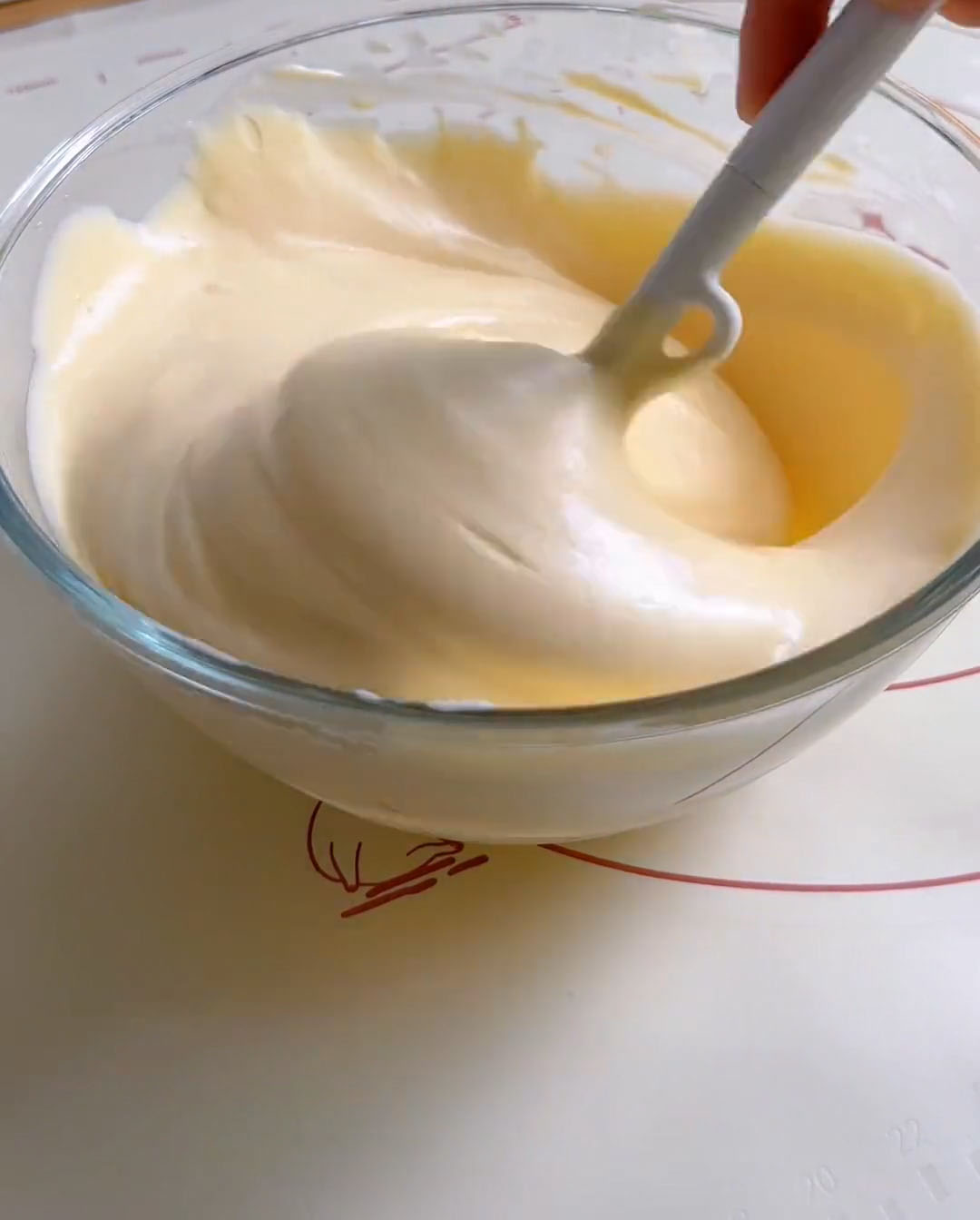
Pour the combined batter back into the remaining meringue and fold gently but quickly until no white streaks remain and the batter looks smooth and glossy.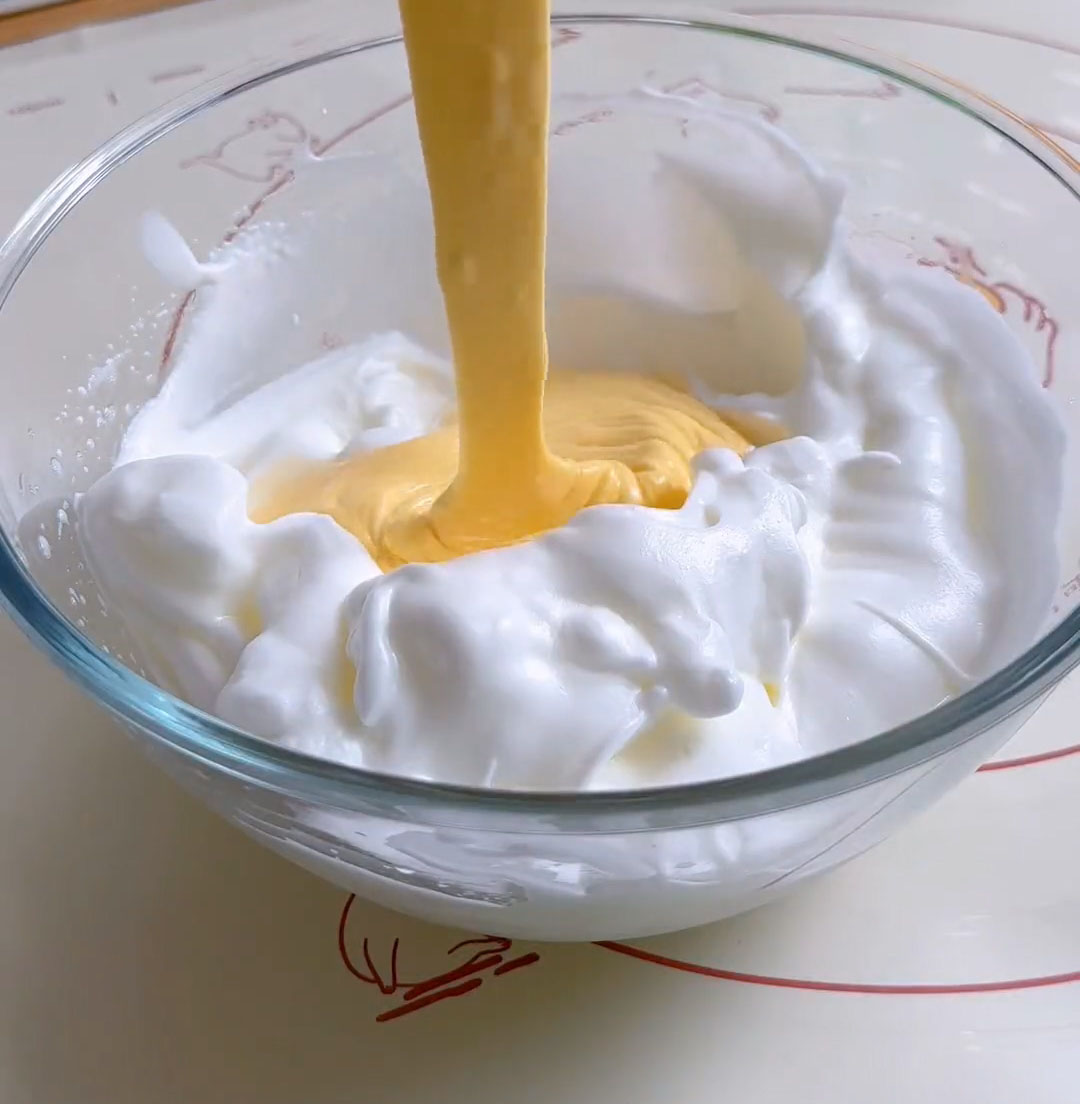
5. Bake
Evenly scatter the drained raisins over the lined baking tray.
Pour the batter onto the tray from about 20 cm above, then gently level the surface.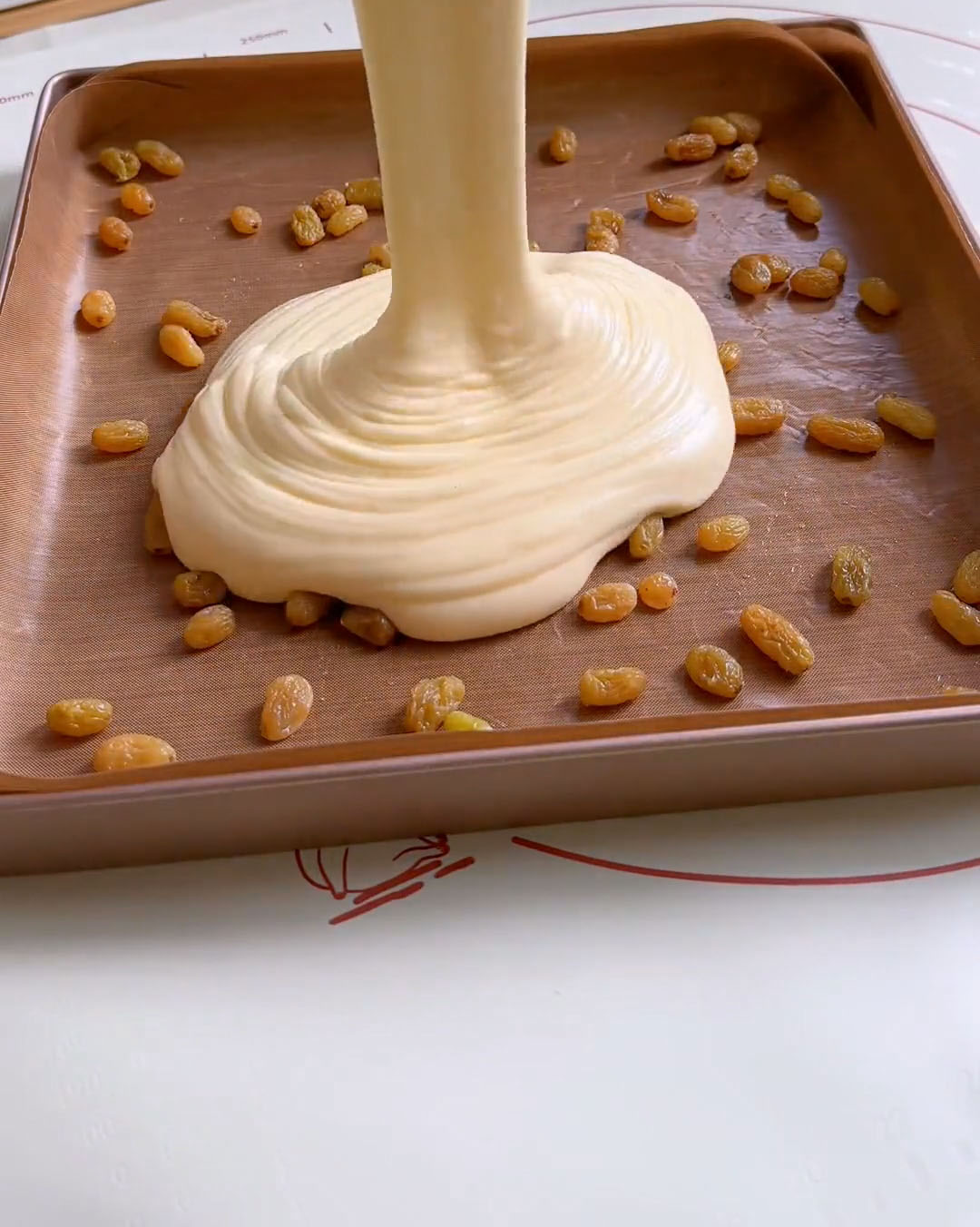
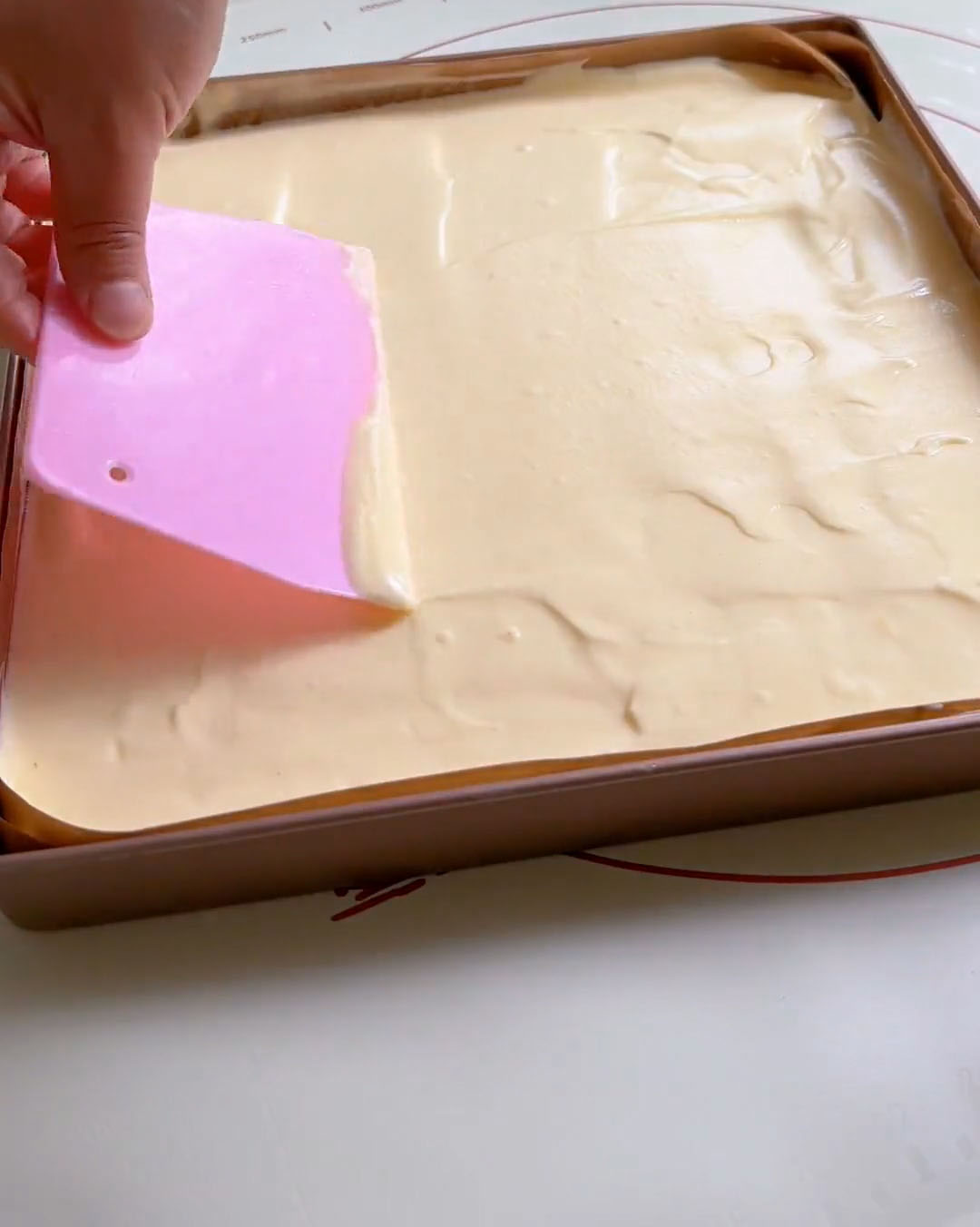
Tap the tray lightly 3–5 times to release large air bubbles.
Preheat the oven for 10 minutes.
Bake on the middle rack at 150°C top heat / 145°C bottom heat for 30 minutes, until the surface is lightly golden and springs back when pressed.
6. Cool and Roll
As soon as the cake comes out of the oven, carefully lift it (using the parchment paper) onto a cooling rack. Let it cool for only 2-3 minutes, until it’s just cool enough to handle but still very warm and pliable.
Place a fresh, clean piece of parchment paper (larger than the cake) on your counter. Carefully invert the warm cake onto this new paper and peel off the baked parchment layer from the bottom (now the top).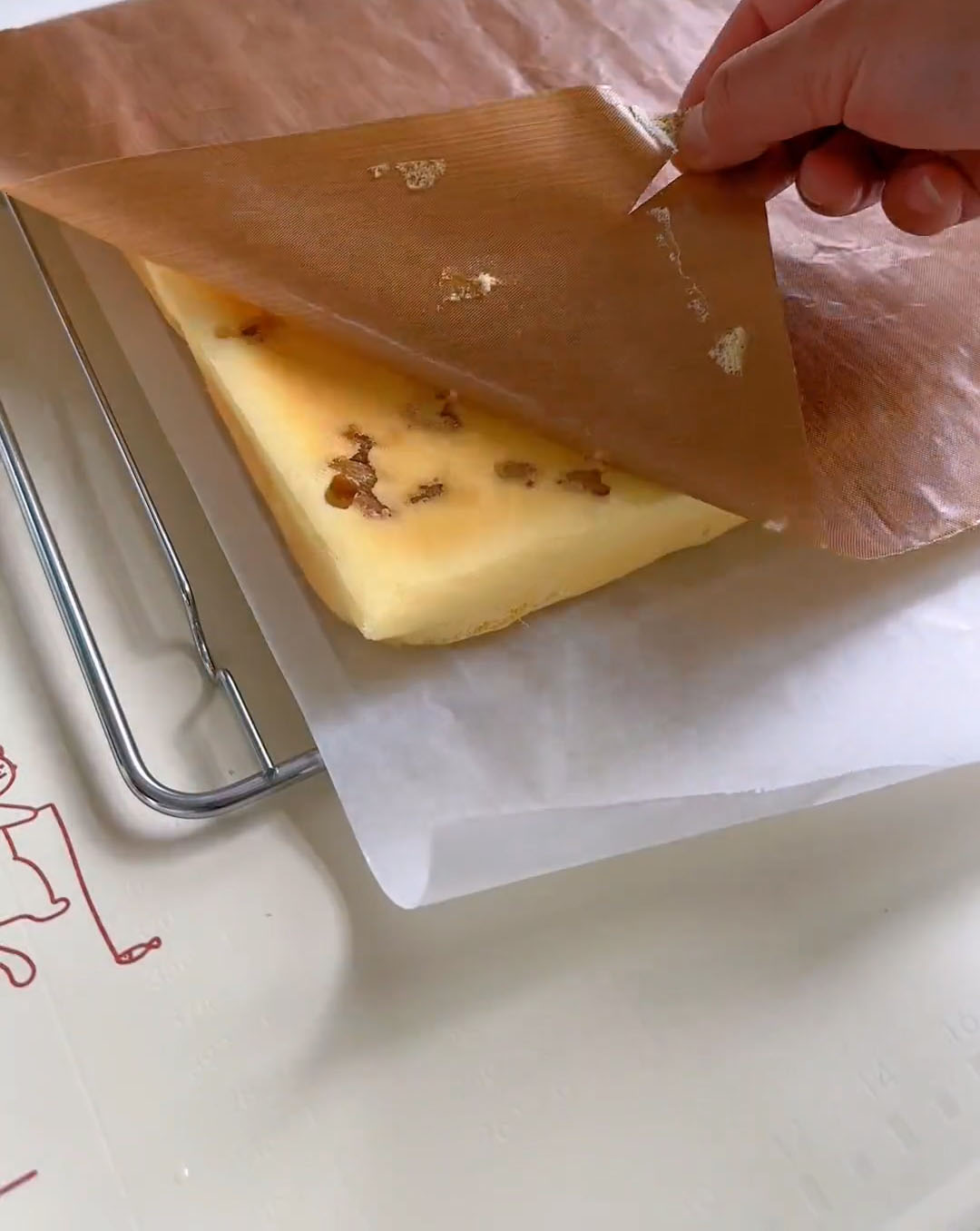
While the cake is still warm, start rolling it from one of the shorter ends. Use the new parchment paper to help you roll, creating a tight spiral. Don’t press too hard.
(For a detailed rolling technique, refer to my Pork Floss Roll Cake tutorial.)
Refrigerate for 20 minutes to set, then slice into pieces about 5 cm wide and serve.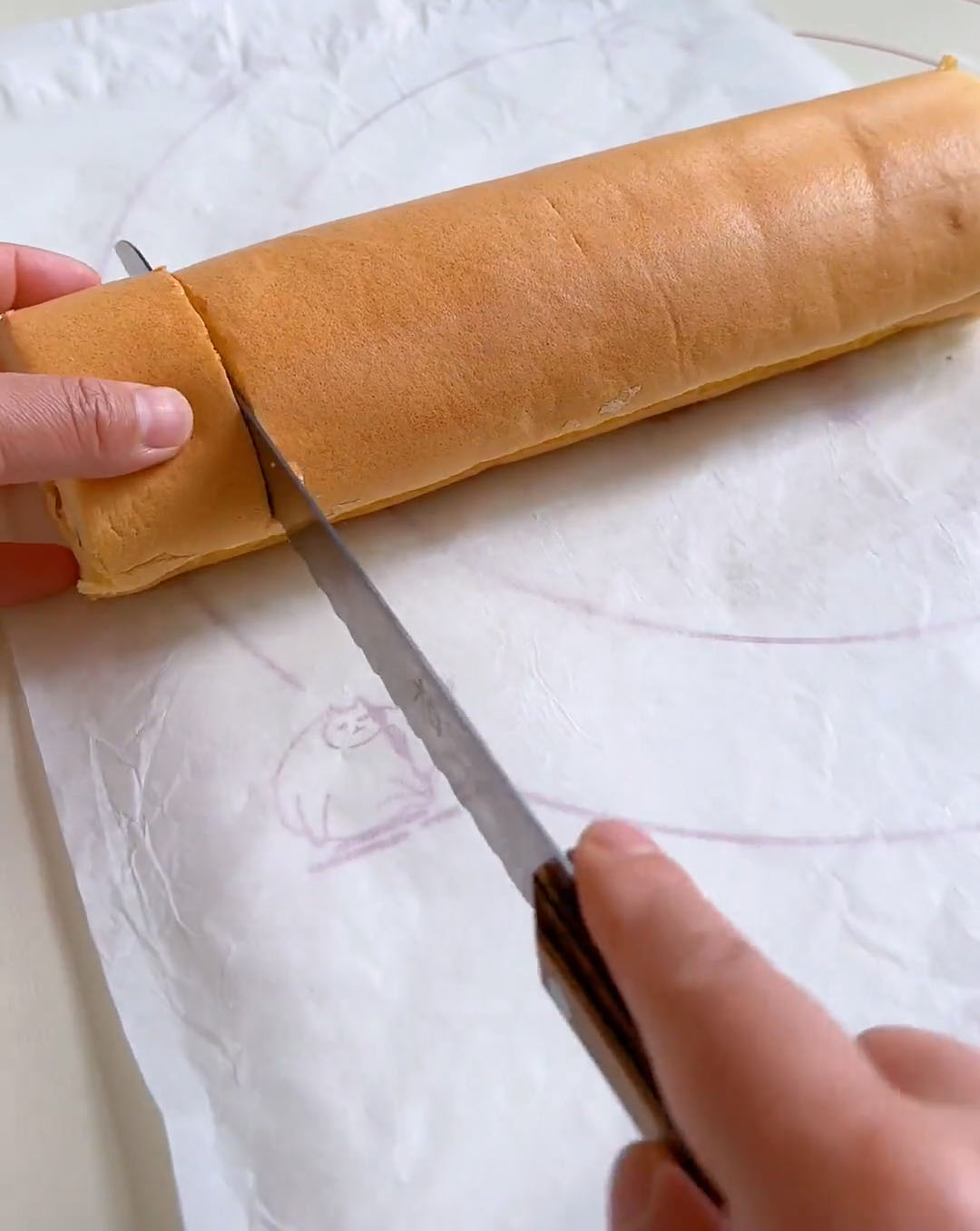
Tips & Tricks
- The “Soft Peak” Meringue is Non-Negotiable: This is the single most important step for a rollable cake. Stiff peaks make the cake spongy and prone to cracking. Under-whipped meringue will cause the cake to be dense and flat.
- Fold, Don‘t Stir: Always use a folding motion with a spatula when combining meringue and batter. Stirring will deflate all the precious air you just whipped in.
- Roll While Warm: Rolling the cake while it’s still warm and flexible “trains” its memory. Letting it cool completely while rolled ensures it will hold its shape beautifully when sliced.
- Use a Serrated Knife for Slicing: For the cleanest cuts that won’t squish your delicate cake, use a long, thin serrated bread knife and a gentle sawing motion. Wiping the blade between cuts helps too.
Frequently Asked Questions
My cake cracked when I rolled it. What happened?
This is usually due to one of three things: 1) The meringue was whipped too stiff (past soft peaks), making the cake less flexible. 2) The cake was overbaked and dried out. 3) You let the cake cool completely before attempting the first roll. You must roll it while it’s still warm and pliable.
Can I add a cream filling?
Absolutely! Once the cake is completely cool after its initial “setting” roll, you can gently unroll it, spread an even layer of sweetened whipped cream, pastry cream, or jam over the surface (leaving a small border), and then re-roll it. Chill for an hour before slicing.
Why did my cake deflate or turn out dense?
This is almost always because the meringue was under-whipped or it deflated during folding. Ensure your meringue reaches the proper soft-peak stage and fold with a very gentle hand, just until combined. Also, make sure your oven is properly preheated.
How do I store the Swiss roll?
Store the rolled cake, well-wrapped in plastic wrap or in an airtight container, in the refrigerator for up to 3 days. The cool environment helps it retain its shape and moisture.
Can I freeze the Swiss roll?
Yes, you can. Wrap the unsliced roll tightly in a layer of plastic wrap and then a layer of aluminum foil. Freeze for up to 1 month. Thaw overnight in the refrigerator before serving.
Chinese Raisin Swiss Roll Cake (Beginner-Friendly & Moist)
Ingredients
For the Cake
- 5 large eggs separated
- 55 g whole milk
- 40 g corn oil or other neutral oil
- 65 g cake flour sifted
- 45 g granulated sugar
- 3 drops white vinegar or lemon juice
For the Filling
- 30 g raisins
Instructions
Preparation
- Soak the raisins in clean water for 15 minutes, then drain well and set aside.
- Line a baking tray with parchment paper, making sure it fits snugly against the sides.
- Separate the egg yolks and egg whites into two bowls.
Make the Egg Yolk Batter
- In a large bowl, combine the milk and corn oil. Whisk thoroughly until fully emulsified, with no visible oil droplets.
- Sift the cake flour directly into the mixture and gently mix using a straight-line motion until no dry flour remains. Avoid circular stirring to prevent gluten development.
- Add the egg yolks and continue mixing with the same motion until the batter is smooth, fine, and lump-free. Set aside.
Whip the Egg Whites
- Place the egg whites and vinegar or lemon juice into a clean, dry, oil-free bowl.
- Using an electric mixer on low speed, beat for about 30 seconds until fine bubbles form.
- Add the sugar in three additions:
- First addition: beat on low speed until the bubbles disappear
- Second addition: beat on medium speed until fine lines appear
- Third addition: beat on high speed until soft peaks form
- The meringue should form a large curved hook when lifting the whisk and should not slide when the bowl is inverted.
Combine the Batter
- Fold one-third of the meringue into the egg yolk batter using a spatula, lifting gently from the bottom up to loosen the mixture.
- Pour the combined batter back into the remaining meringue and fold gently but quickly until no white streaks remain and the batter looks smooth and glossy.
Bake
- Evenly scatter the drained raisins over the lined baking tray.
- Pour the batter onto the tray from about 20 cm above, then gently level the surface.
- Tap the tray lightly 3–5 times to release large air bubbles.
- Preheat the oven for 10 minutes.
- Bake on the middle rack at 150°C top heat / 145°C bottom heat for 30 minutes, until the surface is lightly golden and springs back when pressed.
Cool and Roll
- As soon as the cake comes out of the oven, carefully lift it (using the parchment paper) onto a cooling rack. Let it cool for only 2-3 minutes, until it's just cool enough to handle but still very warm and pliable.
- Place a fresh, clean piece of parchment paper (larger than the cake) on your counter. Carefully invert the warm cake onto this new paper and peel off the baked parchment layer from the bottom (now the top).
- While the cake is still warm, start rolling it from one of the shorter ends. Use the new parchment paper to help you roll, creating a tight spiral. Don't press too hard.
- (For a detailed rolling technique, refer to my Pork Floss Roll Cake tutorial.)
- Refrigerate for 20 minutes to set, then slice into pieces about 5 cm wide and serve.



Leave a Reply