
A must-have Chinese New Year dish, this Guo Bao Rou is crispy on the outside, tender on the inside, and coated in a glossy sweet and sour sauce. Made with simple pantry ingredients and a foolproof triple-fry method, this homemade version is even better than takeout and perfect for family gatherings.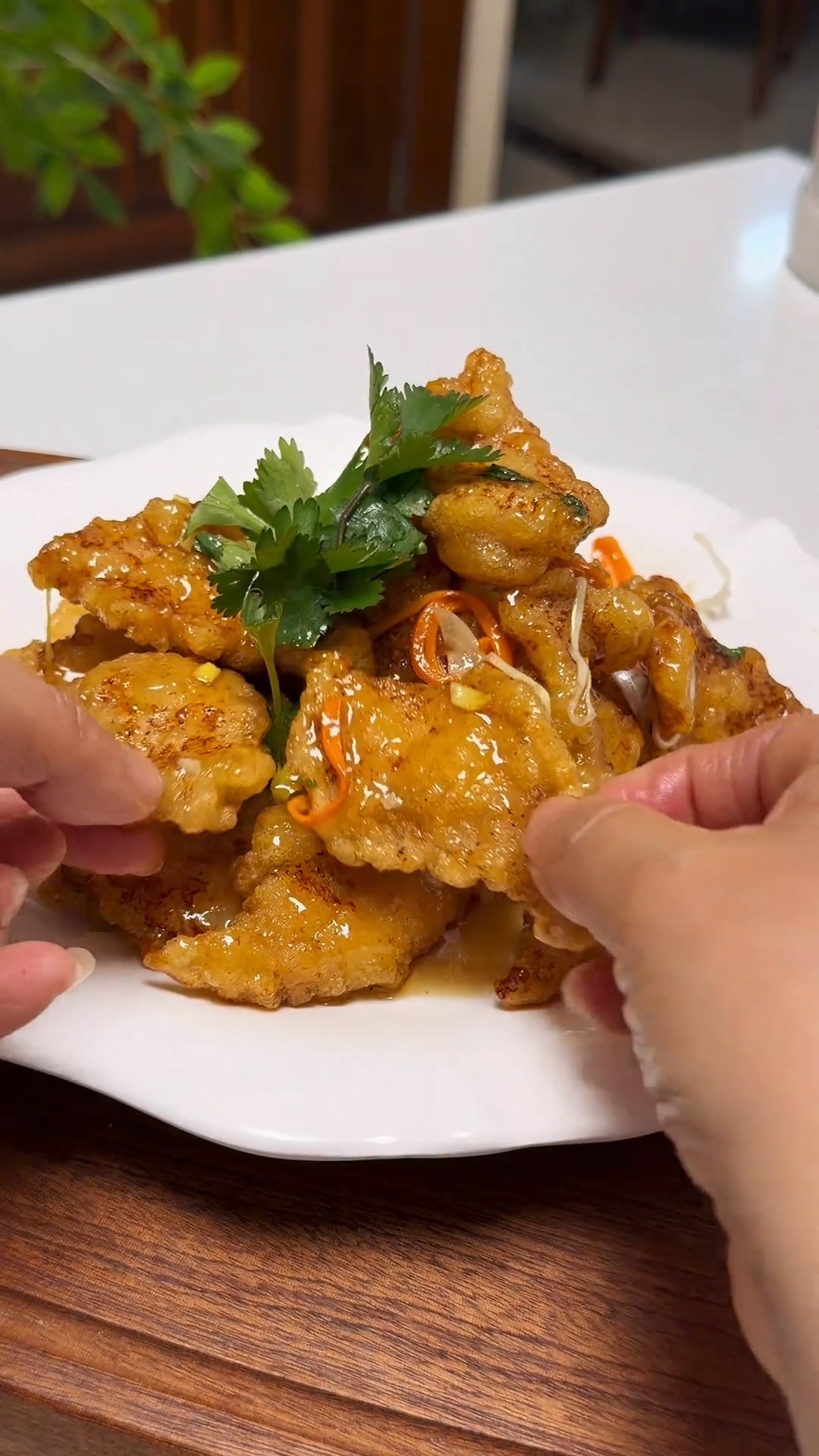
I learned this version online and have made it many times—each time with amazing results. It’s one of those dishes that looks impressive but is actually very achievable at home.
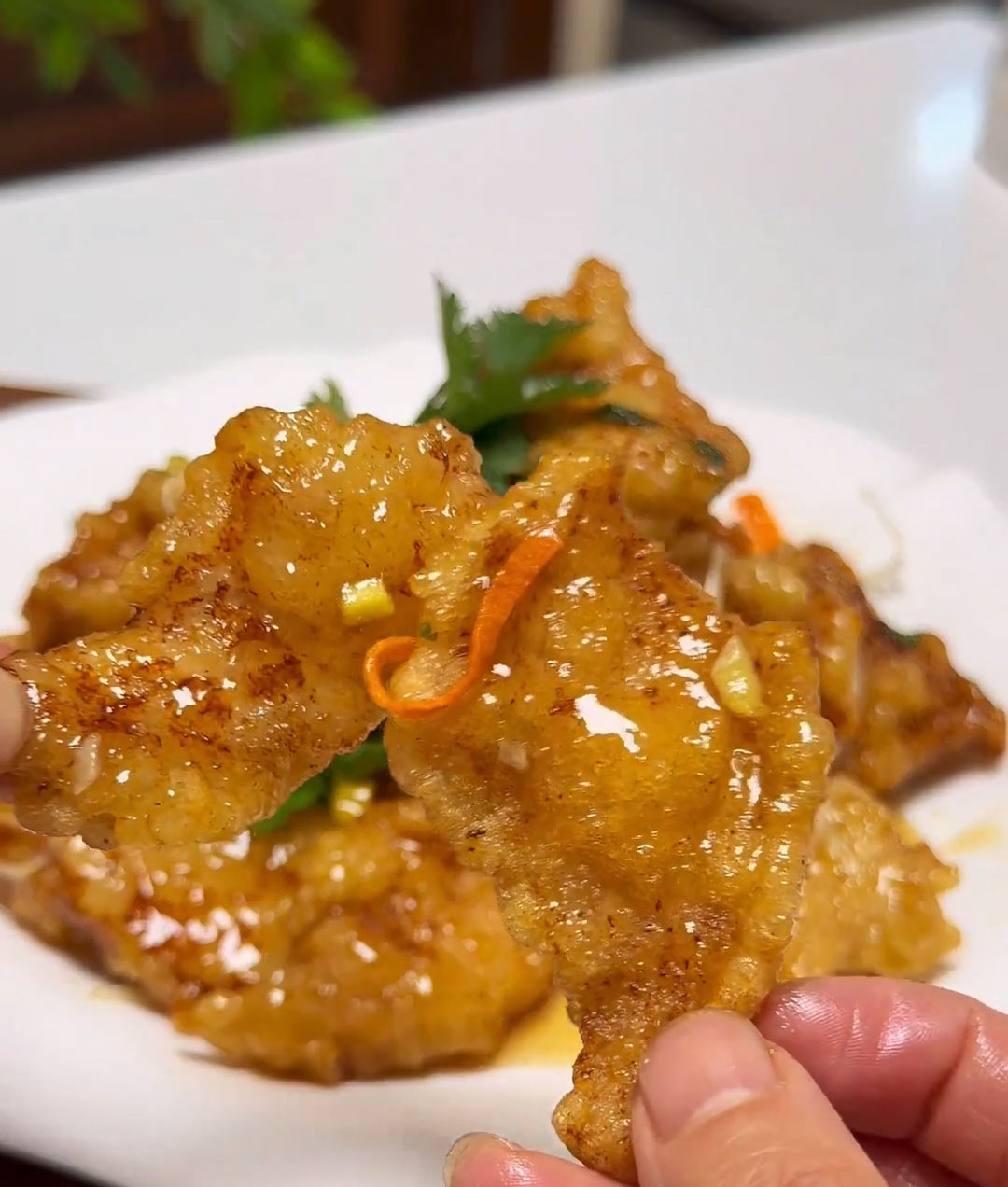
The pork is shatteringly crispy on the outside, tender and juicy on the inside, and coated in a glossy sweet and sour sauce that’s perfectly balanced.
If you follow the key techniques—marinating, battering, and triple-frying—I promise you’ll get it right on your first try.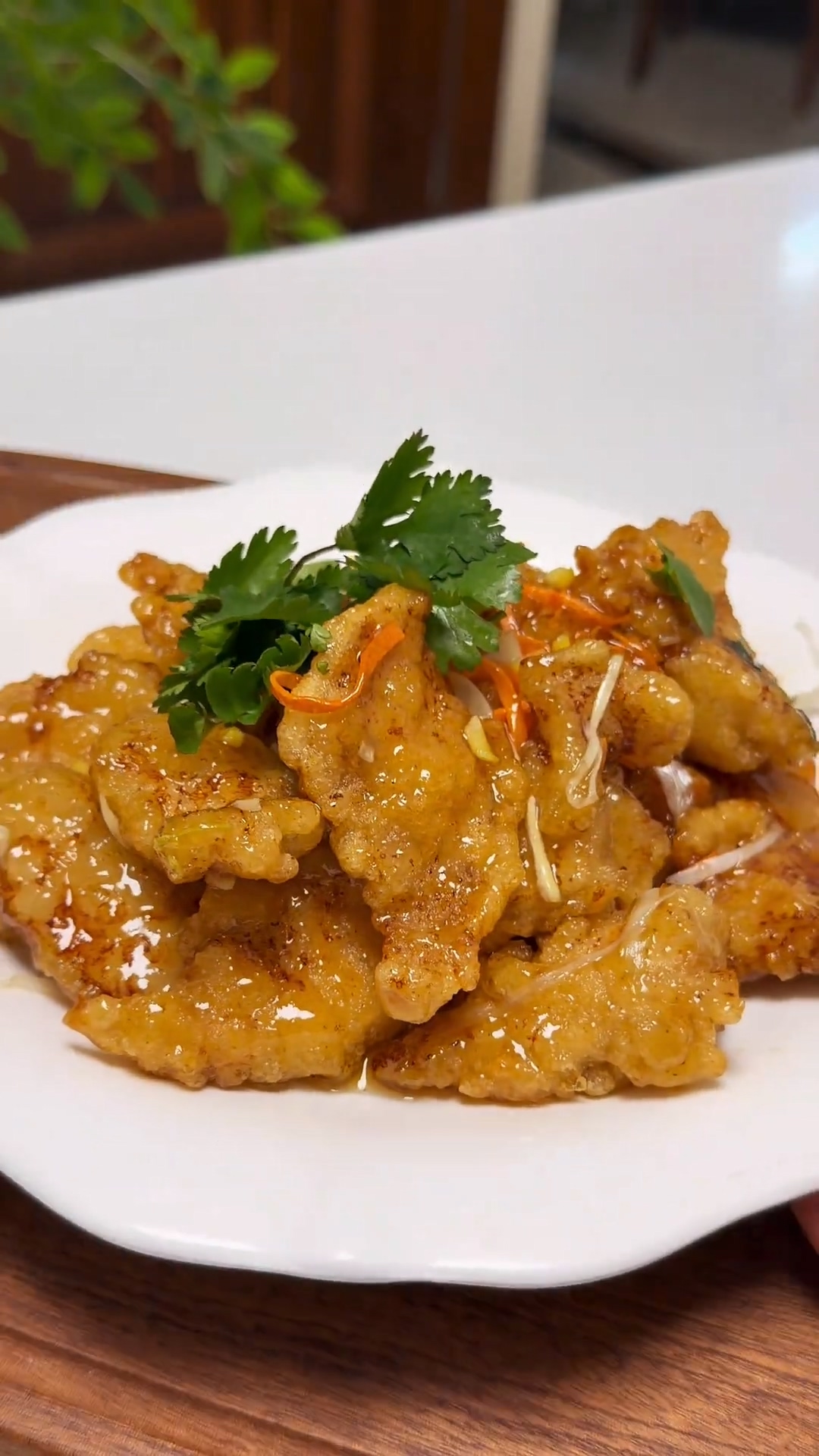
Ingredients and Substitutions
- Pork tenderloin or lean shoulder – I always look for cuts without any white connective tissue or fascia, as this ensures the tenderest result. The meat should be sliced diagonally about two coins thick, then gently pounded to break down the fibers – this double-preparation guarantees it won’t turn dry or tough after frying.
- Salt and white pepper – Just a pinch of each goes into the marinade. The white pepper adds a subtle aromatic warmth without the visual speckles of black pepper, keeping the final dish pristine.
- Granulated sugar – A full 80g creates the signature sweet backbone of the sauce. This isn’t a shy dessert-level sweetness – it’s meant to stand boldly against the tangy vinegar and rich fried pork.
- White vinegar (9% acidity) – This high-acidity vinegar is crucial for that authentic Northeast tang. Regular 5% vinegar won’t give you the same bright punch. If you need to adjust, remember you can always add a touch less, but the 70g measurement is carefully calibrated to balance the 80g sugar.
- Light soy sauce – Just 3g adds a subtle umami depth without darkening the sauce too much. It rounds out the sweet-and-sour profile beautifully.
- Sweet potato starch – This 2g addition to the sauce might seem tiny, but it helps the glaze cling to the meat without becoming gluey. Don’t skip it!
- Potato starch – This is non-negotiable. I cannot stress this enough: potato starch’s unique properties create that shatteringly crisp coating that stays crunchy even after saucing. Cornstarch will give you a sad, soft result. The 200g measurement includes what you’ll soak and drain, so don’t worry if it seems like a lot.
- Rapeseed oil – I recommend this for both the batter and frying if available. It gives the finished meat a beautiful golden color that’s especially welcome on the New Year’s Eve table. Any neutral high-smoke-point oil works, but rapeseed is traditional.
- Ginger, garlic, scallions, carrot, cilantro – These aromatics do double duty: they’re briefly tossed with the finished dish for fresh flavor, and they add those beautiful pops of color that make the platter look festive.
Ingredients
Meat & Marinade
- 500g pork tenderloin or lean shoulder (no connective tissue)
- Pinch of salt
- Pinch of white pepper powder
Sweet & Sour Sauce
- 80g granulated sugar
- 70g white vinegar (9% acidity)
- 2g salt
- 3g light soy sauce
- 2g sweet potato starch
Batter
- 200g potato starch
- 2 tablespoons rapeseed oil
- Water (for soaking)
Aromatics & Garnish
- Ginger, sliced or julienned
- Garlic, sliced
- Scallions, julienned
- Carrot, julienned
- Cilantro, for garnish
For Frying
- Rapeseed oil or other neutral oil, sufficient for deep frying
How to Make Northeast Guobaorou
Prepare the Meat
Remove any connective tissue from the pork. Slice diagonally into pieces about two coins thick (approximately 0.5 cm).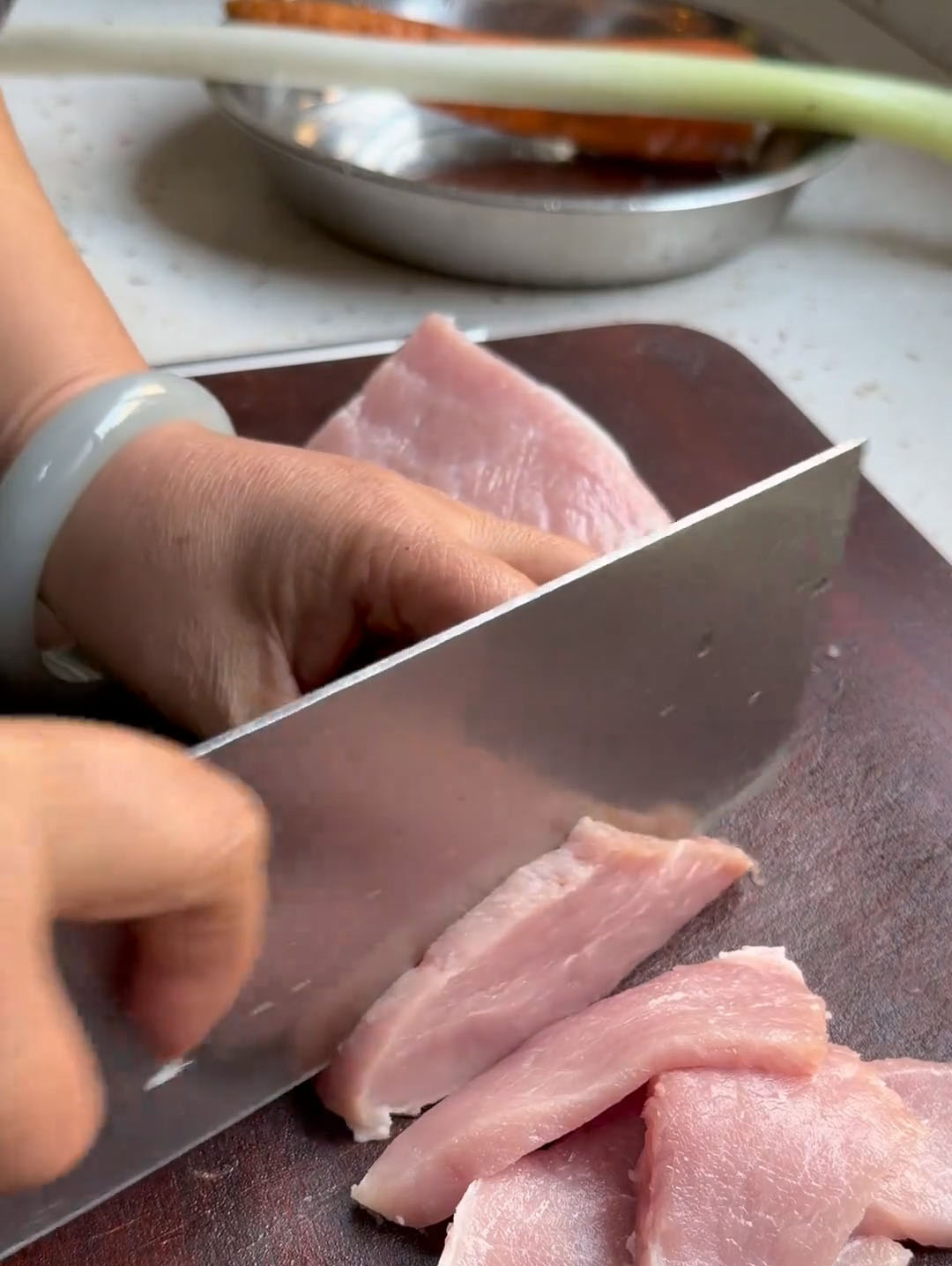
Gently pound each slice with the back of a knife or a meat mallet to loosen the fibers.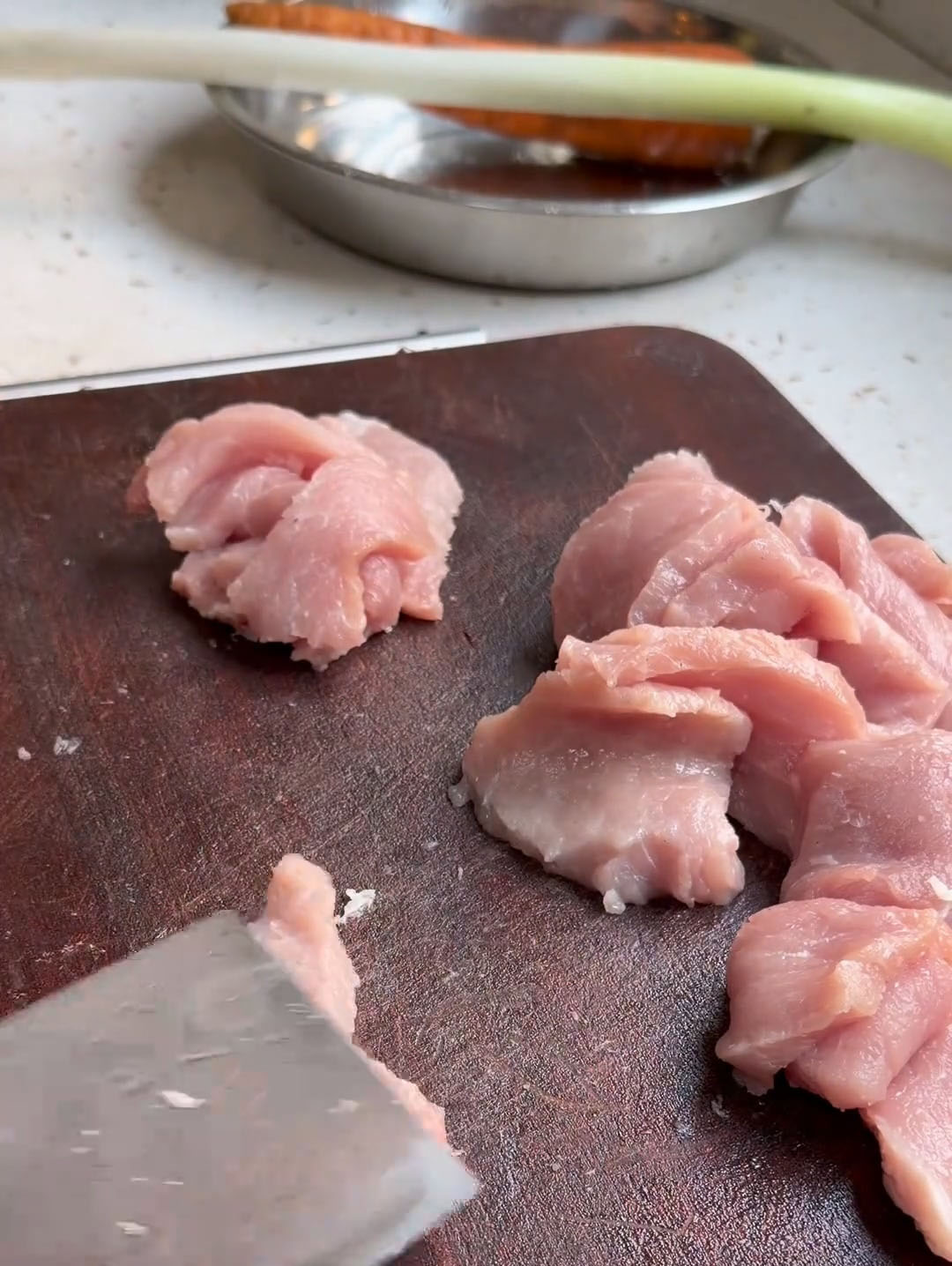
Place the meat in a bowl, add enough water to cover, and massage with your hands a few times.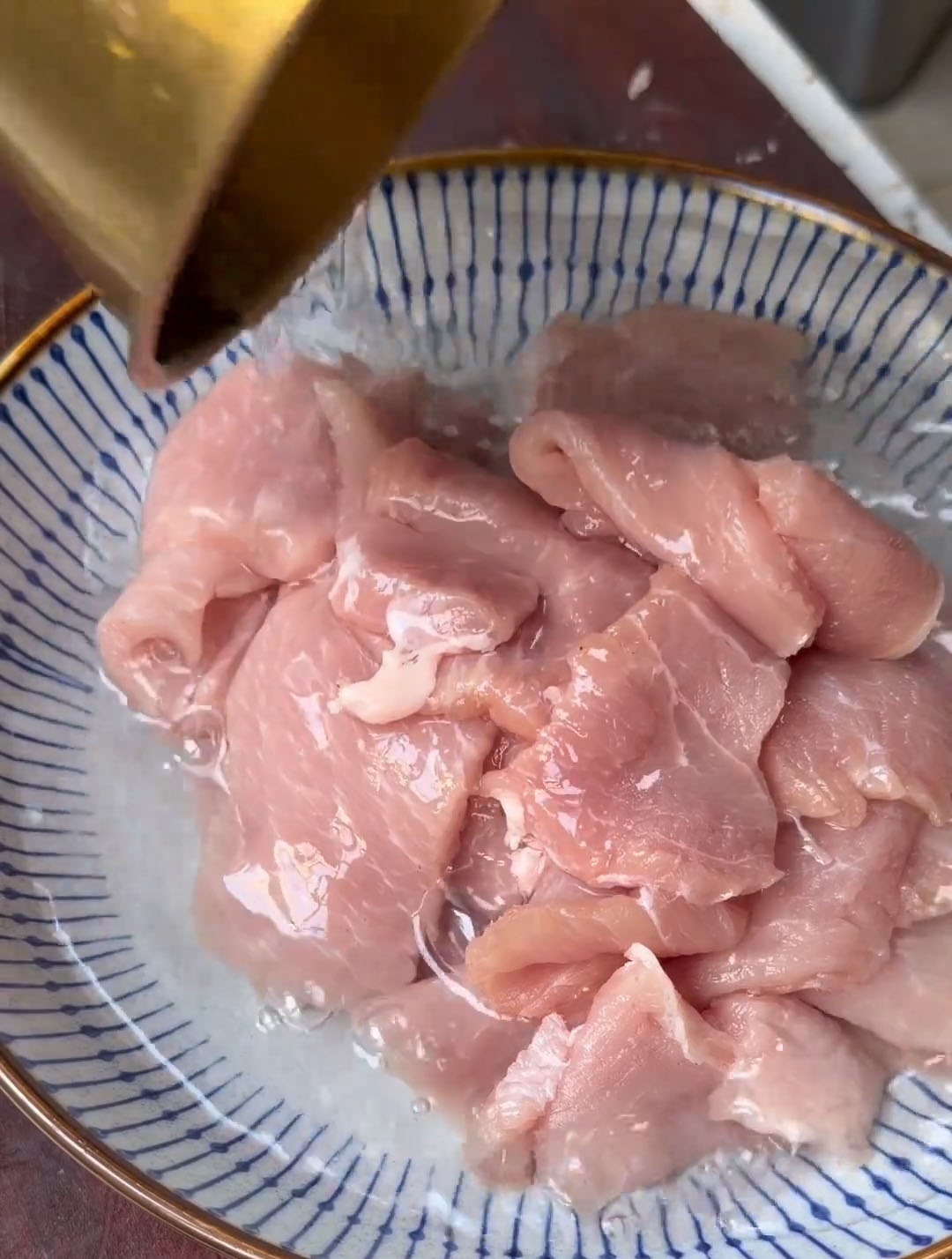
Squeeze out any excess liquid. Add a pinch of salt and white pepper.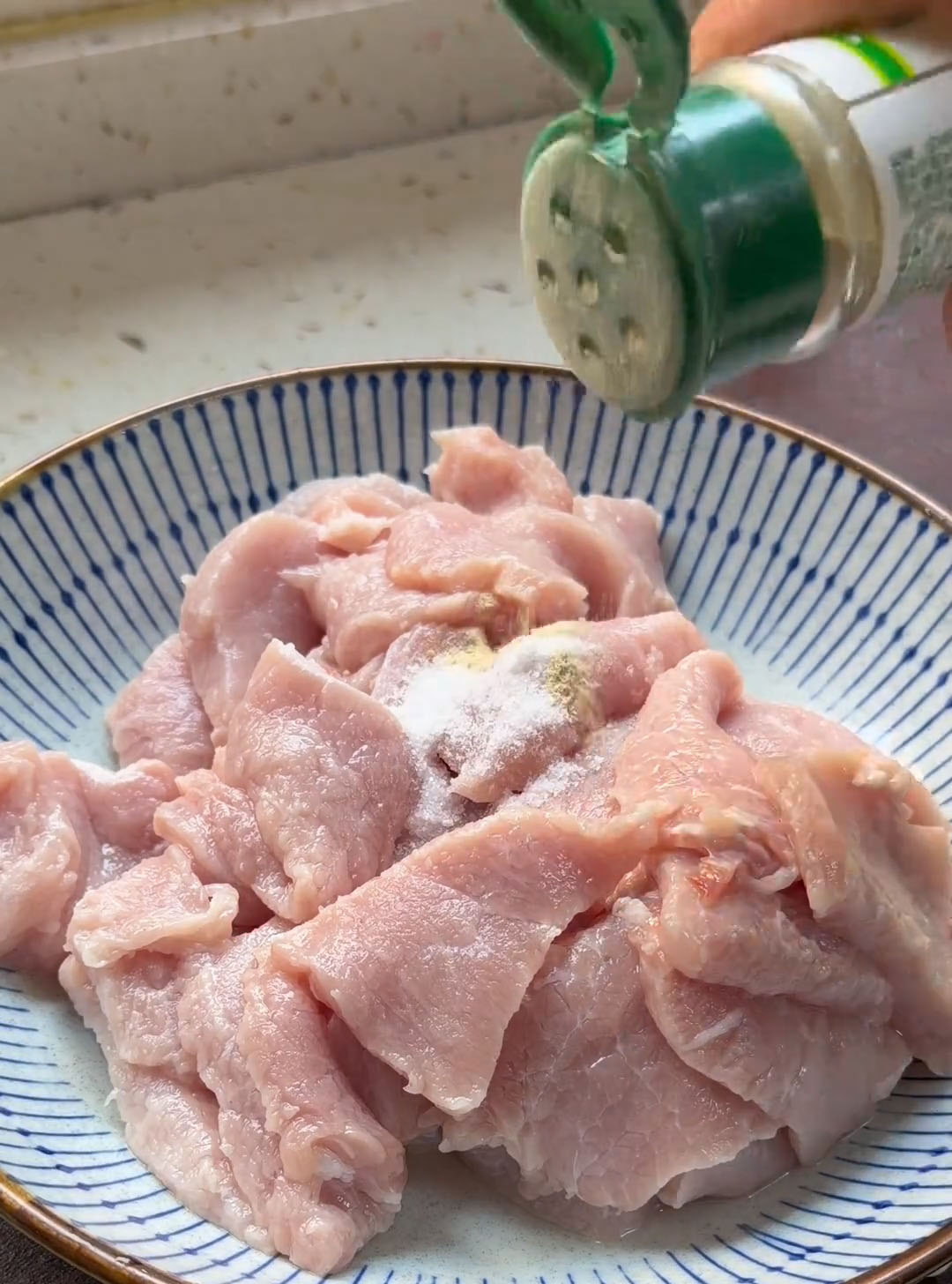
Mix and knead vigorously until the meat feels sticky to the touch and no water remains. Set aside to marinate for 10 minutes.
Make the Sauce and Prep Aromatics
In a small bowl, combine 80g sugar, 70g vinegar, 2g salt, 3g light soy sauce, and 2g sweet potato starch. Whisk until the starch is completely dissolved. Set aside.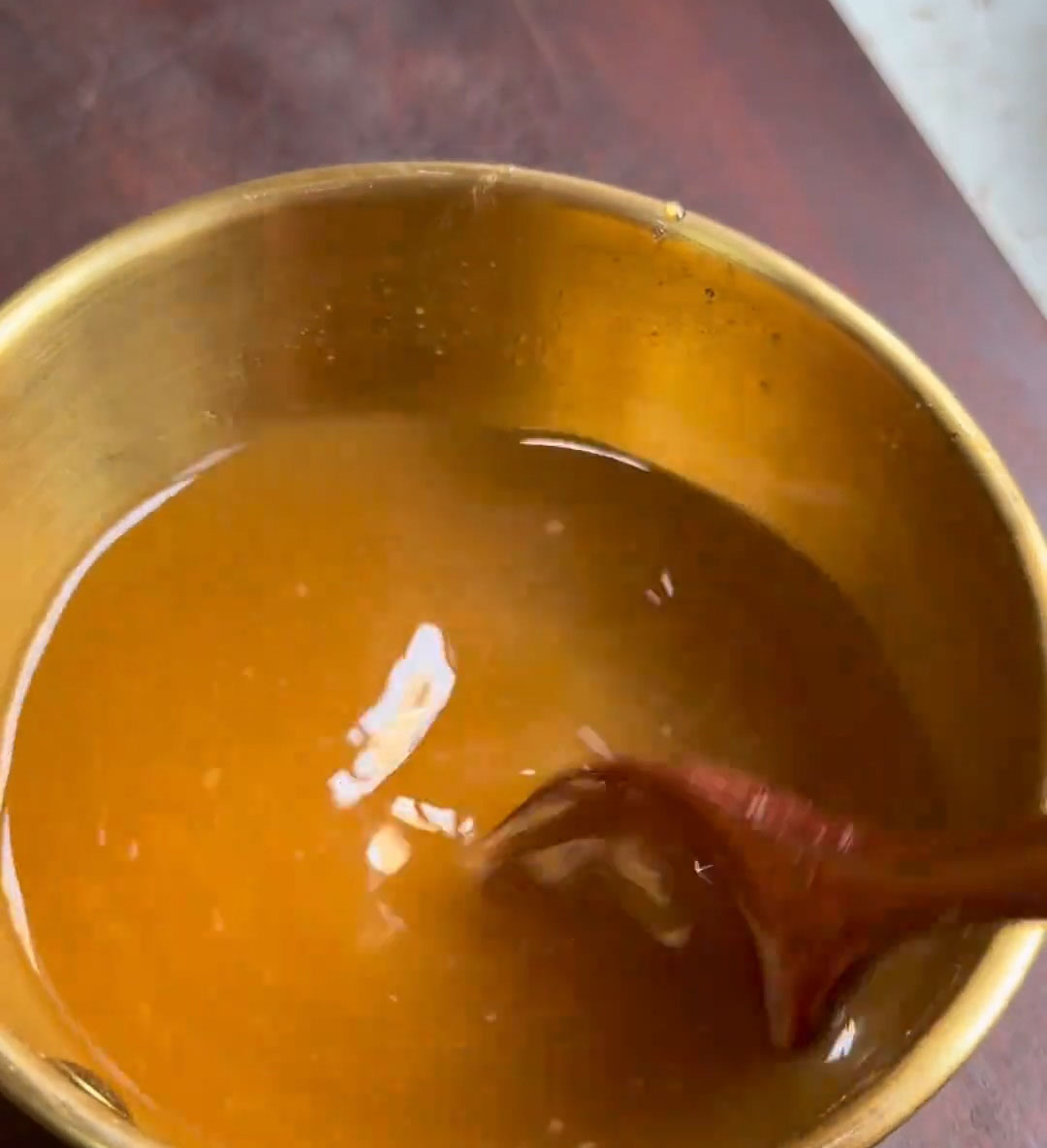
Prepare your aromatics: slice or julienne the ginger, garlic, scallions, and carrot. Wash the cilantro and set aside.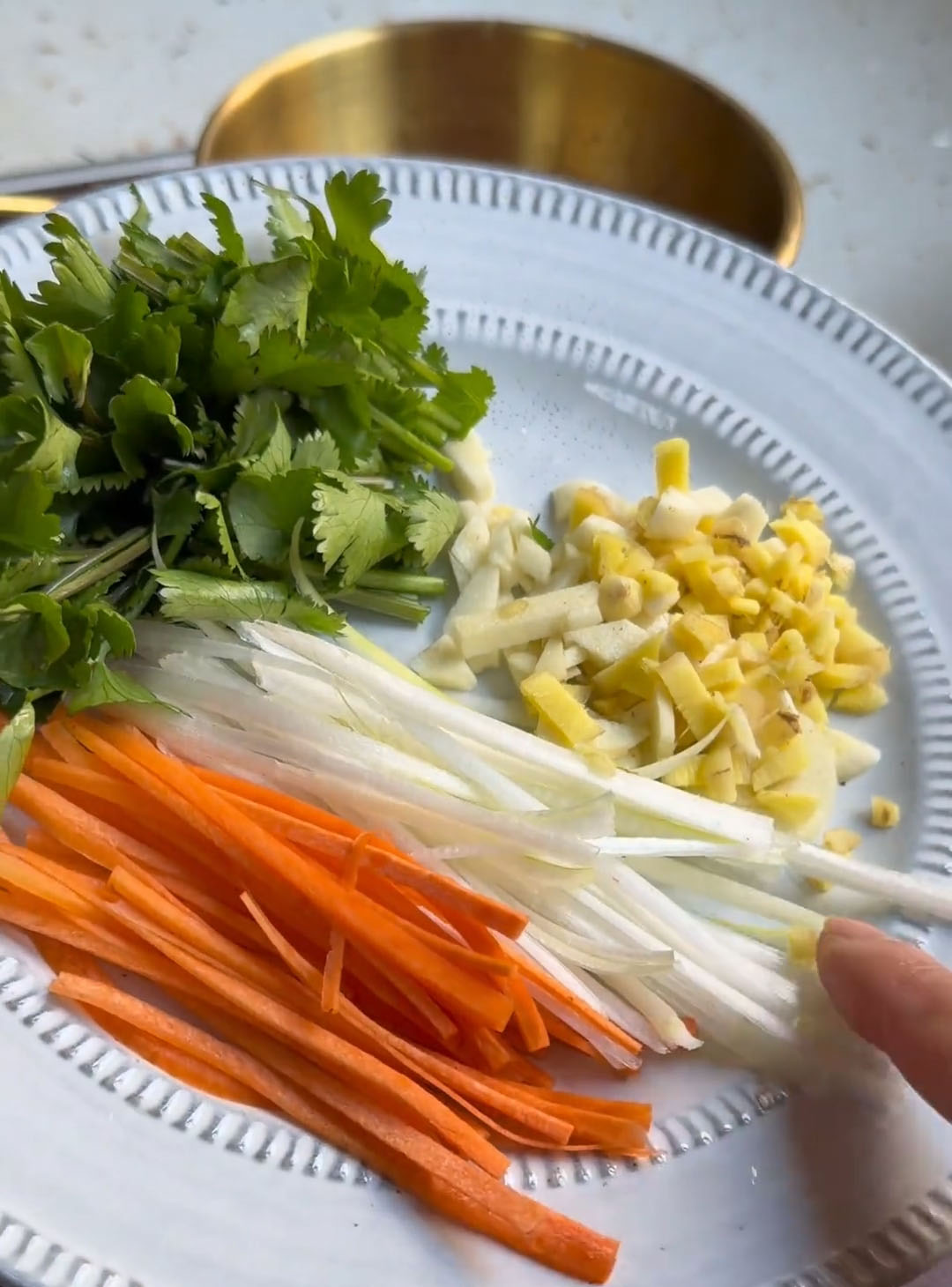
Make the Signature Batter
Place 200g potato starch in a bowl and add enough water to cover. Let it soak for at least 1 hour until the starch settles firmly at the bottom.
Carefully pour off the clear water on top, leaving only a thin layer of water (about 1-2mm) above the settled starch.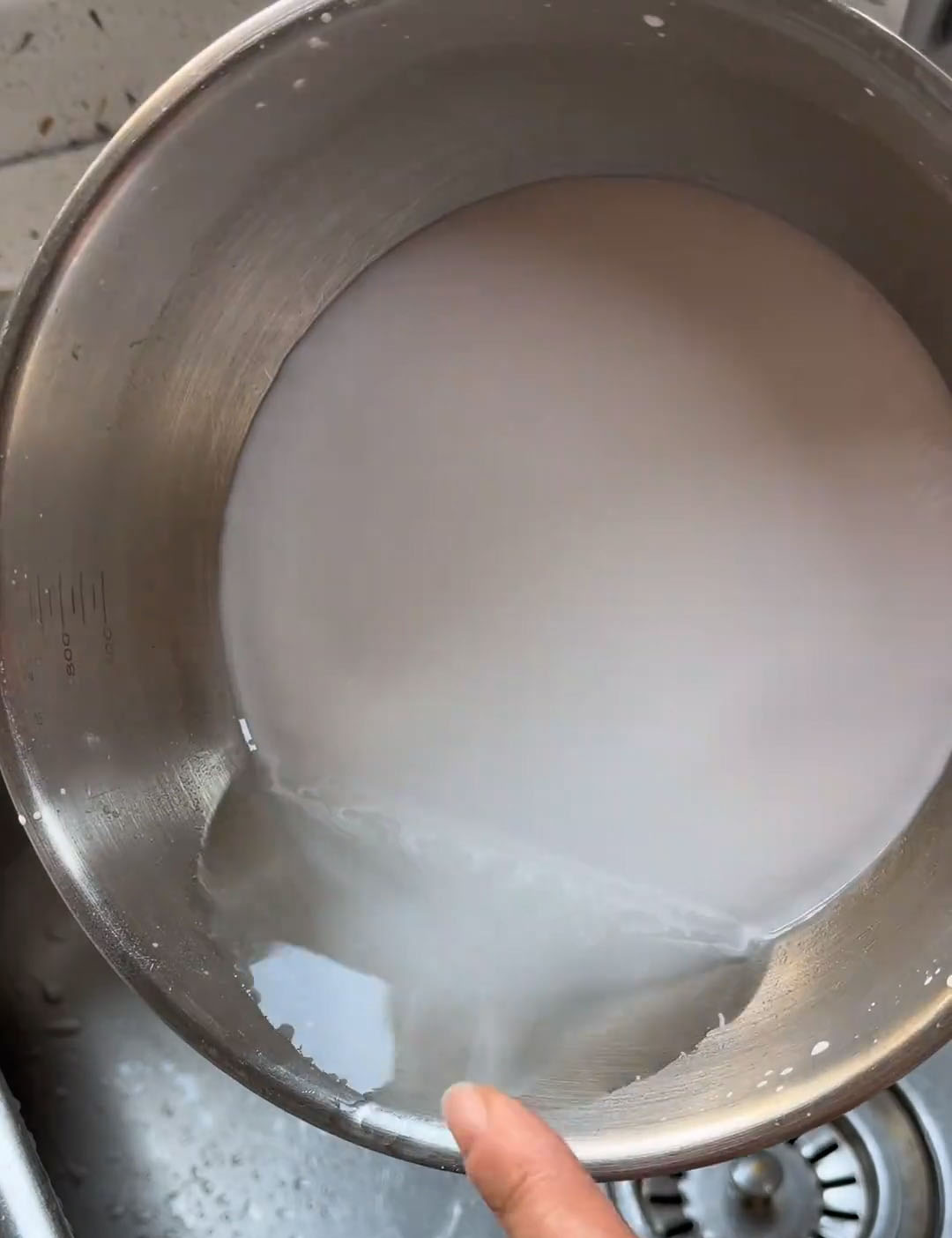
Add 2 tablespoons rapeseed oil to the starch paste. Use your hand to mix vigorously, squeezing and pressing until the paste becomes thick, resistant to mixing, and flows slowly like thick lava. It should feel heavy and sticky when you try to mix it.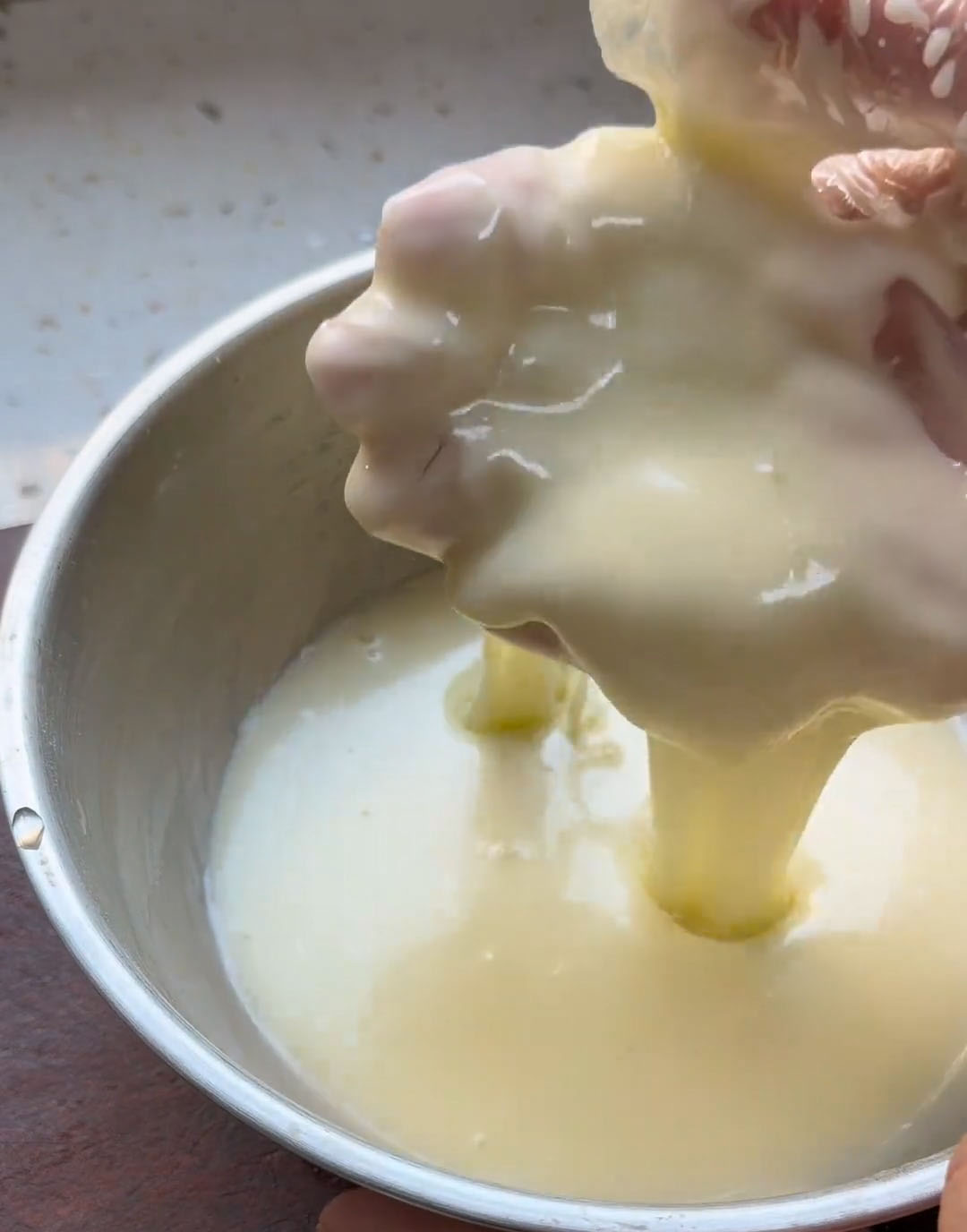
Add the marinated pork slices to the batter.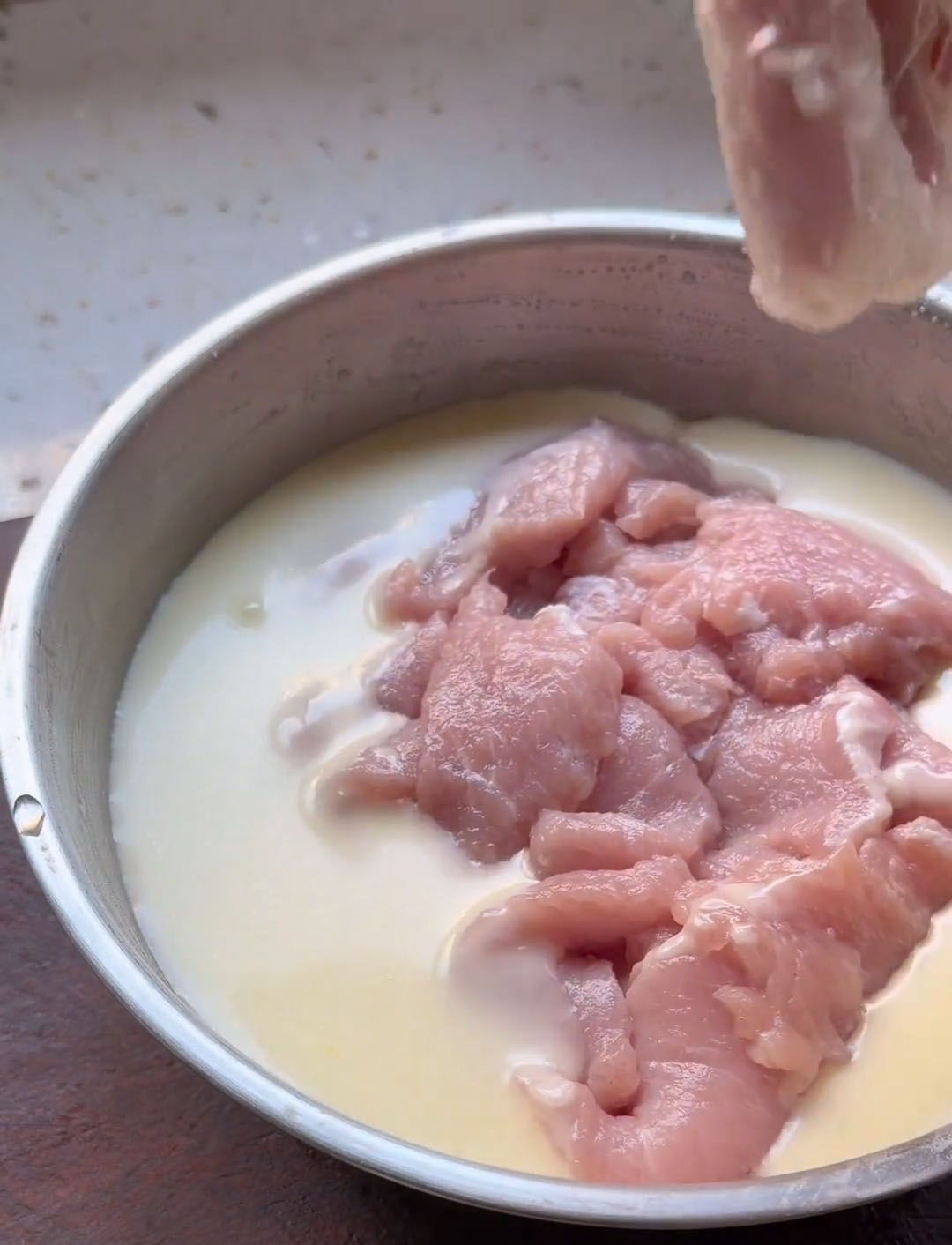
Mix with your hands until each slice is evenly coated. The coated meat should look relatively dry on the surface without any visible watery batter dripping off.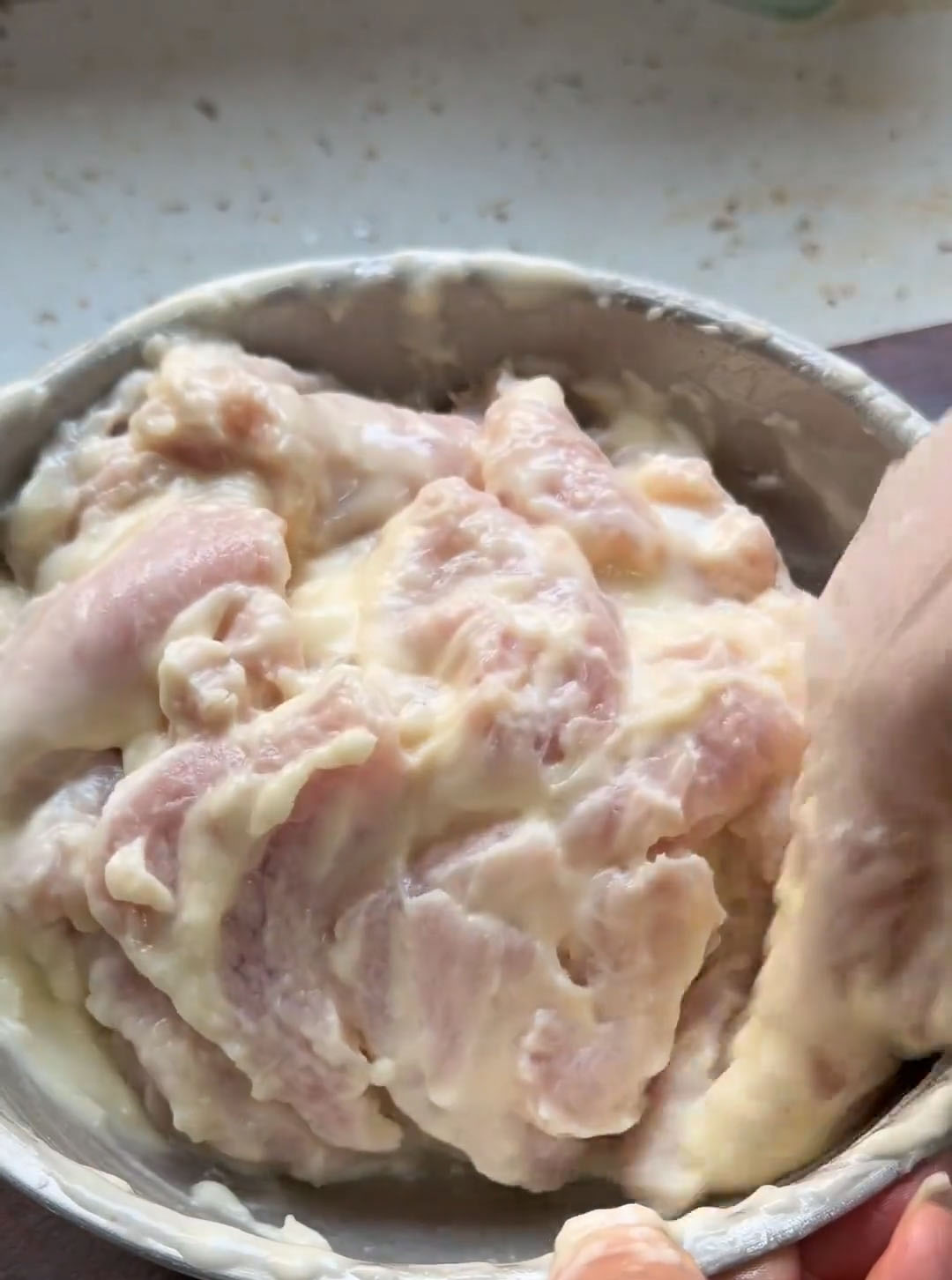
Triple-Fry for Ultimate Crispiness
Pour enough oil into a wok or heavy pot to reach at least 2-3 inches deep. Heat the oil to 80% hot (about 190°C/375°F) – you’ll know it’s ready when a tiny piece of batter dropped in floats to the surface within 2-3 seconds and sizzles immediately.
First fry: Carefully add the battered pork slices one by one, making sure they don’t stick together. Don’t overcrowd – fry in batches if needed. Fry over medium-high heat until the batter sets and turns pale yellow, about 2-3 minutes. Gently separate any pieces that stick together with chopsticks or a slotted spoon. Remove and drain on a wire rack or paper towels.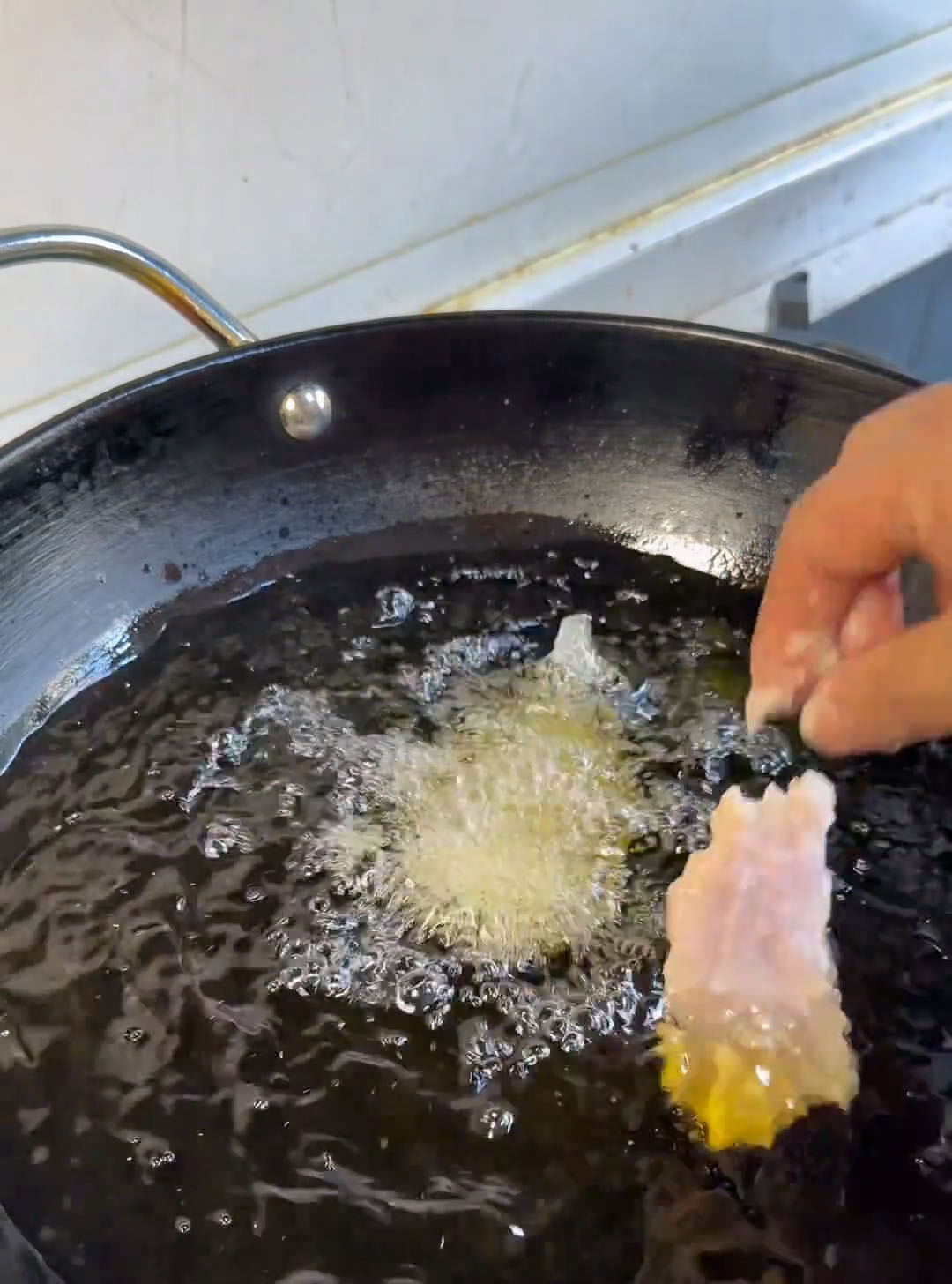
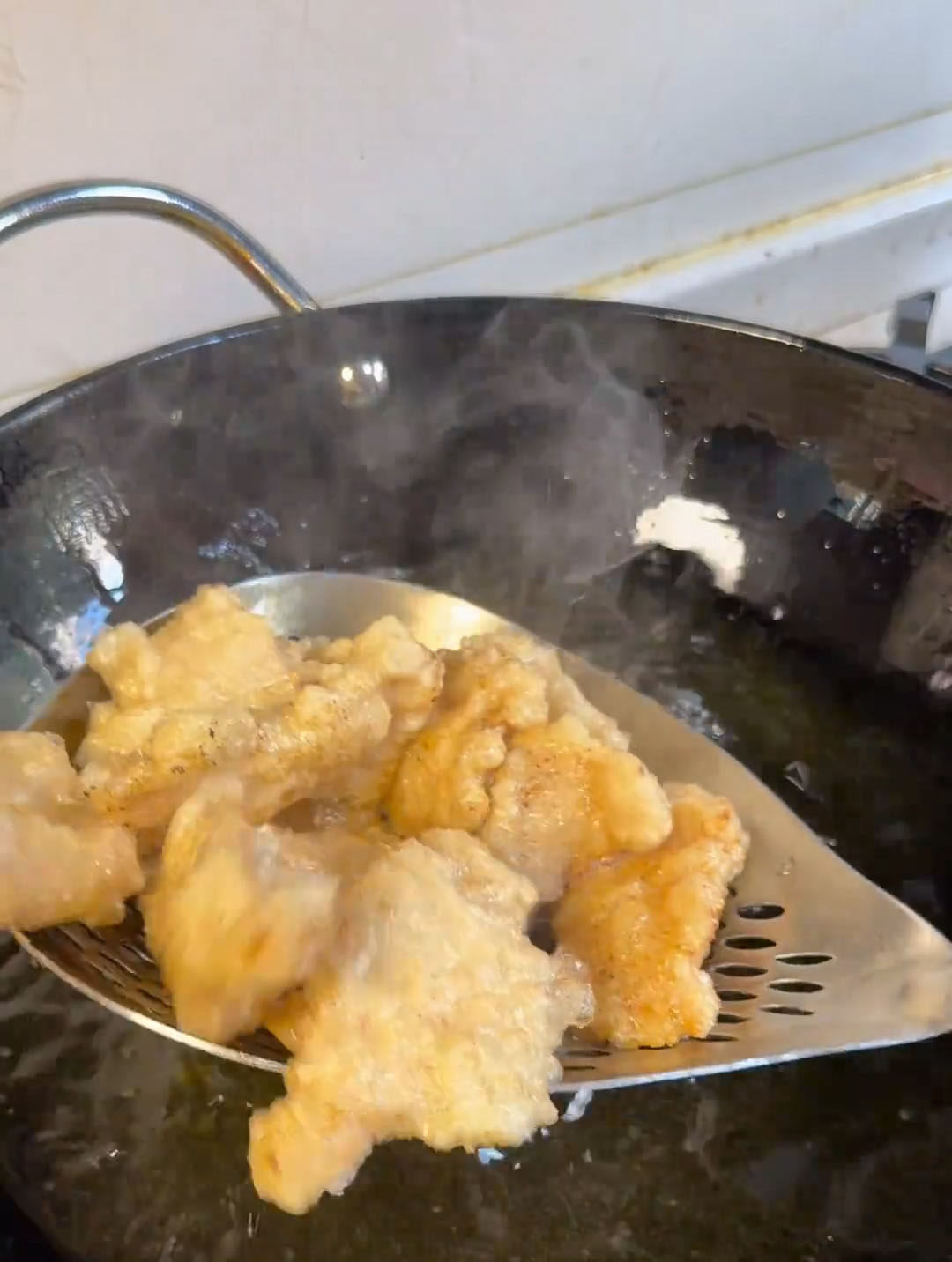 First refry: Reheat the oil to 80% hot. Add all the par-fried meat slices and fry for exactly 10 seconds. This step begins building the crunch. Remove and drain.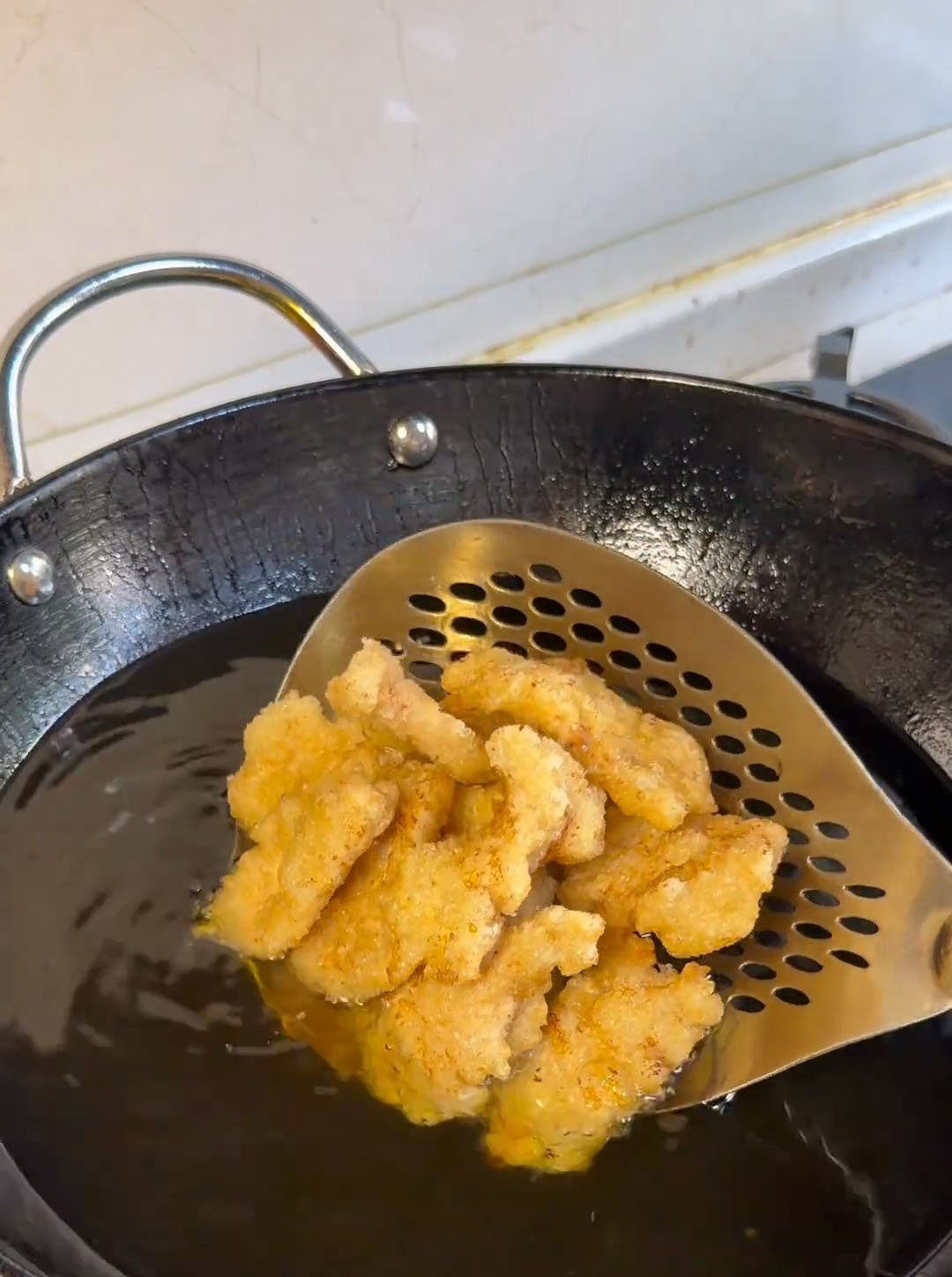
Second refry: Keep the oil at 80% hot. Add the meat slices back again and fry for another 10 seconds, until they transform into a beautiful deep golden brown. The exterior should look incredibly crispy and sound shatteringly crisp when tapped. Remove and drain well.
Make the Sauce and Toss
Leave only a tiny film of oil in the wok (about 2 teaspoon). Pour in the prepared sauce mixture.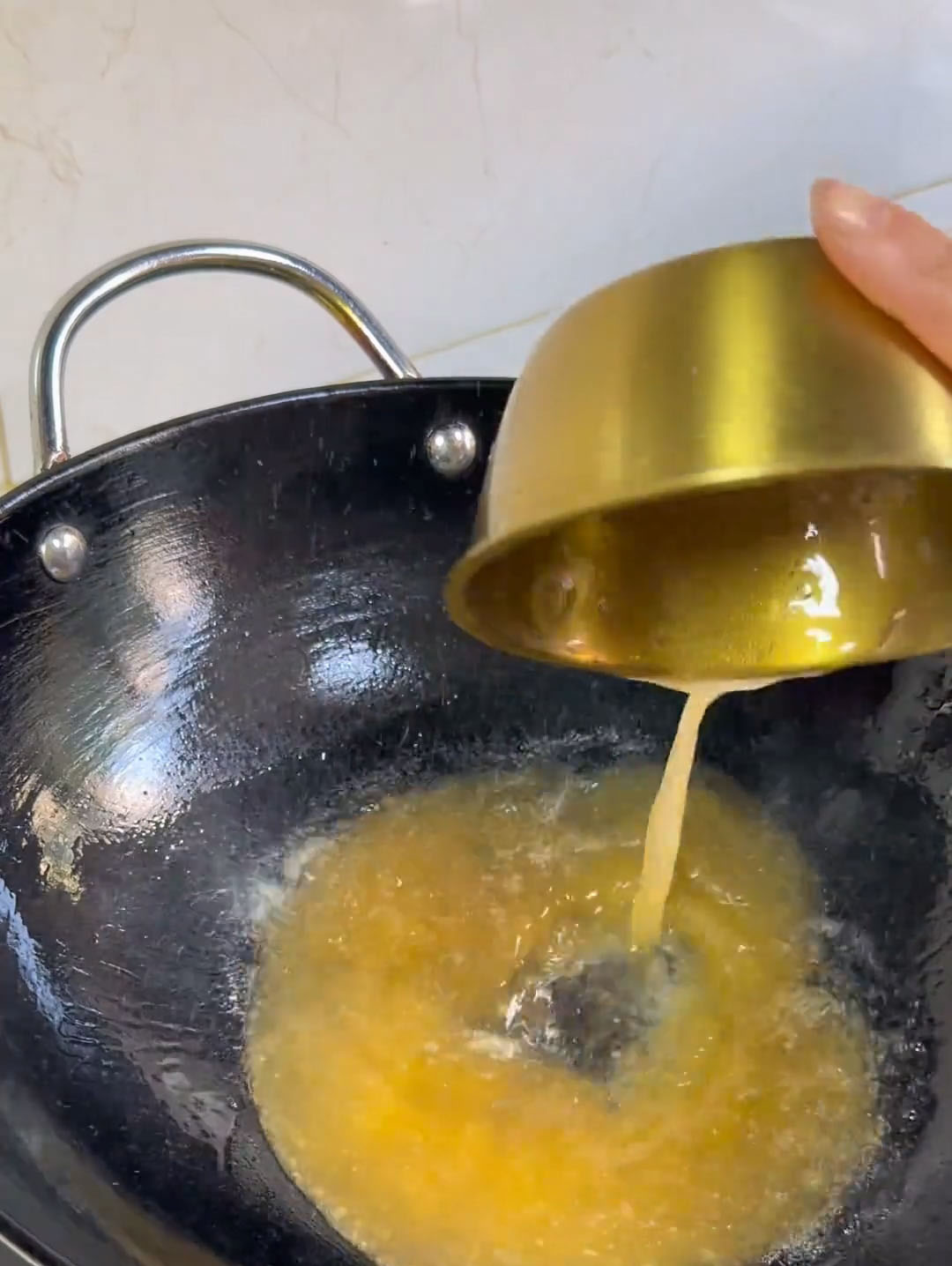
Cook over low heat, stirring constantly, as the sauce transforms from cloudy to translucent and begins to bubble.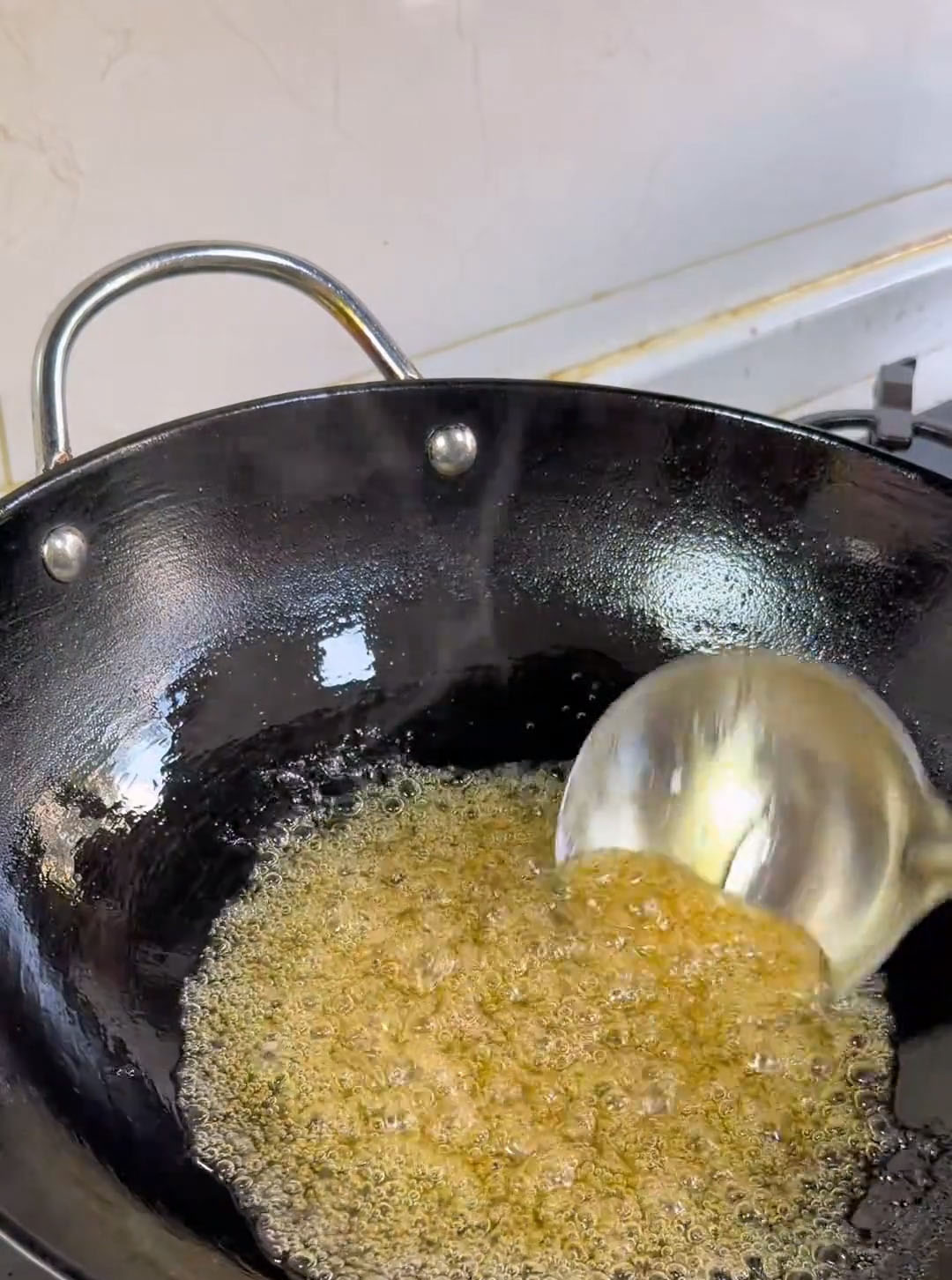
Watch carefully – you’re looking for it to turn an amber color and thicken enough to coat the back of a spoon. Before it reaches this stage, spoon a portion of the sauce into a small bowl and set it aside. This happens quickly, usually within 30-45 seconds. Do NOT overcook into a thick paste.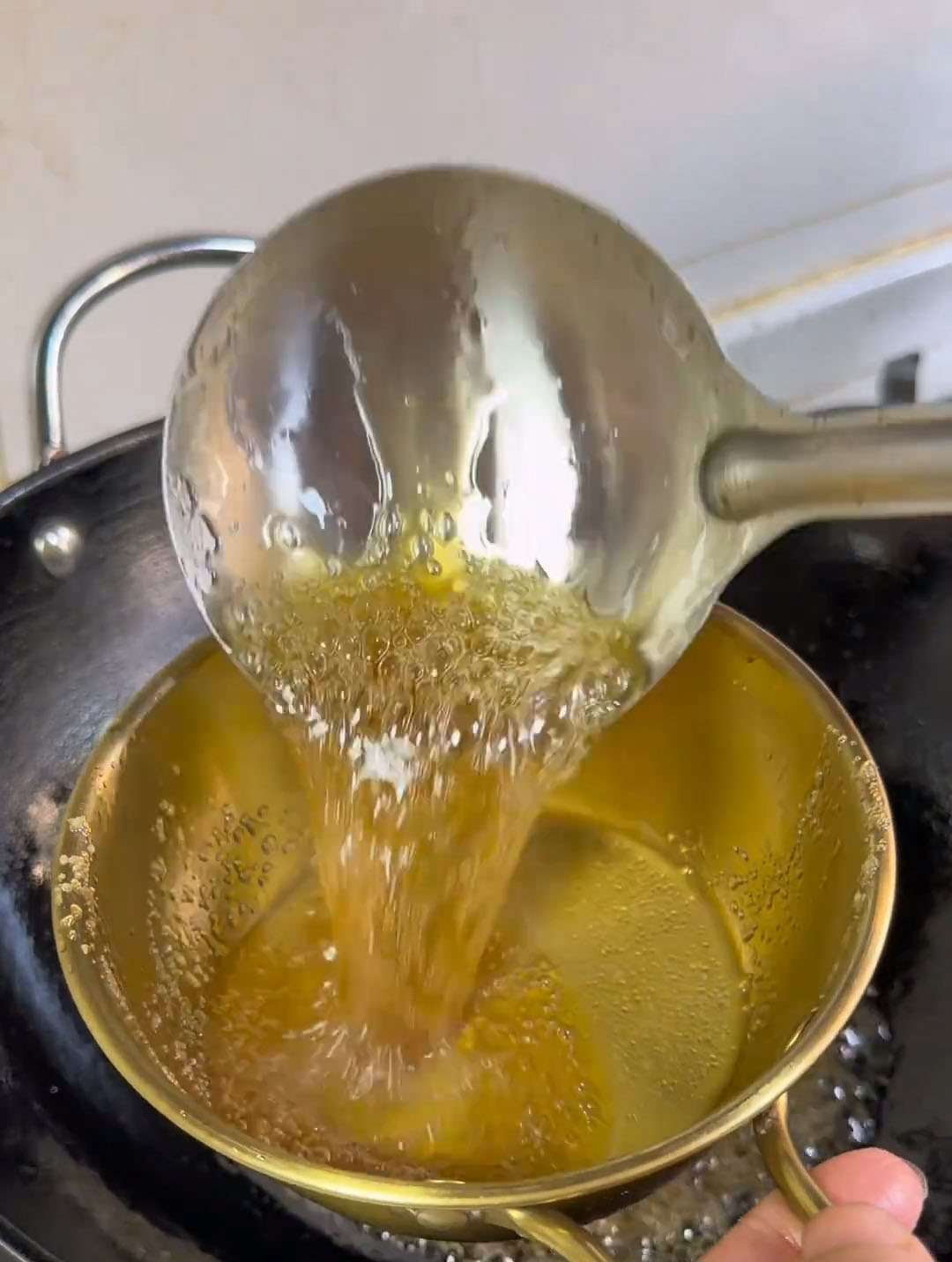
Immediately add all the fried meat slices. Toss vigorously and quickly – I use two spatulas or one spatula and quick wrist flicks – to coat each slice evenly with a thin layer of glaze.
Add the ginger, garlic, scallions, and carrot, and continue tossing to combine.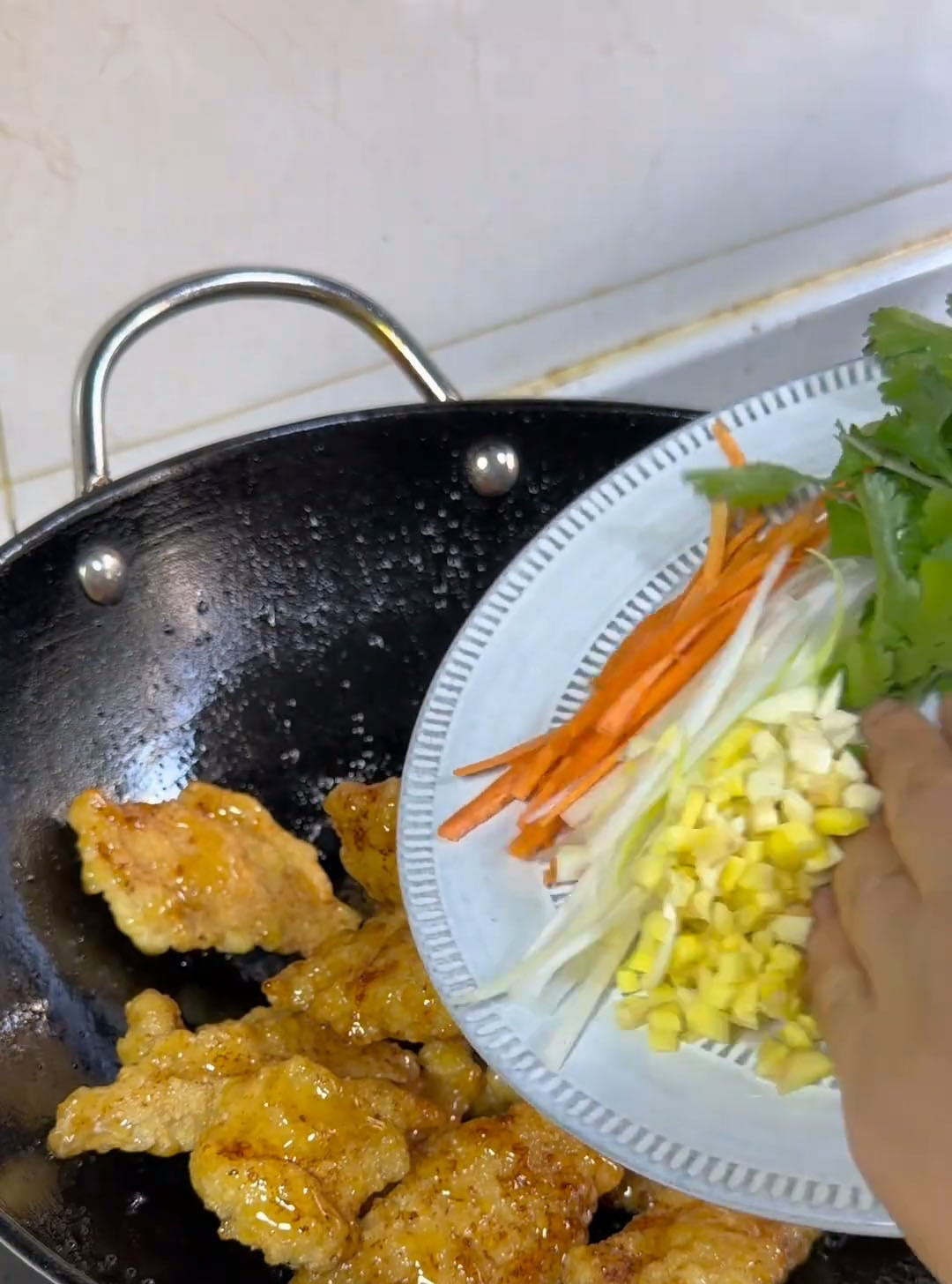
Finally, drizzle in the reserved sauce and toss once more until the sauce lightly clings to the meat. The goal is a light coating, not a drenching.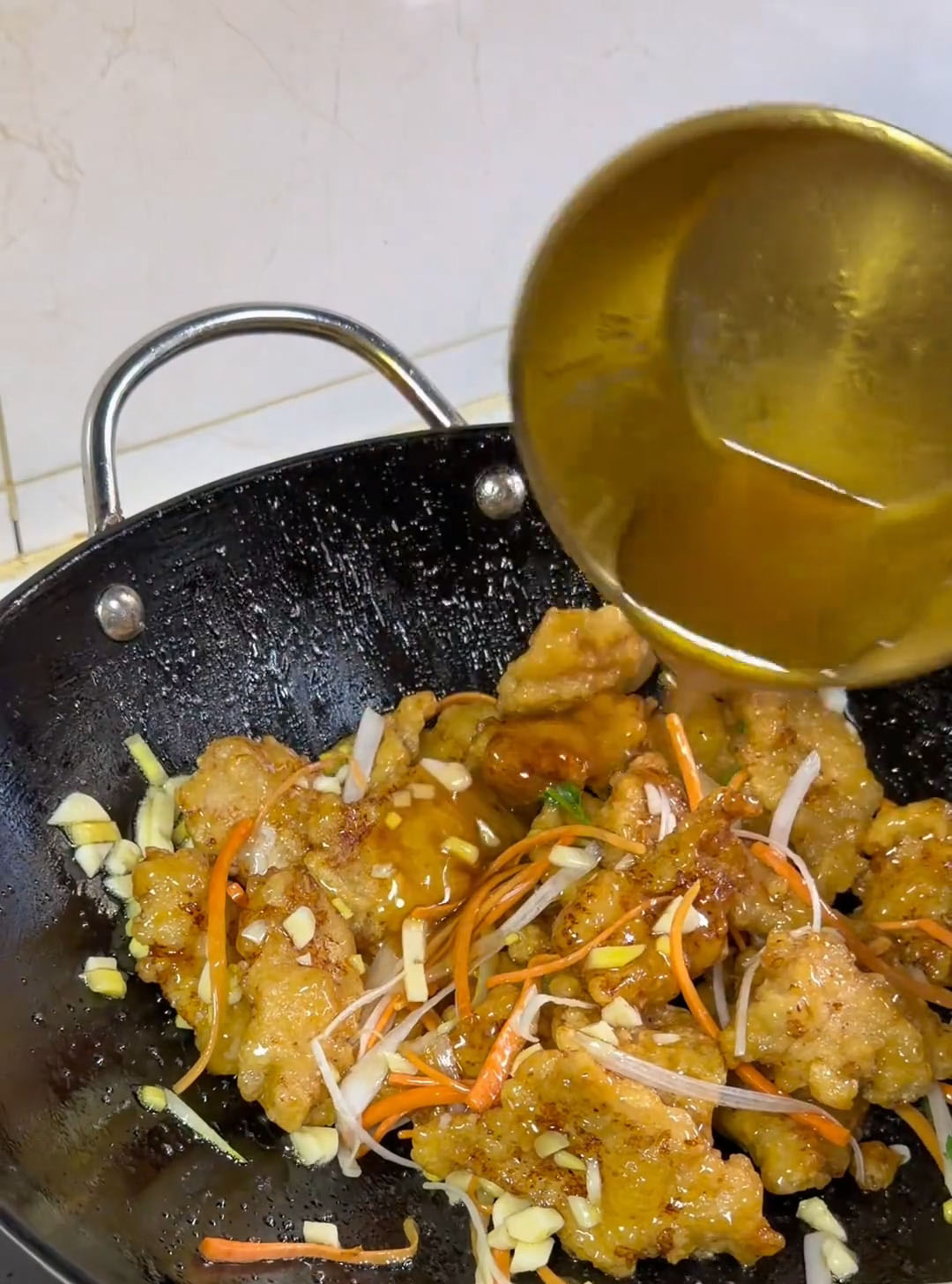
Transfer immediately to a serving plate. Garnish with fresh cilantro and serve right away.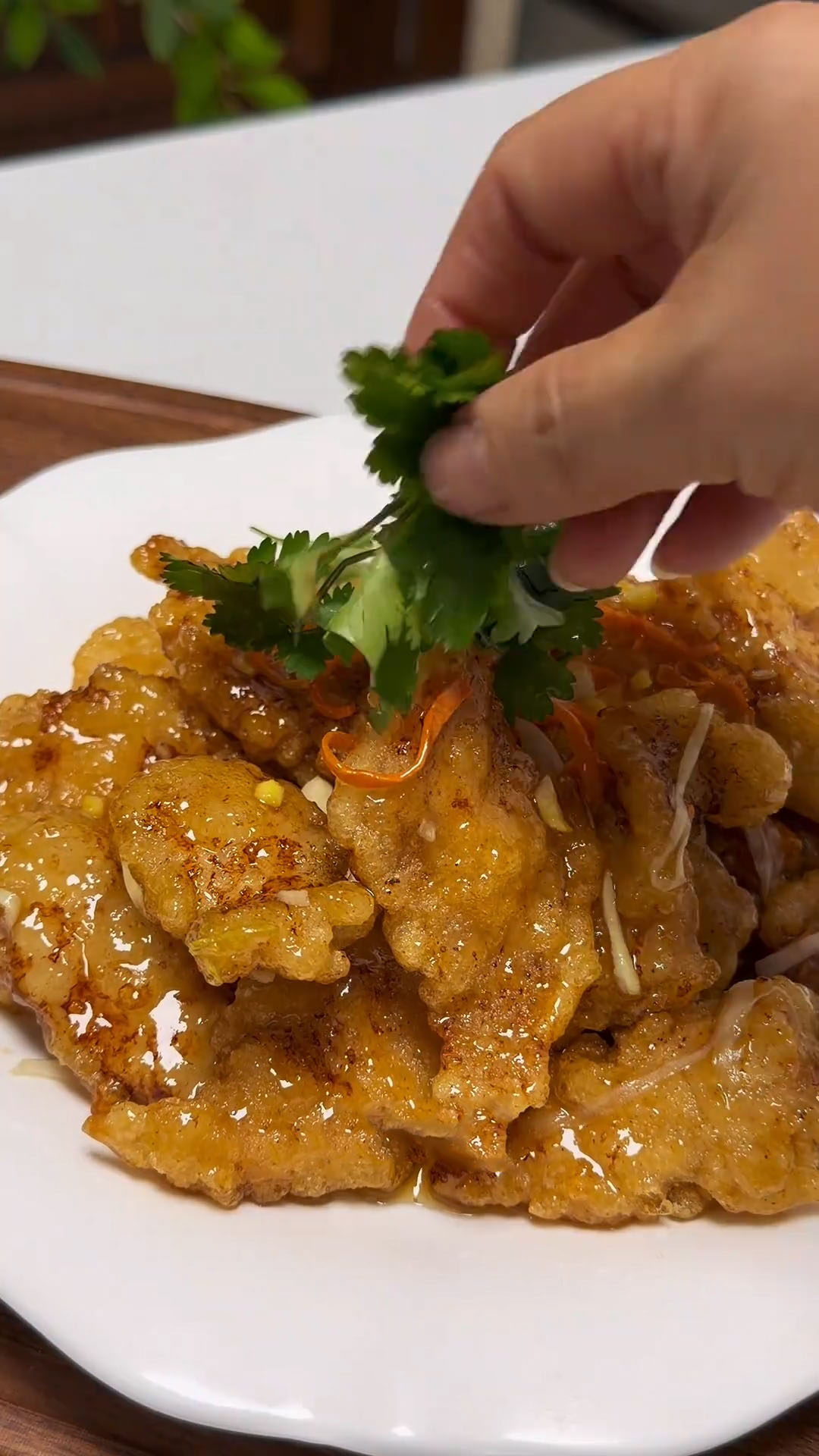
Storage
Guobaorou is truly at its best immediately after cooking, when the contrast between hot, crispy exterior and tender pork is most dramatic. However, if you have leftovers, store them in an airtight container in the refrigerator for up to 2 days. Note that the coating will soften significantly upon refrigeration.
Make-ahead option: For New Year’s Eve entertaining, you can fry the meat through the first fry stage up to 4 hours ahead. Keep at room temperature. Just before serving, complete the two refry stages, make the sauce, and toss. This way, you get freshly sauced, ultra-crispy meat with minimal last-minute work.
To reheat leftovers: Place on a baking sheet in a 200°C (400°F) oven for 5-8 minutes until heated through and re-crisped. Avoid microwaving, which will make the coating irreversibly soggy.
Tips & Tricks
Marinating secrets – Don’t skip pounding the meat or kneading in water. These two steps are what keep the pork juicy and tender after the high-heat frying. When you marinate until the meat feels sticky to your fingers, you’re creating a surface that the batter will cling to fiercely – this is your insurance against the dreaded batter-falling-off disaster.
The potato starch commitment – I cannot overstate this: potato starch is the only starch that will give you authentic Guobaorou texture. Its long molecular structure creates that distinctive crisp-yet-not-hard coating that stays crunchy even after being sauced. The soaking step is equally crucial – it allows the starch granules to fully hydrate, and pouring off the excess water leaves just enough moisture to create the perfect paste. The oil you add at the end is the secret to that “stays crispy even when cold” magic.
Temperature control is everything – Maintain that 80% hot oil throughout all three frying stages. If the oil drops temperature, the batter will absorb oil and become greasy instead of crispy. This is why frying in batches matters – too much cold meat at once crashes your oil temperature. When you add the meat, it should sizzle aggressively from the moment it hits the oil.
Sauce timing is critical – The window between “sauce is ready” and “sauce is over-reduced” is surprisingly small. Cook it just until it turns amber and coats a spoon – if you can draw a line through the sauce on the back of the spoon and it holds, you’re there. Any thicker and it will weigh down your crispy coating. And when you add the meat, work fast! Every second the meat sits in the hot wok, it’s absorbing moisture and losing crunch.
Batch frying strategy – For best results, fry in two batches if you’re making the full 500g of meat. This keeps the oil temperature stable and gives each piece room to crisp properly. You can combine batches for the refry stages.
Frequently Asked Questions
Why did my batter fall off during frying?
This usually happens for one of three reasons: the meat wasn’t marinated until sticky (so the batter had nothing to grip), the starch paste was too watery (you didn’t pour off enough water after soaking), or the oil wasn’t hot enough when you added the meat (the batter sets slowly and slides off). Next time, ensure your meat feels tacky, your batter is thick and flows slowly, and your oil is genuinely at 80% hot.
Can I use cornstarch instead of potato starch?
I strongly advise against it. Cornstarch creates a coating that’s crispy when first fried but quickly becomes soft and chewy, especially once sauced. It’s simply not the same dish. Potato starch is widely available in Asian grocery stores and many mainstream supermarkets now – it’s worth seeking out for authentic results.
Why is my Guobaorou greasy?
Greasy results almost always mean the oil temperature was too low during frying. When the oil isn’t hot enough, the batter absorbs oil like a sponge instead of instantly sealing and crisping. Make sure your oil is truly at 80% hot before you start, and don’t overcrowd the pan. Also, the triple-fry method actually helps push out excess oil – if you’re skipping refries, you’re missing that de-greasing benefit.
My sauce turned out too thick and made the meat soft – what happened?
You likely cooked the sauce a few seconds too long. The sauce should be just thickened to a syrupy consistency that coats a spoon – it will continue thickening slightly from residual heat after you add the meat. If it’s already a thick paste in the wok, it’s too late. Next time, pull it off the heat a moment earlier and trust that the toss will coat the meat.
Can I prepare this for a crowd?
Absolutely! This is actually an ideal dish for entertaining because of the make-ahead potential. Fry the meat through the first stage up to 4 hours ahead. Keep it at room temperature (not in the fridge, which would introduce moisture). About 15 minutes before serving, reheat your oil, do the two refries, make the sauce, and toss. You’ll have perfectly crispy Guobaorou with minimal last-minute fuss.
Is the 9% vinegar essential?
It’s important for authentic flavor. Regular 5% white vinegar will give you a milder tang, which you might actually prefer – but if you use it, you may want to reduce the sugar slightly to maintain balance. The 9% vinegar’s higher acidity is what cuts through the rich fried pork so effectively.
How do I know when the oil is at 80% hot?
The wooden chopstick test is reliable: insert a dry wooden chopstick into the oil. If bubbles immediately form around it and rise vigorously, the oil is ready. Alternatively, a tiny drop of batter should float to the surface and sizzle furiously within 2-3 seconds. If it sinks and sits at the bottom, the oil isn’t hot enough. If it browns instantly and burns, it’s too hot.
My meat was tough – what went wrong?
Tough meat usually means one of two things: you didn’t pound the slices to break down the fibers, or you used a cut with too much connective tissue. Pounding is crucial – it physically tenderizes the meat. Also, make sure you’re slicing against the grain (diagonally) for maximum tenderness.

Chinese Crispy Sweet and Sour Pork (Guo Bao Rou)
Ingredients
Meat & Marinade
- 500 g pork tenderloin or lean shoulder no connective tissue
- Pinch of salt
- Pinch of white pepper powder
Sweet & Sour Sauce
- 80 g granulated sugar
- 70 g white vinegar 9% acidity
- 2 g salt
- 3 g light soy sauce
- 2 g sweet potato starch
Batter
- 200 g potato starch
- 2 tablespoons rapeseed oil
- Water for soaking
Aromatics & Garnish
- Ginger sliced or julienned
- Garlic sliced
- Scallions julienned
- Carrot julienned
- Cilantro for garnish
For Frying
- Rapeseed oil or other neutral oil sufficient for deep frying
Instructions
Prepare the Meat
- Remove any connective tissue from the pork. Slice diagonally into pieces about two coins thick (approximately 0.5 cm).
- Gently pound each slice with the back of a knife or a meat mallet to loosen the fibers.
- Place the meat in a bowl, add enough water to cover, and massage with your hands a few times.
- Squeeze out any excess liquid. Add a pinch of salt and white pepper.
- Mix and knead vigorously until the meat feels sticky to the touch and no water remains. Set aside to marinate for 10 minutes.
Make the Sauce and Prep Aromatics
- In a small bowl, combine 80g sugar, 70g vinegar, 2g salt, 3g light soy sauce, and 2g sweet potato starch. Whisk until the starch is completely dissolved. Set aside.
- Prepare your aromatics: slice or julienne the ginger, garlic, scallions, and carrot. Wash the cilantro and set aside.
Make the Signature Batter
- Place 200g potato starch in a bowl and add enough water to cover. Let it soak for at least 1 hour until the starch settles firmly at the bottom.
- Carefully pour off the clear water on top, leaving only a thin layer of water (about 1-2mm) above the settled starch.
- Add 2 tablespoons rapeseed oil to the starch paste. Use your hand to mix vigorously, squeezing and pressing until the paste becomes thick, resistant to mixing, and flows slowly like thick lava. It should feel heavy and sticky when you try to mix it.
- Add the marinated pork slices to the batter.
- Mix with your hands until each slice is evenly coated. The coated meat should look relatively dry on the surface without any visible watery batter dripping off.
Triple-Fry for Ultimate Crispiness
- Pour enough oil into a wok or heavy pot to reach at least 2-3 inches deep. Heat the oil to 80% hot (about 190°C/375°F) – you'll know it's ready when a tiny piece of batter dropped in floats to the surface within 2-3 seconds and sizzles immediately.
- First fry: Carefully add the battered pork slices one by one, making sure they don't stick together. Don't overcrowd – fry in batches if needed. Fry over medium-high heat until the batter sets and turns pale yellow, about 2-3 minutes. Gently separate any pieces that stick together with chopsticks or a slotted spoon. Remove and drain on a wire rack or paper towels.
- First refry: Reheat the oil to 80% hot. Add all the par-fried meat slices and fry for exactly 10 seconds. This step begins building the crunch. Remove and drain.
- Second refry: Keep the oil at 80% hot. Add the meat slices back again and fry for another 10 seconds, until they transform into a beautiful deep golden brown. The exterior should look incredibly crispy and sound shatteringly crisp when tapped. Remove and drain well.
Make the Sauce and Toss
- Leave only a tiny film of oil in the wok (about 2 teaspoon). Pour in the prepared sauce mixture.
- Cook over low heat, stirring constantly, as the sauce transforms from cloudy to translucent and begins to bubble.
- Watch carefully – you're looking for it to turn an amber color and thicken enough to coat the back of a spoon. Before it reaches this stage, spoon a portion of the sauce into a small bowl and set it aside. This happens quickly, usually within 30-45 seconds. Do NOT overcook into a thick paste.
- Immediately add all the fried meat slices. Toss vigorously and quickly – I use two spatulas or one spatula and quick wrist flicks – to coat each slice evenly with a thin layer of glaze.
- Add the ginger, garlic, scallions, and carrot, and continue tossing to combine.
- Finally, drizzle in the reserved sauce and toss once more until the sauce lightly clings to the meat. The goal is a light coating, not a drenching.
- Transfer immediately to a serving plate. Garnish with fresh cilantro and serve right away.


Leave a Reply