
A perfect Pork Floss Roll Cake is easy to make with this step-by-step recipe! Learn the tips and tricks to avoid cracking or collapsing, including the right egg white whipping technique, batter folding method, and baking time.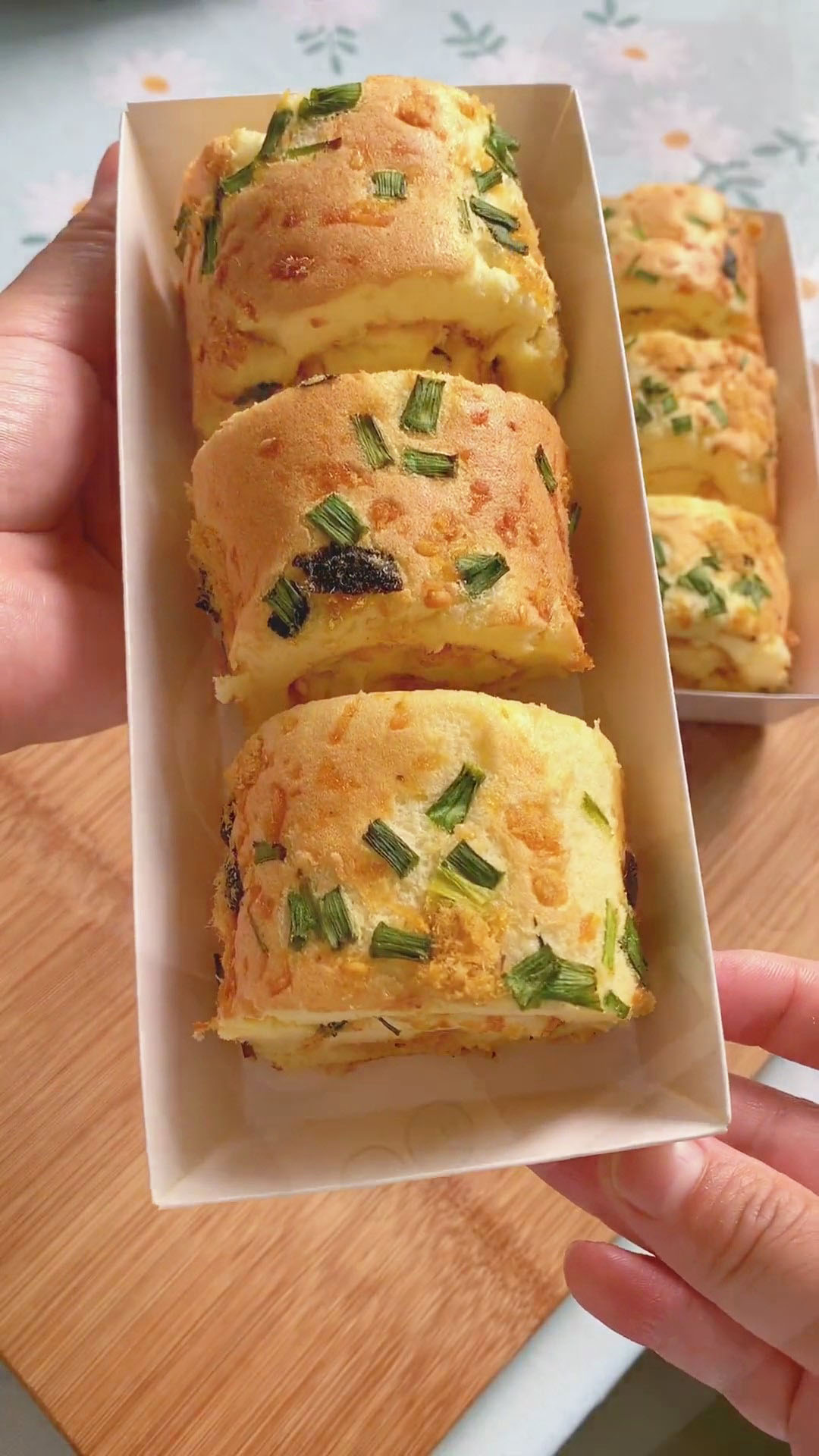
If you’ve ever visited a Chinese bakery, you’ll notice that pork floss is used in many delicious treats, like savory buns, cakes, and even Pork Floss Sandwiches.
I’ve always loved Pork Floss Roll Cake since I was a child, but I couldn’t have it very often back then.
Now, I can make it whenever I want, and my kids absolutely love it too!
Inspired by the traditional Pork Floss Cake, I’m excited to share my Pork Floss Roll Cake recipe with you.
I’ve made this cake dozens of times, learning from plenty of trial and error, and I’ve gathered many useful tips along the way.
From perfecting the egg white whipping technique and the folding method for the batter to mastering the baking temperature and timing, every step is crucial to achieving a cake that’s light, fluffy, and won’t collapse or crack.
Follow my simple instructions, and even beginners can easily recreate a bakery-style roll cake at home—no fancy equipment required!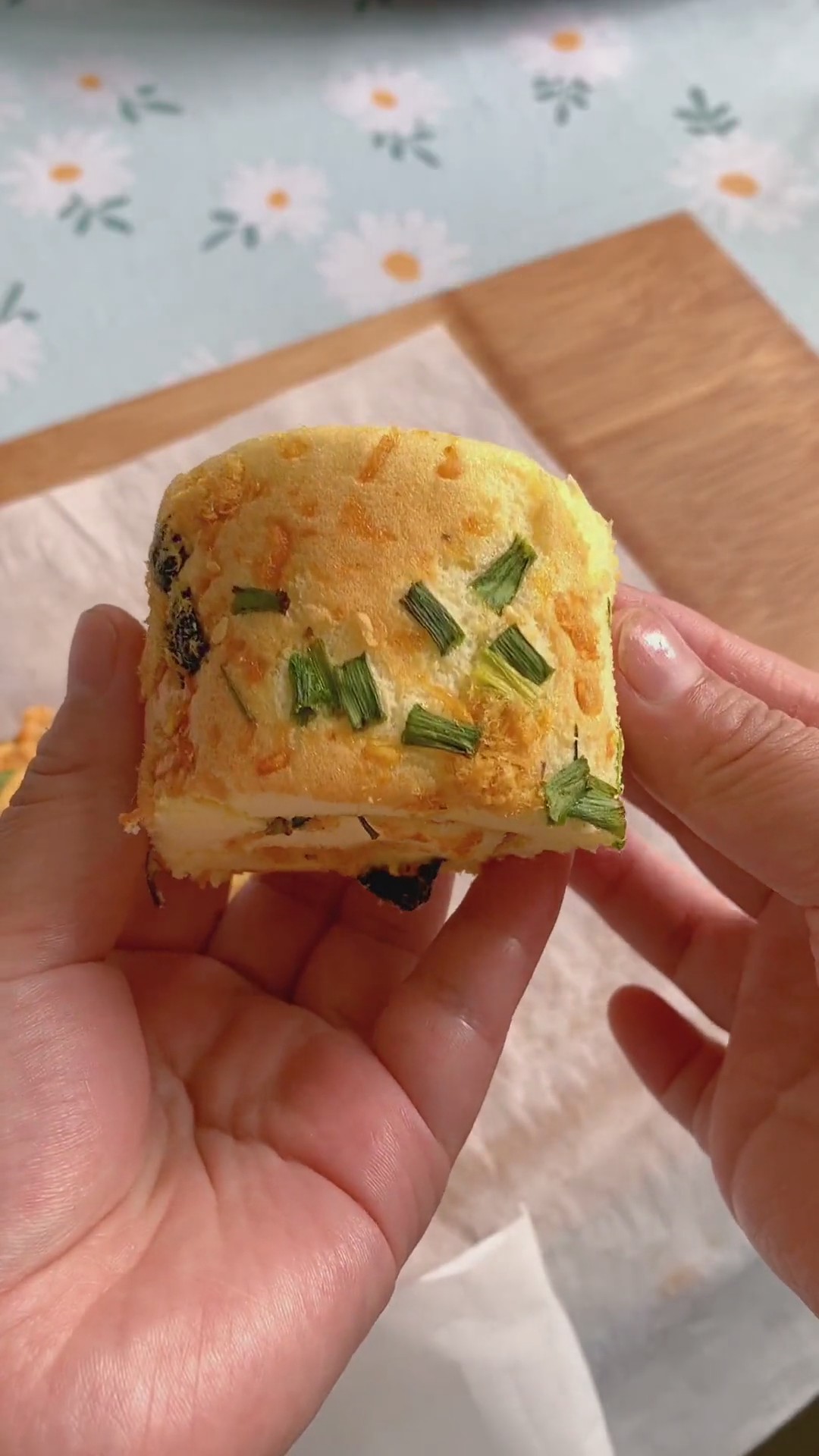
Ingredients and Substitutions
- Corn Oil – A neutral-flavored oil is essential here to let the other flavors shine. Avoid strongly flavored oils like olive or peanut oil, as they will overwhelm the delicate cake.
- Whole Milk – I recommend using whole milk for the best richness and moisture in the cake crumb. While you can use lower-fat milk, the result won’t be quite as tender.
- Cake Flour – This is non-negotiable for achieving the signature soft, pillowy texture of the sponge. Its low protein content prevents gluten development, which would make the cake tough and likely to crack. Do not substitute with all-purpose flour.
- Eggs – You’ll need to separate the yolks and whites. Ensure your bowl and beaters for the whites are impeccably clean and dry; any trace of fat or yolk will prevent them from whipping up properly.
- Granulated Sugar – The sugar is used solely to stabilize the whipped egg white meringue, giving the cake its structure and a hint of sweetness.
- White Vinegar / Lemon Juice – Just a few drops are crucial! The acid helps stabilize the egg white foam, ensures a greater volume, and eliminates any potential eggy taste.
- Seaweed Pork Floss – Look for the crispy, savory variety commonly labeled as “meat floss” or “pork sung.” If you’re interested, I also have a recipe to make your own homemade pork floss!
- Chopped Green Onions – These provide a fresh, aromatic kick that cuts through the richness. If you’re not a fan, you can omit them, but they really elevate the flavor.
- Mayonnaise – Use a good-quality, creamy mayonnaise (sweet or original flavor both work).
How to Make Seaweed Pork Floss Roll Cake
1. Prepare & Make the Yolk Batter
Preheat your oven to 150°C (300°F) with both top and bottom heat. Line a standard 28×28 cm (11×11 inch) baking pan with parchment paper, ensuring the paper goes up the sides slightly for easy removal.
In a medium bowl, whisk together the 40g corn oil and 40g whole milk until completely blended and emulsified.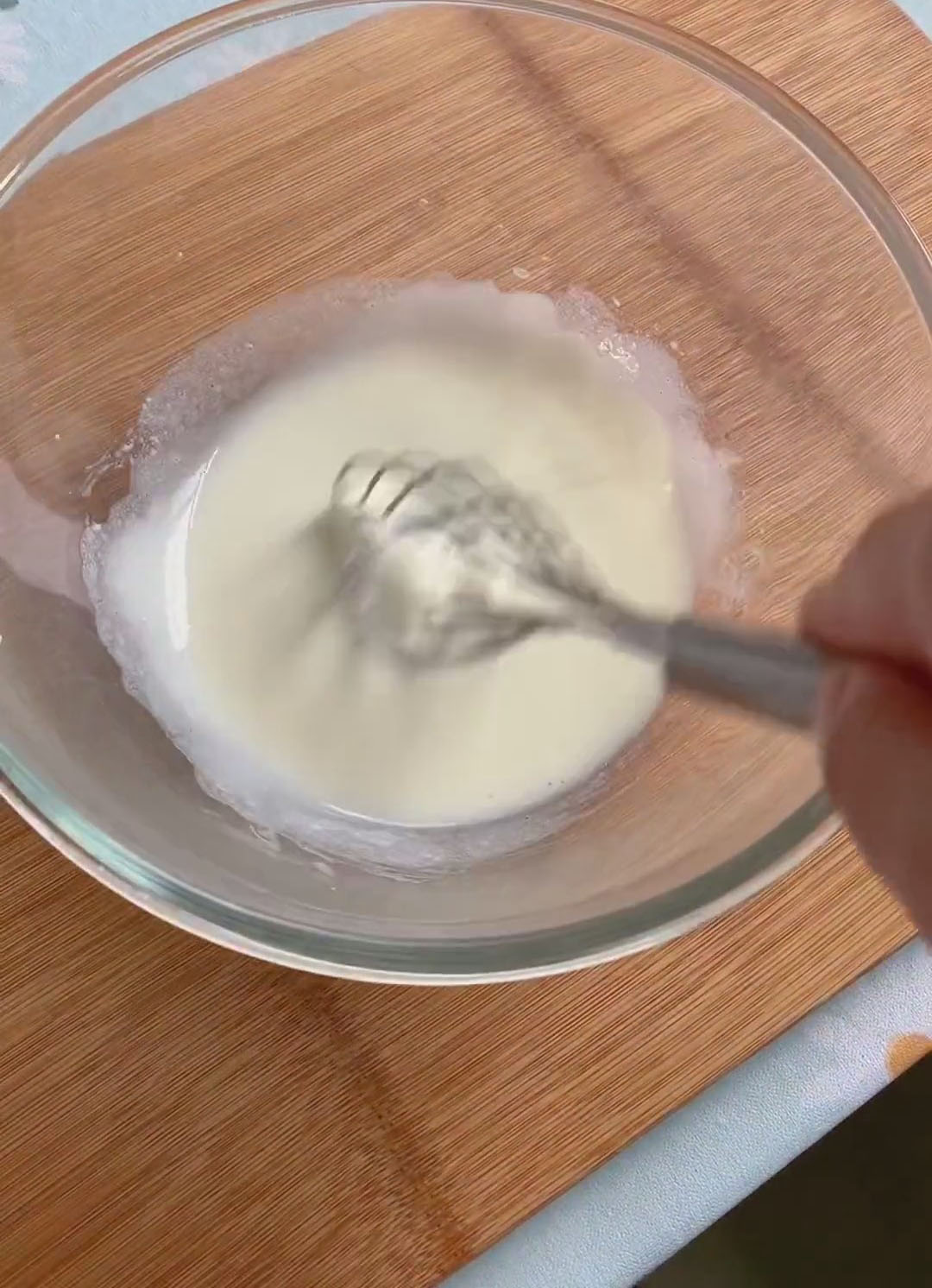
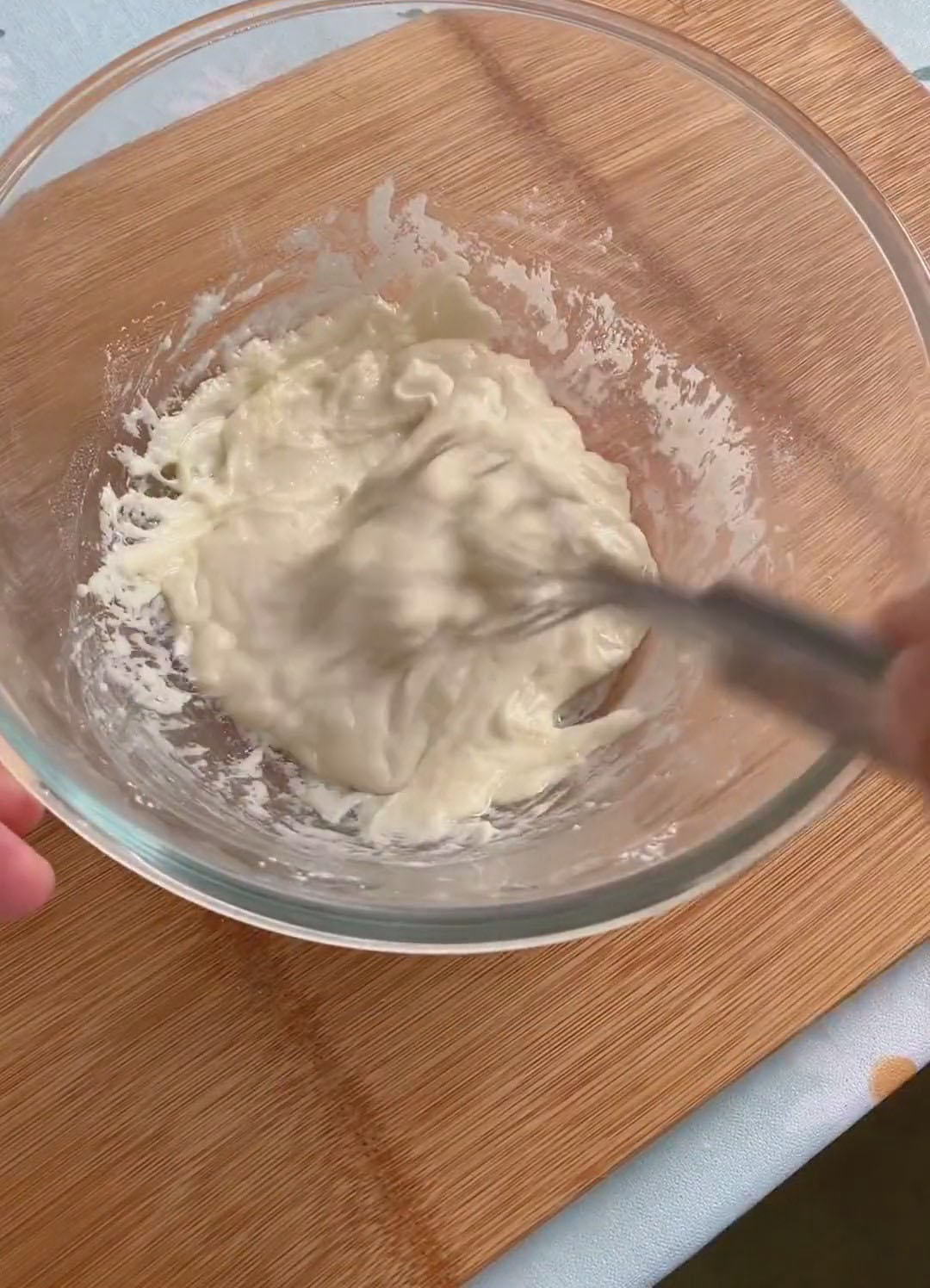
Sift in the 40g of cake flour, and mix gently using a “Z” motion to ensure there are no lumps. Avoid stirring in circles as this may activate the gluten, making the cake dense.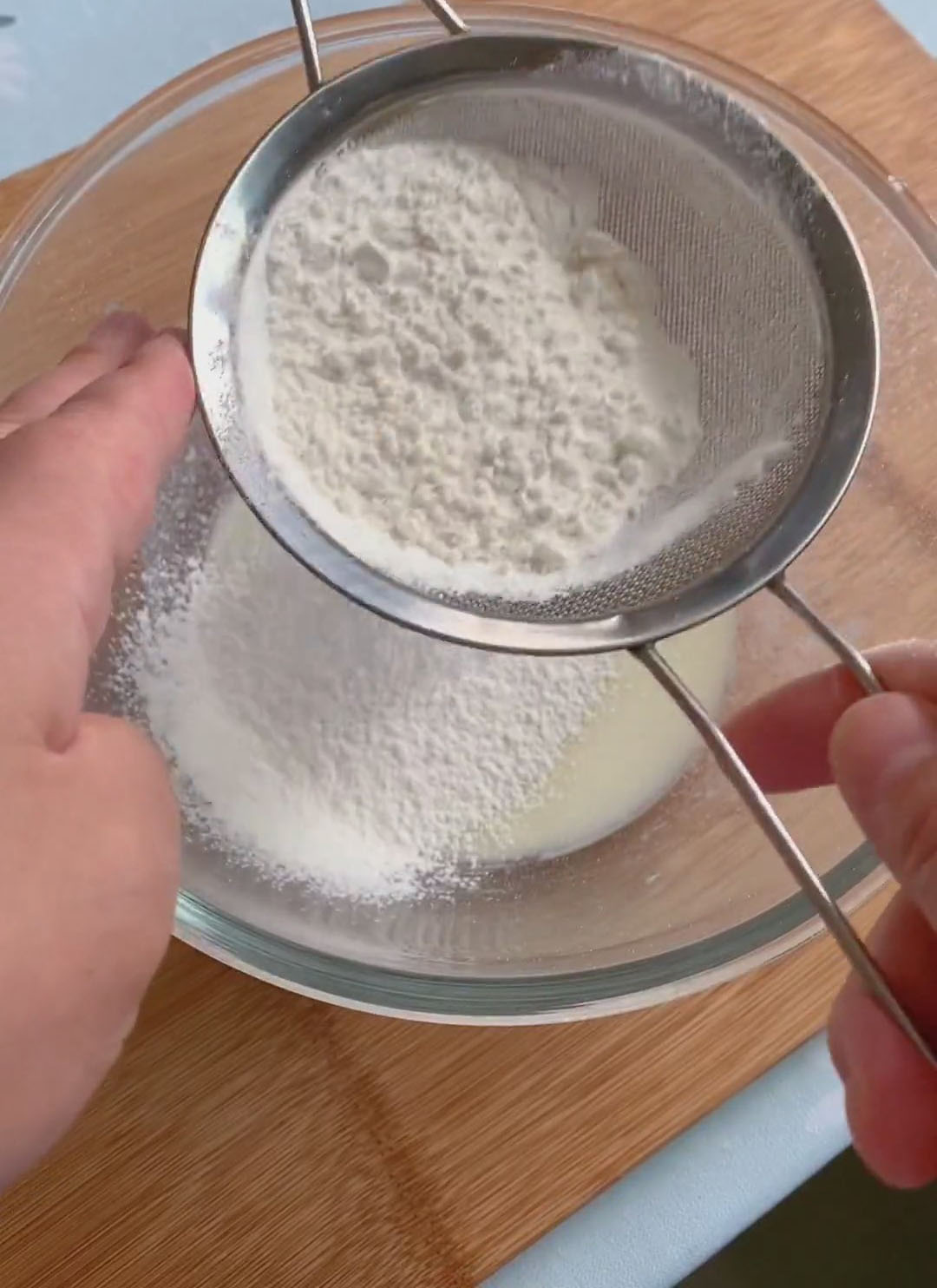
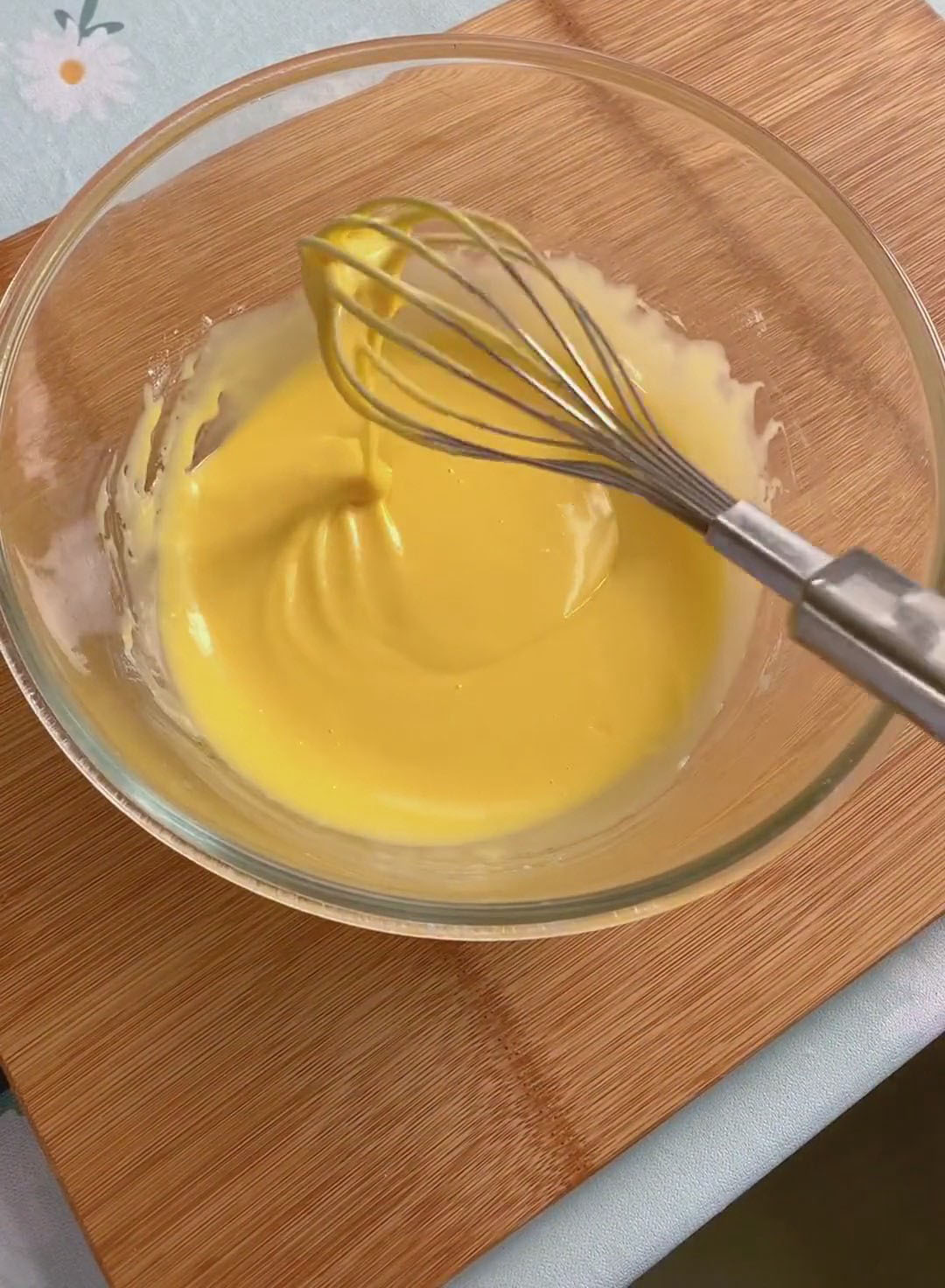
 Add the 4 egg yolks to this flour mixture. Using the same “Z” pattern, mix until you have a smooth, thick, and lump-free batter. Set aside.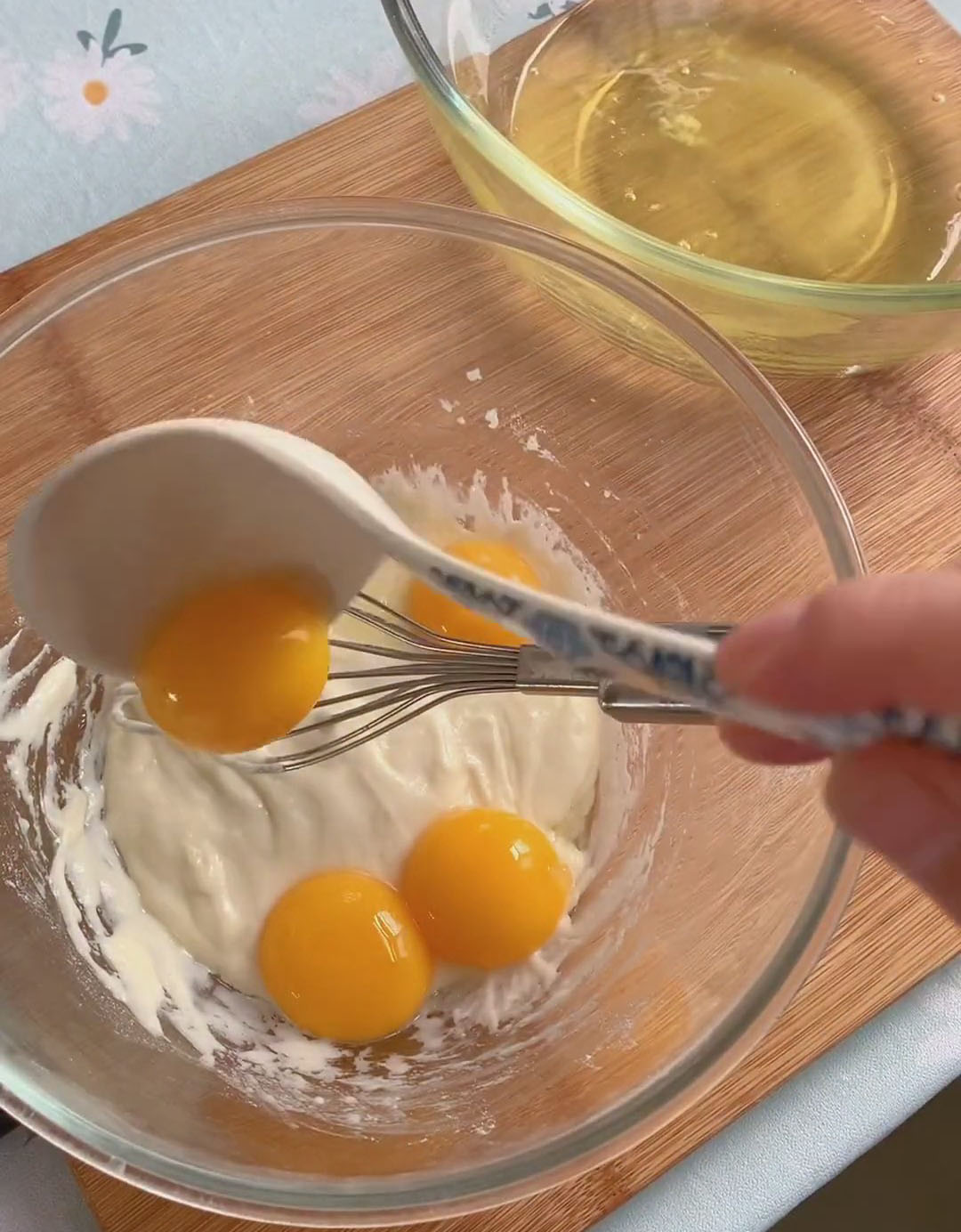
2. Whip the Meringue
In a separate, impeccably clean and dry bowl, place the 4 egg whites. Add a few drops of vinegar or lemon juice.
Using an electric mixer, start on low speed until the whites become frothy. Increase the speed to medium and gradually add the 30g of granulated sugar.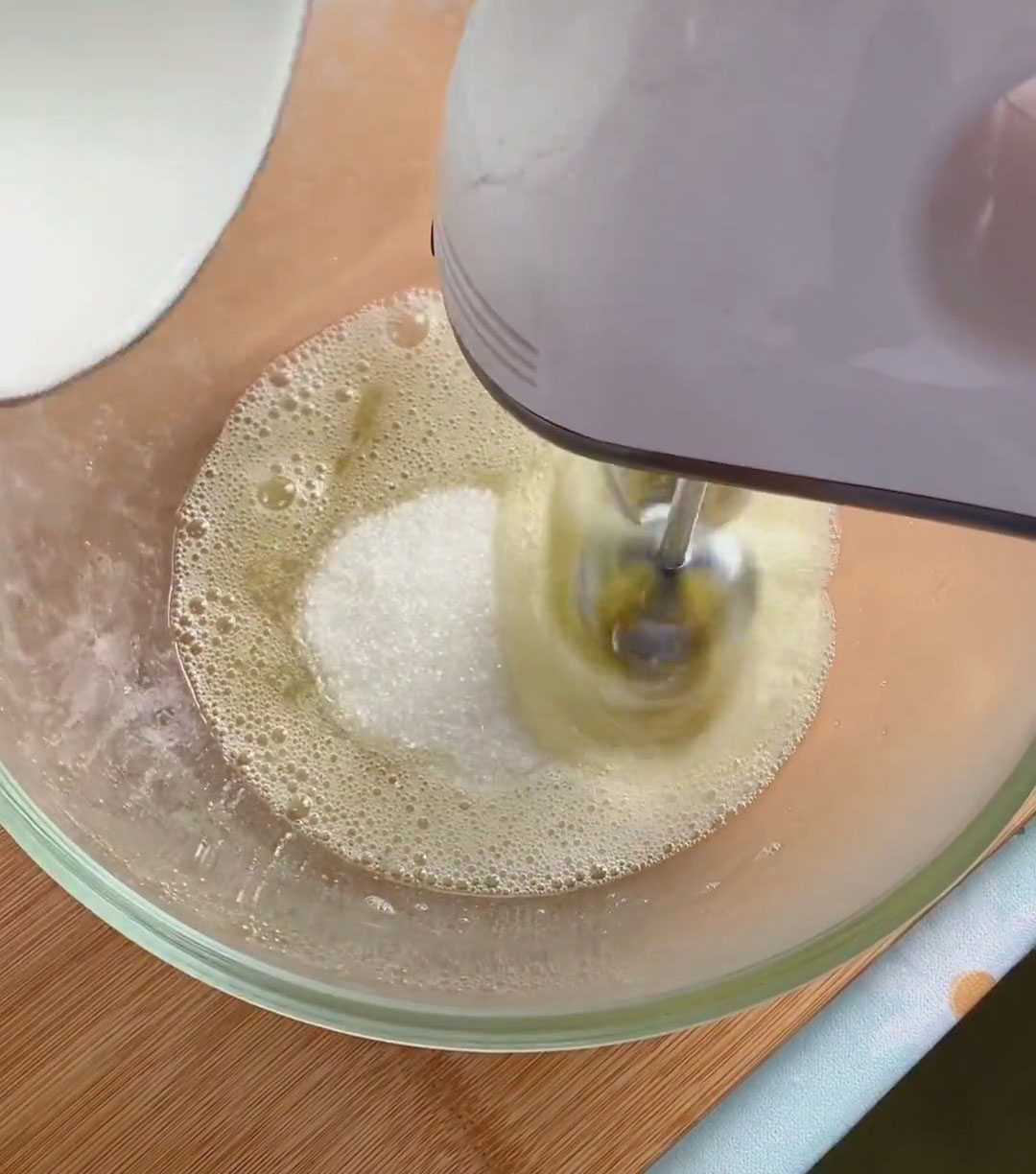
Continue whipping on medium-high speed until the meringue reaches the soft peak stage. This is critical: when you lift the beaters, the meringue should form a soft, droopy peak that curls over at the tip (like a bird’s beak). 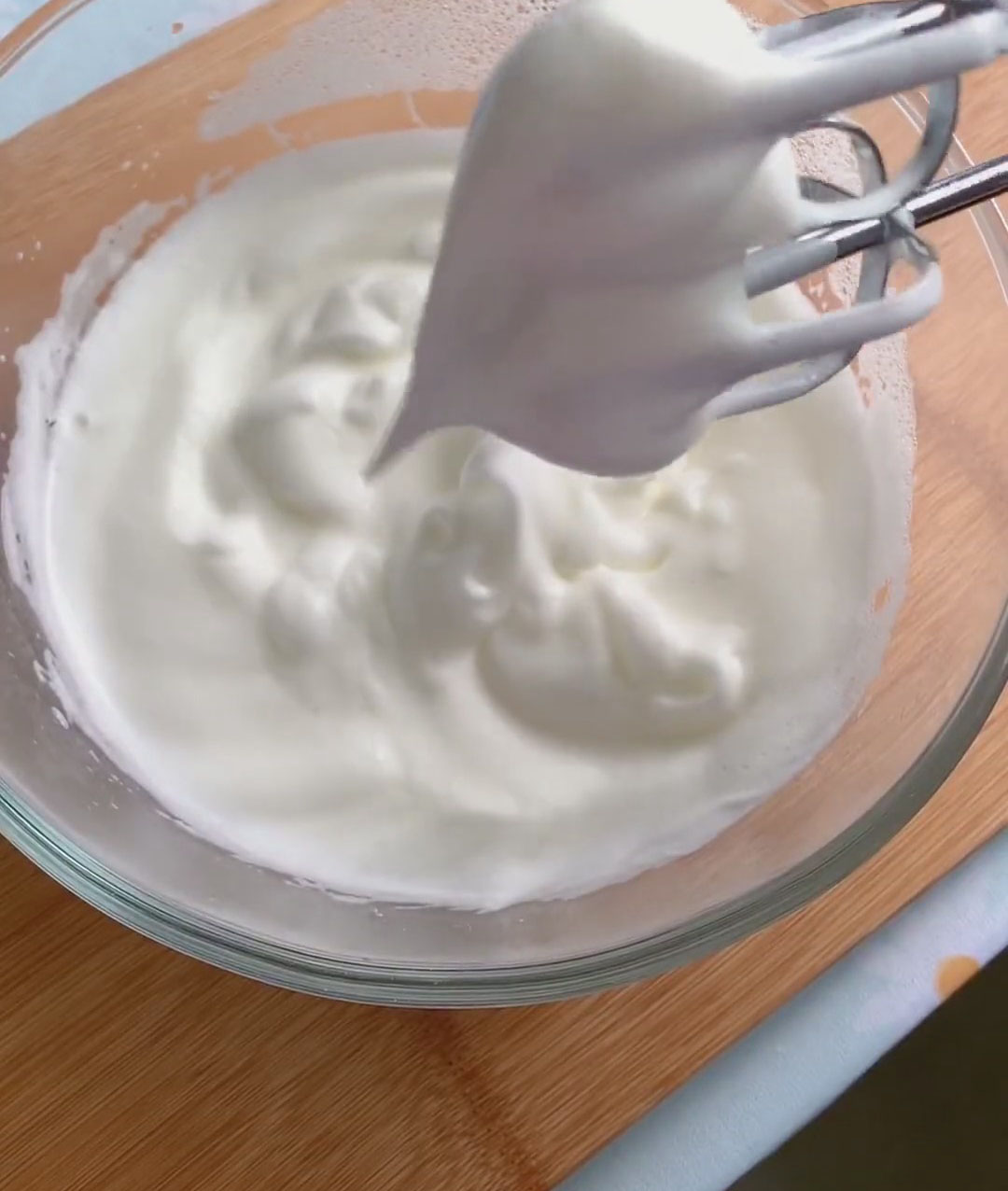
Do not whip to stiff, upright peaks, as this will make the cake more prone to cracking when rolled.
3. Fold the Batters Together
Using your spatula, take about one-third of the whipped meringue and add it to the yolk batter.
Fold gently to lighten the thick batter until mostly combined.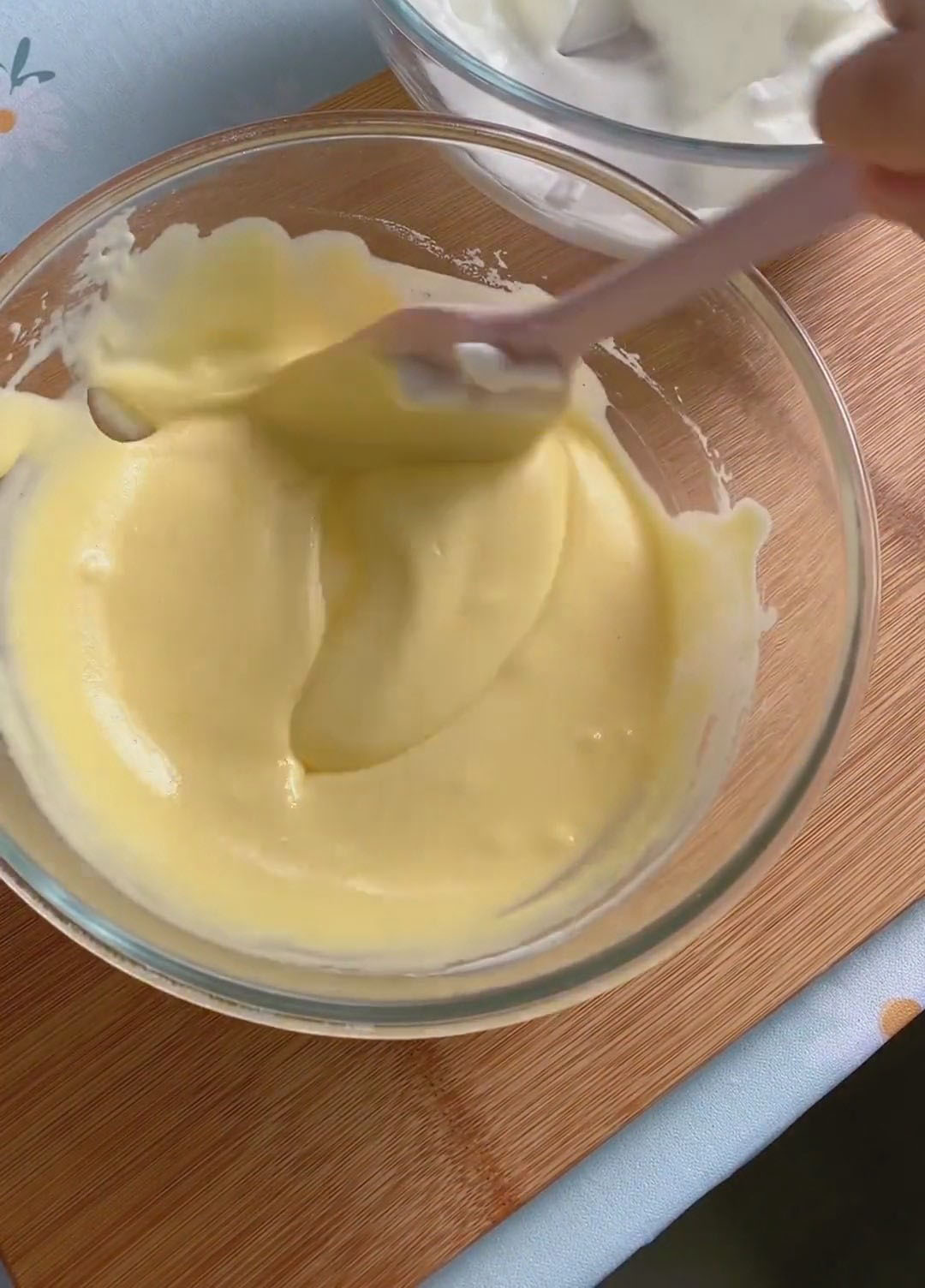
Pour this lightened mixture back into the bowl with the remaining meringue.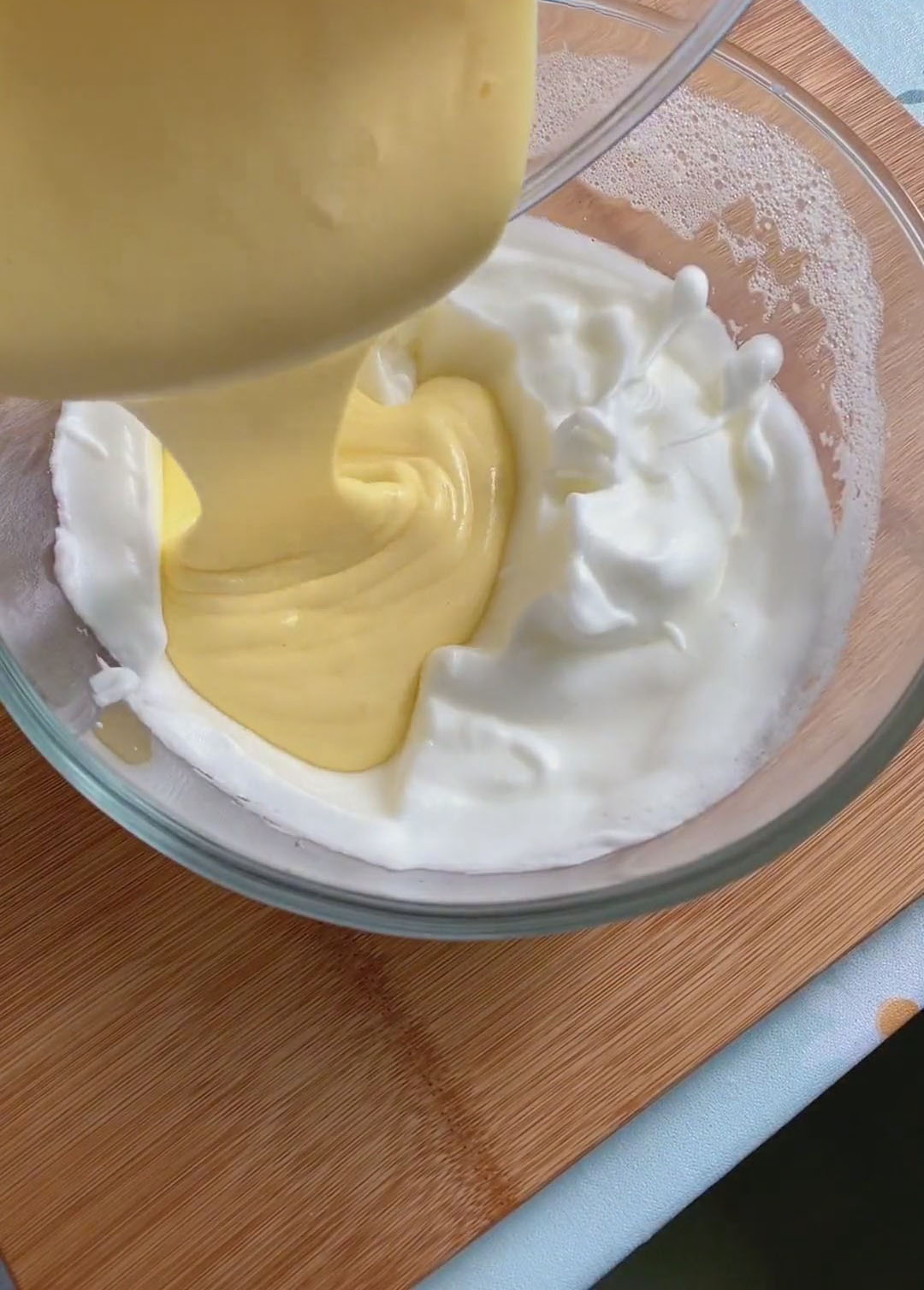
Now, fold very gently and carefully: cut through the center with your spatula, scoop from the bottom, and fold over the top. Rotate the bowl and repeat until no white streaks remain. The batter should be smooth, fluffy, and voluminous. Work quickly but gently to avoid deflating it.
4. Bake the Cake
Pour the batter into the prepared baking tray, holding the bowl about 30cm above the tray. This helps the batter spread evenly without creating large air bubbles.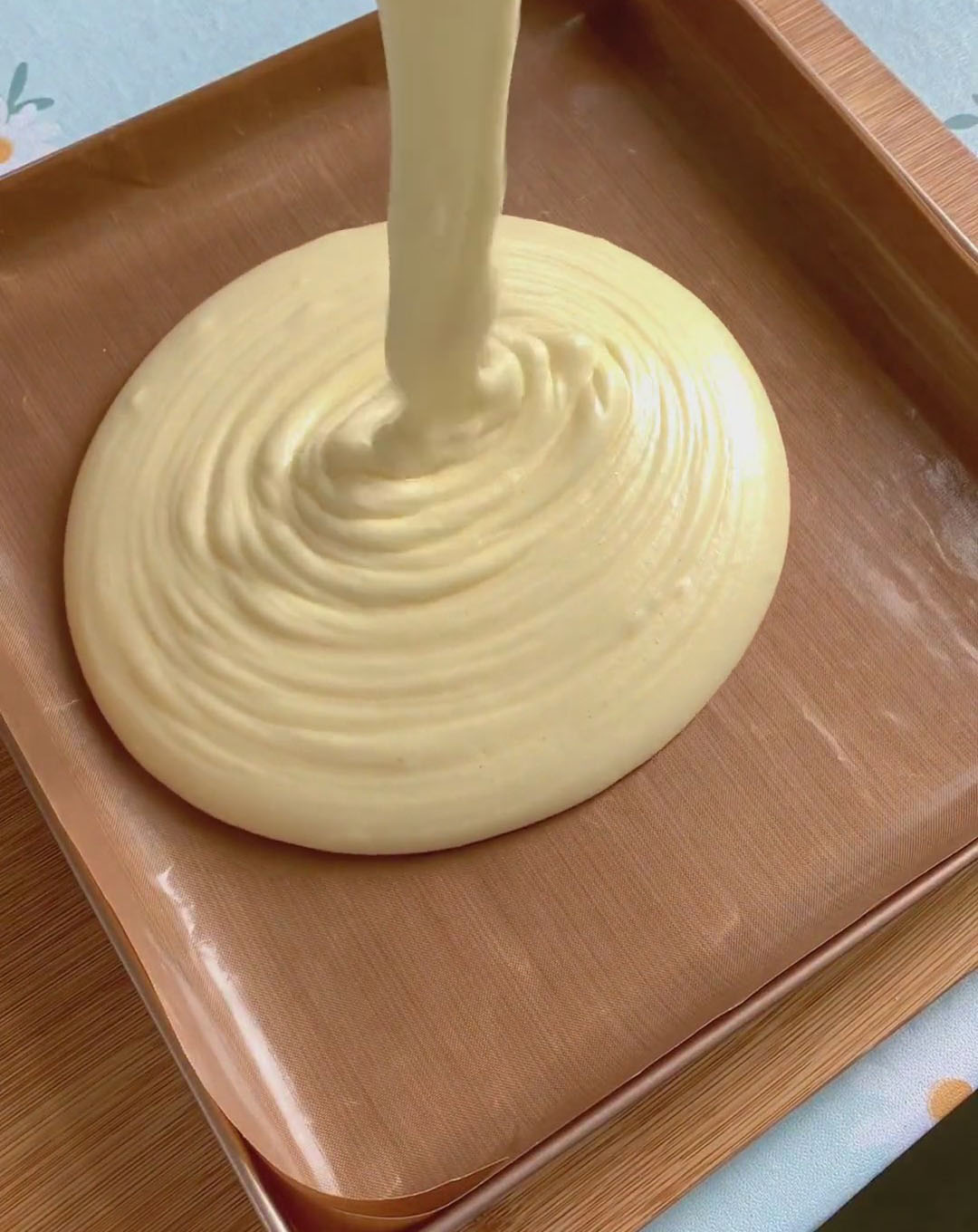
Tilt the pan gently or use an offset spatula to spread it into an even layer.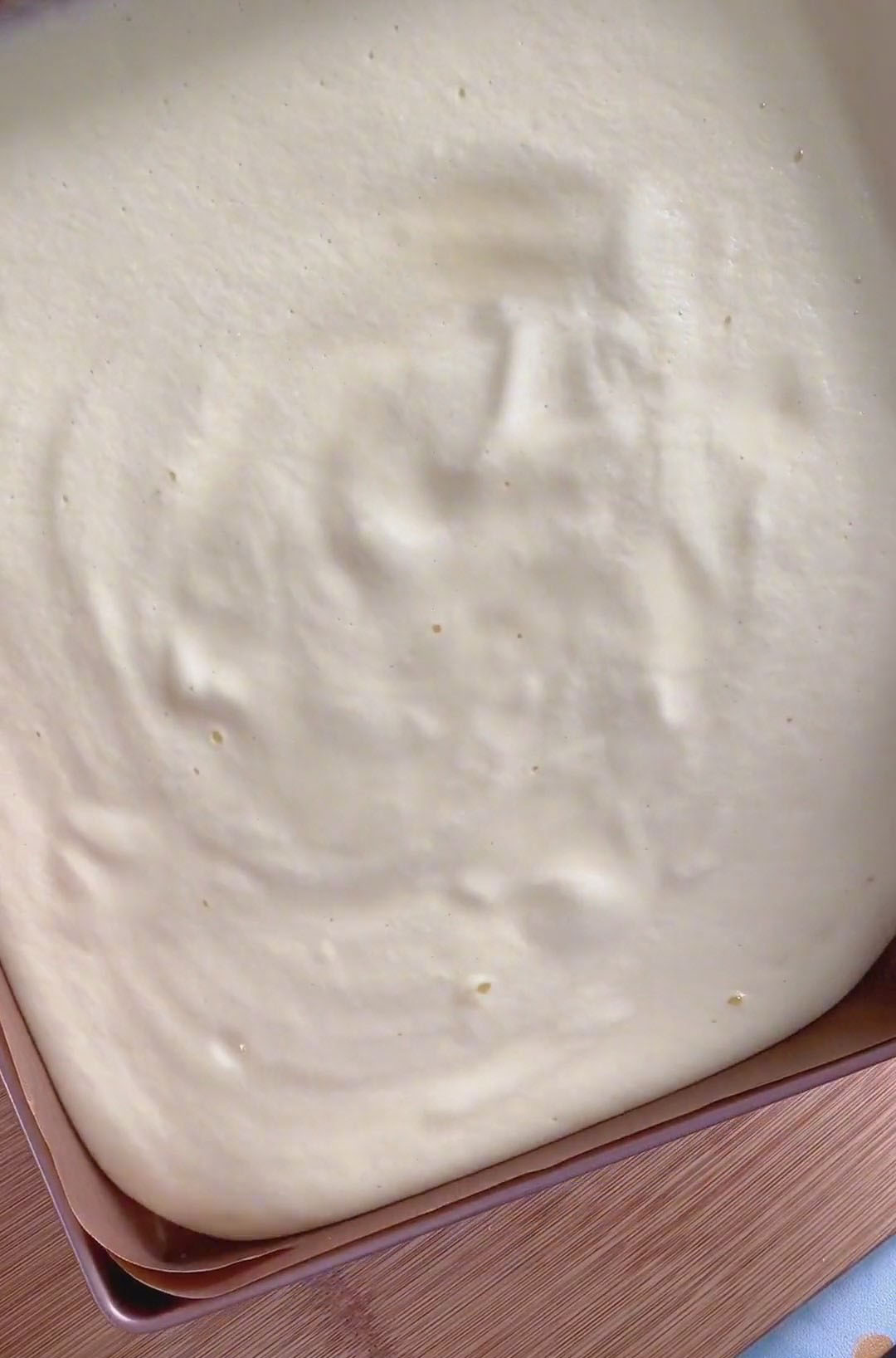
Gently tap the tray on the counter 3-5 times to release any large air bubbles.
Evenly sprinkle a layer of seaweed pork floss and chopped green onions on top of the batter.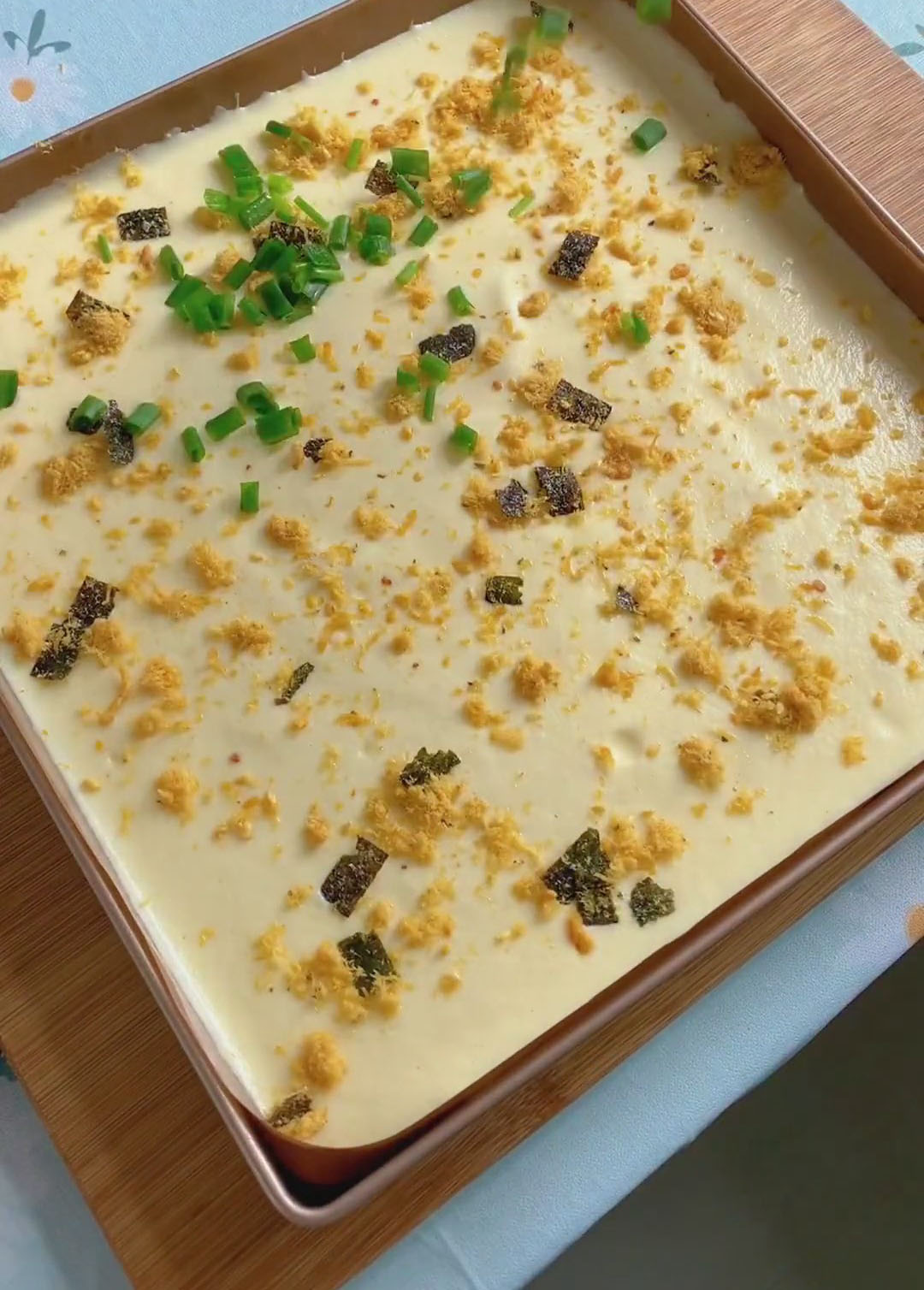
Place the pan on the middle rack of the preheated oven. Bake at 150°C (300°F) for 28-30 minutes, or until the top is a light golden brown and springs back lightly when touched.
5. Shape and Cool the Cake
Remove the cake from the oven and allow it to cool for a few minutes. Peel off the parchment paper from the bottom of the cake.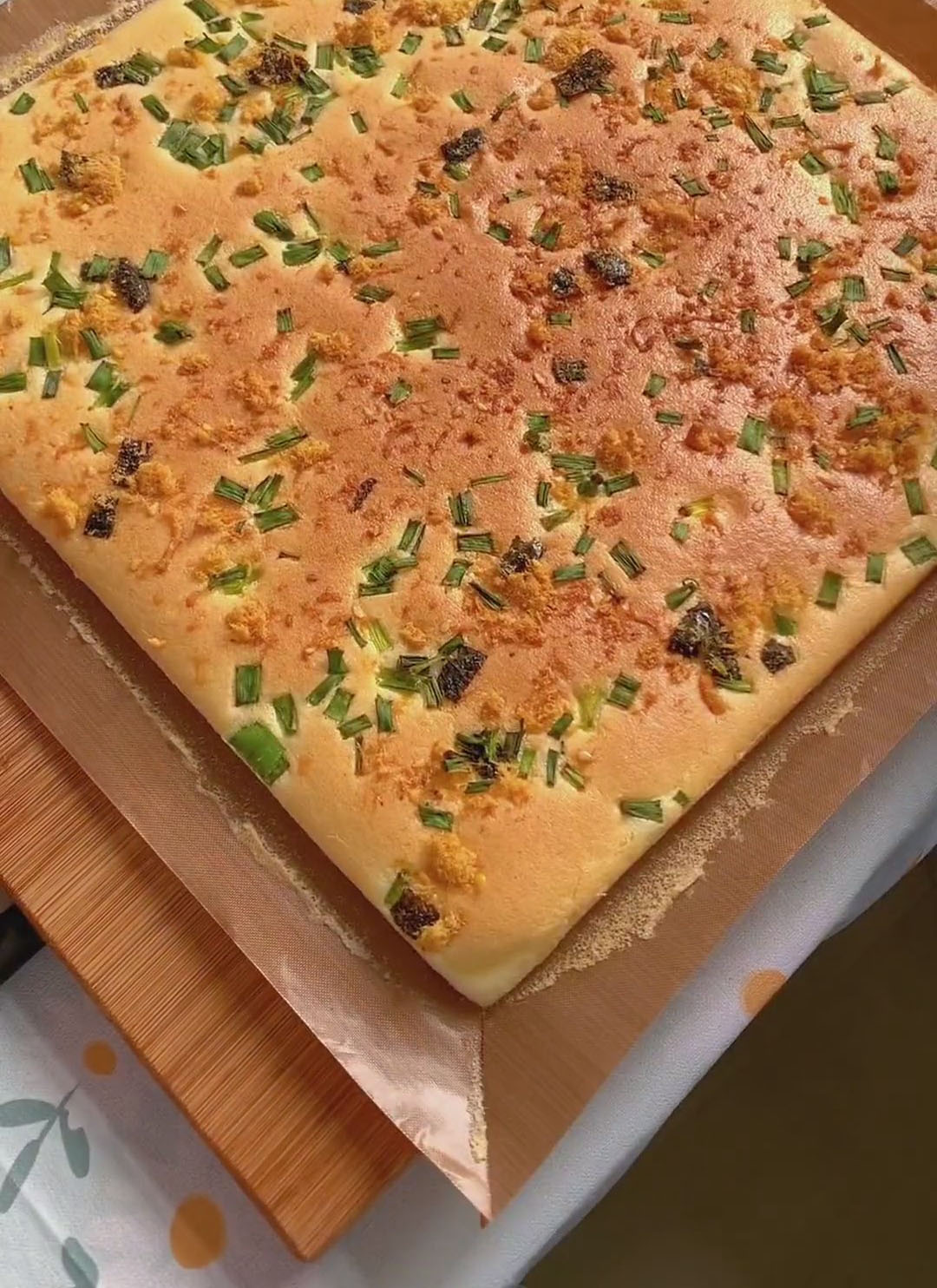
Let the cake cool to room temperature on a flat surface.
6. Fill and Roll the Cake
Once the cake has cooled, flip it over onto a new piece of parchment paper. Spread a thin layer of salad dressing on the surface of the cake, leaving a 1cm margin at the edges.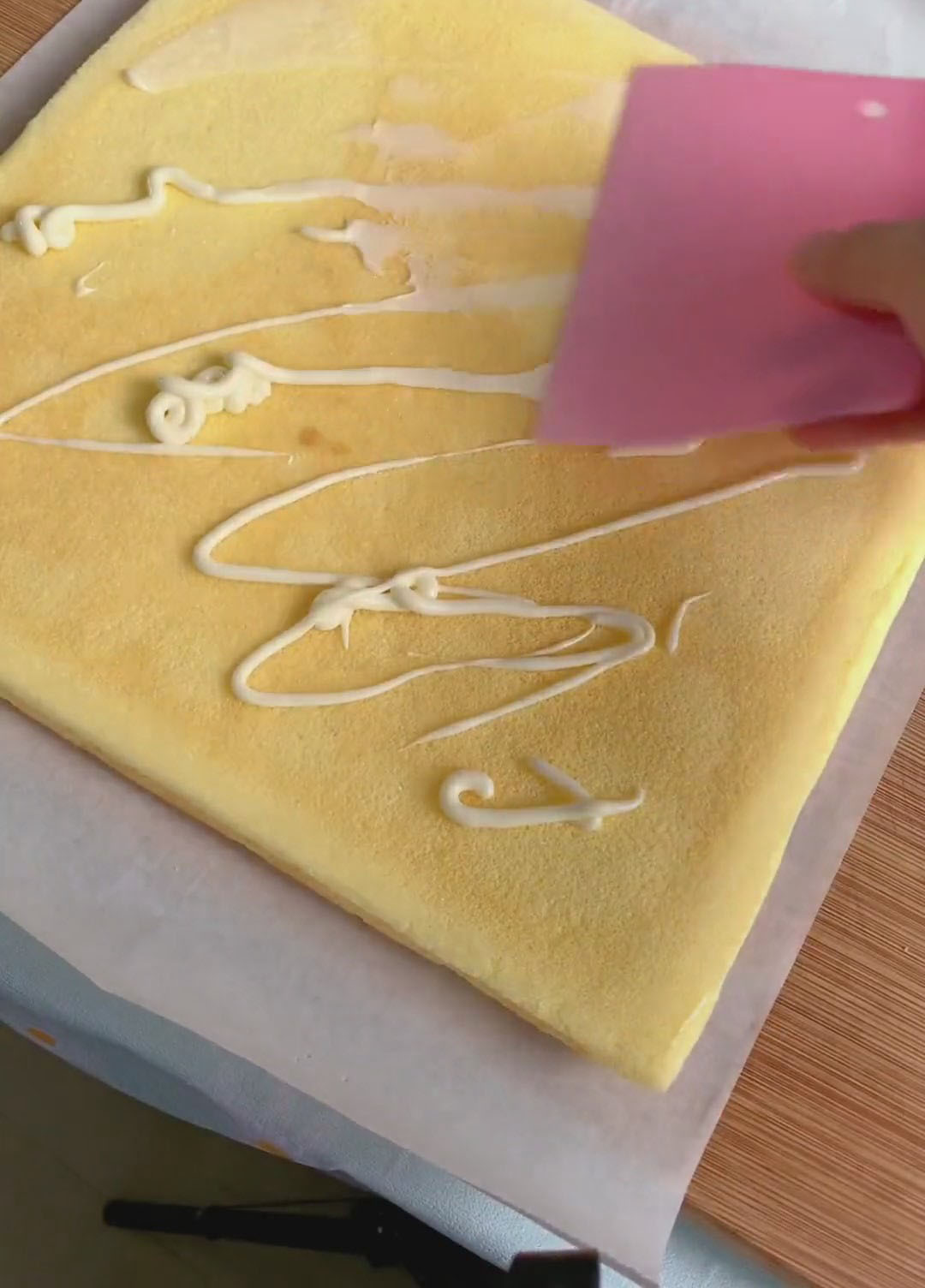
Sprinkle a layer of seaweed pork floss on top of the dressing. Gently press to help the floss stick to the dressing.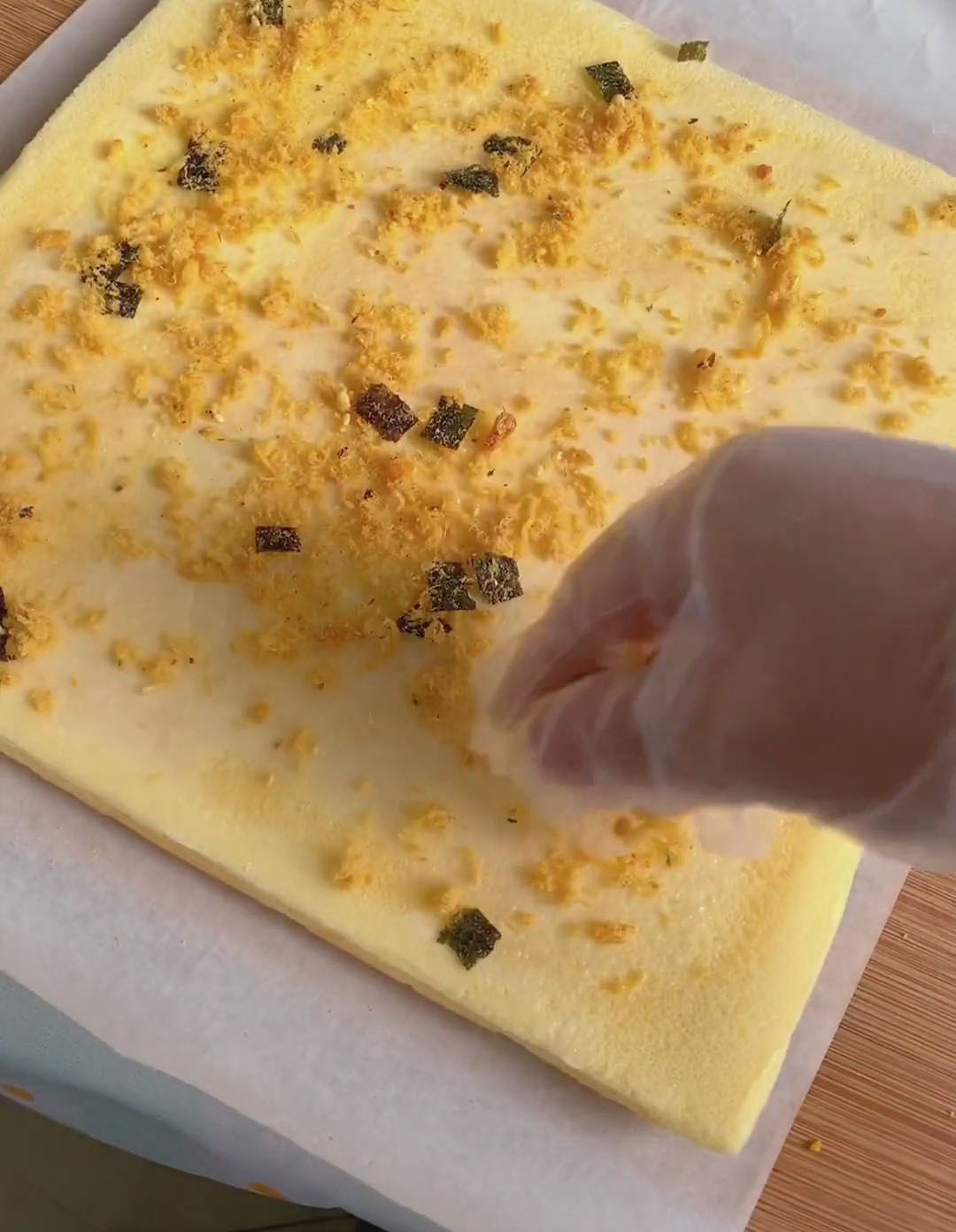
Use a sharp knife to trim off the two short ends of the cake at a slight angle (this helps the layers fit together snugly when rolling).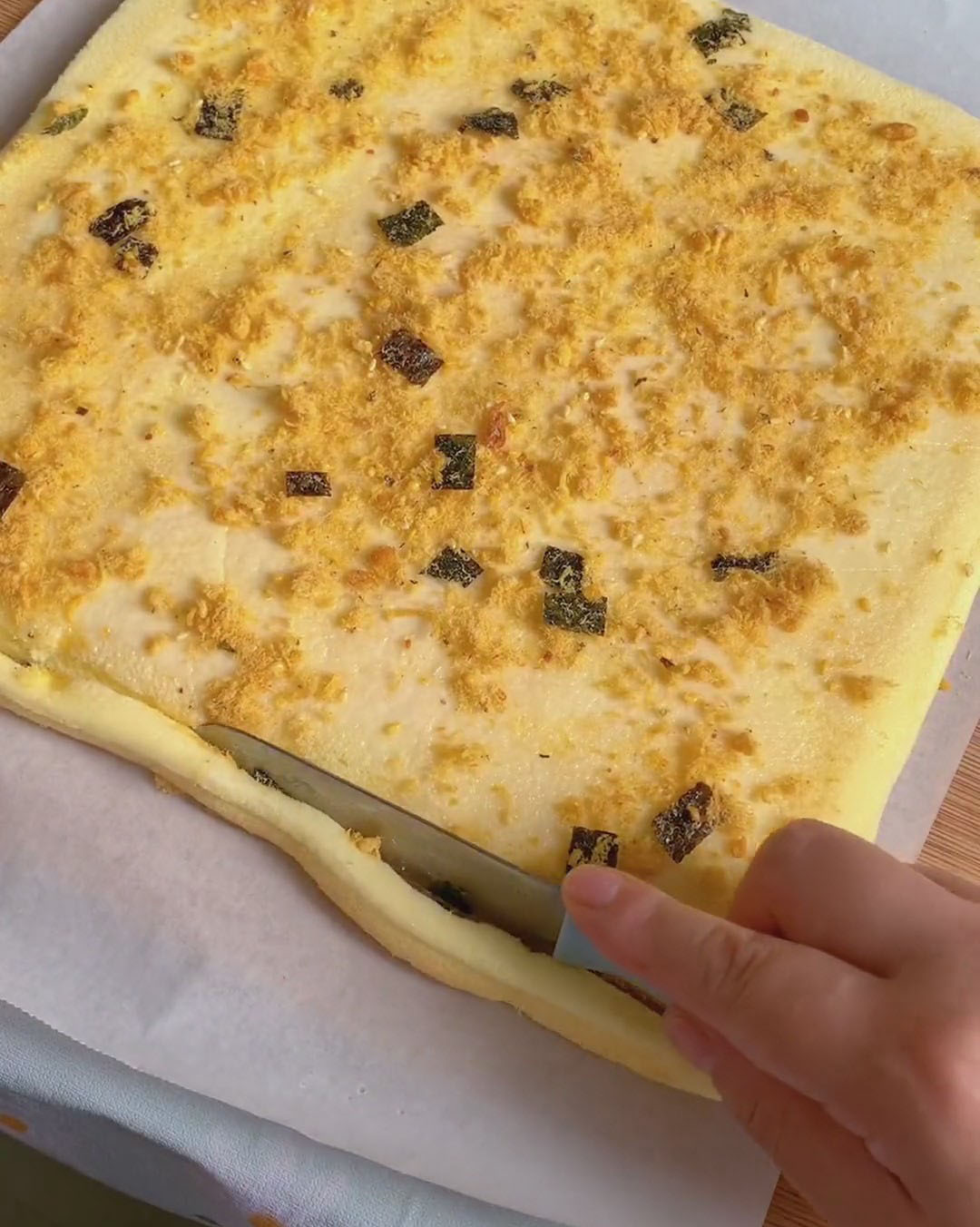
Starting from one angled end, use a rolling pin to help tightly roll the cake inward (the tighter you roll, the less likely it is to unravel after setting).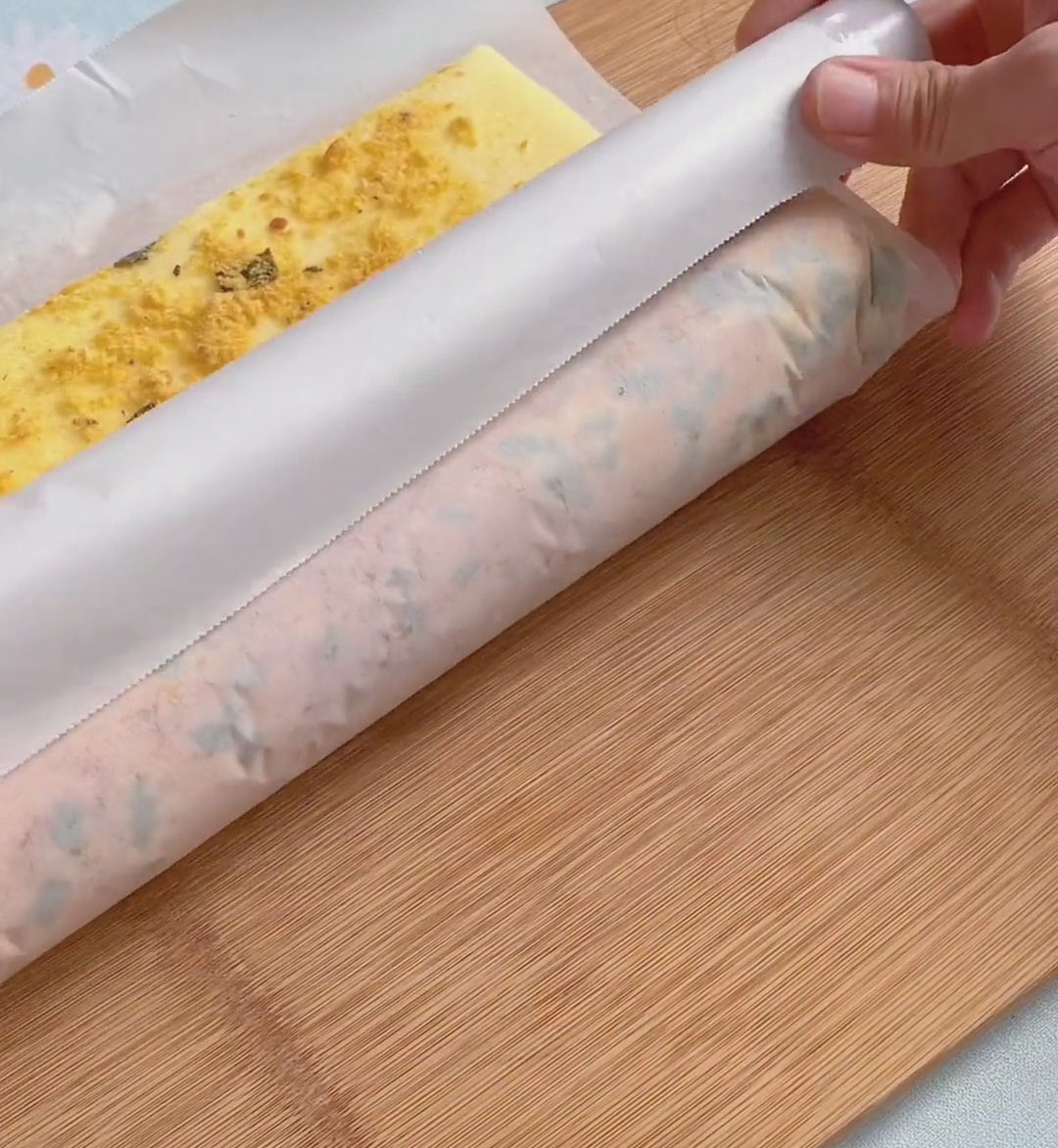
Use an offset spatula to gently press and compact it as you go.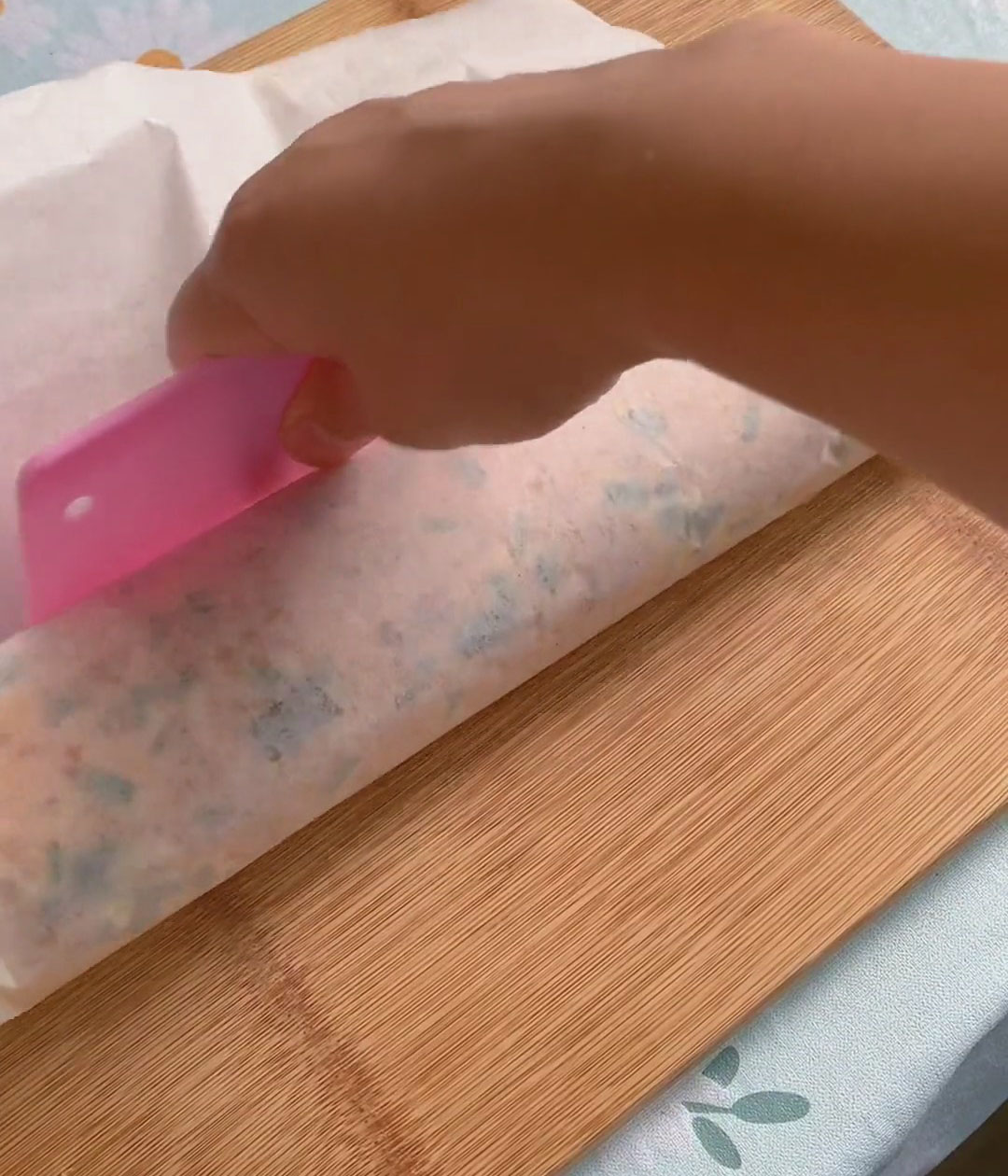
Once rolled, refrigerate the cake for 30 minutes to set.
7. Slice and Serve
After the cake has chilled and set, use a sharp knife to slice it into 3-4 cm pieces. Serve and enjoy!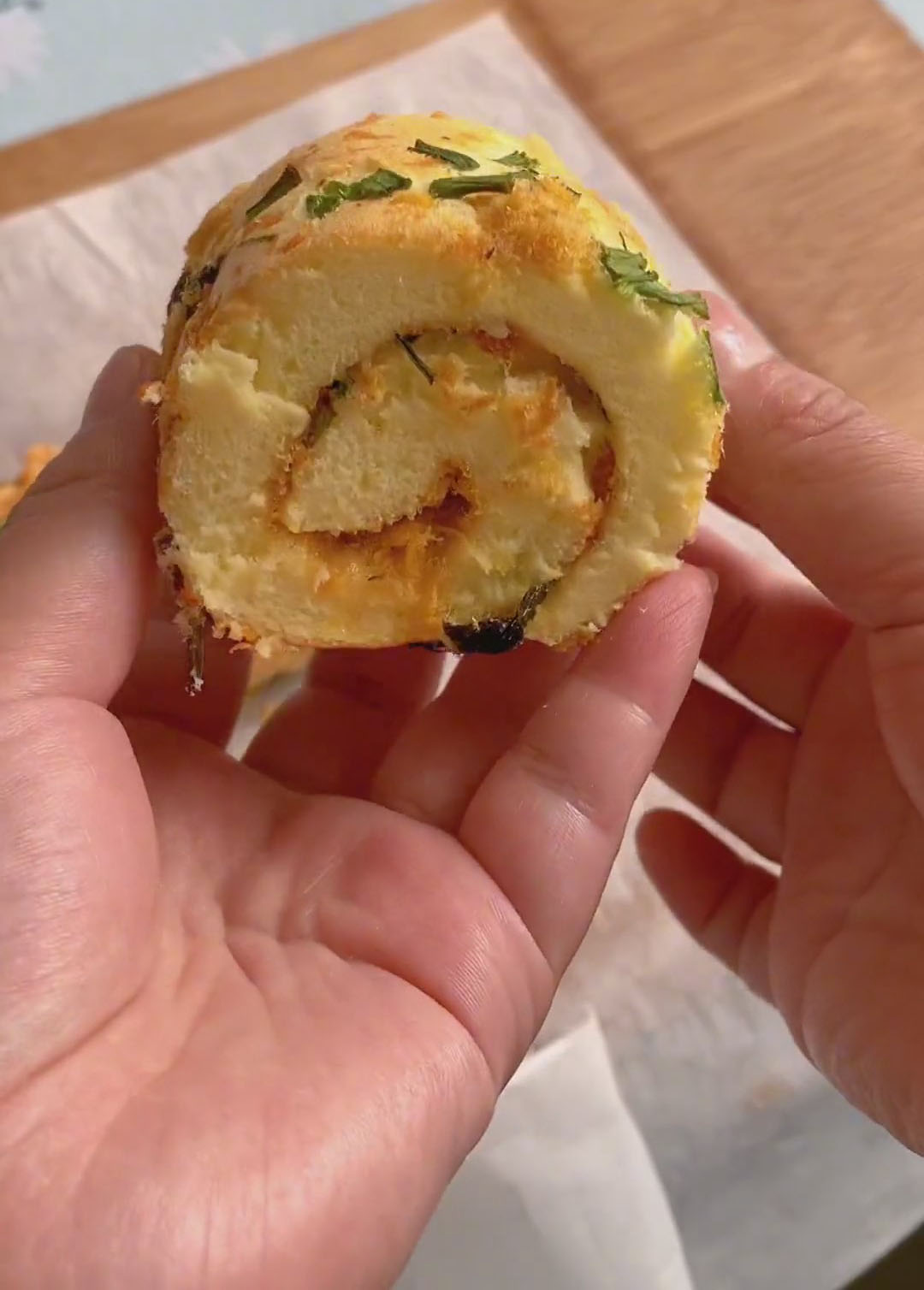
Tips & Tricks
- Master the Meringue: The soft peak stage is the single most important step for a crack-free roll. Over-whipped meringue makes the cake too stiff and dry, leading to cracks. If in doubt, stop whipping a little early.
- Fold, Don’t Stir: Always use a gentle folding motion when combining the meringue and batter. Stirring or beating will deflate the precious air bubbles, resulting in a dense, flat cake.
- Cool Completely: Patience is key. Do not attempt to roll the cake while it’s even slightly warm, as the steam inside will make it soggy and prone to tearing.
- Roll Tightly, Chill Thoroughly: A snug initial roll and proper chilling time are what give you neat, perfect slices that hold their shape without falling apart.
Frequently Asked Questions
Why did my cake crack when I rolled it?
This is usually due to one of three reasons: 1) The egg whites were over-whipped to stiff peaks, making the cake less flexible. 2) The cake was over-baked and became too dry. 3) You tried to roll it before it was completely cooled.
My cake is dense and didn’t rise much. What happened?
This is almost always caused by deflating the batter. This can happen if: the meringue was under-whipped and unstable; you used a stirring motion instead of folding to combine the batters; or you over-mixed the batter after adding the flour (developing gluten). Ensure your meringue is at soft peaks and fold gently and swiftly.
Can I use all-purpose flour instead of cake flour?
I do not recommend it. Cake flour has a lower protein content, which is essential for the tender, fine crumb needed for a roll cake. Using all-purpose flour will yield a chewier, tougher sponge that is more likely to crack. If you must substitute, for every 40g of cake flour, use 30g all-purpose flour + 10g cornstarch, sifted together.
Fluffy Pork Floss Roll Cake | Easy Recipe
Ingredients
For the Sponge Cake
- 40 g corn oil or other neutral vegetable oil
- 40 g whole milk
- 40 g cake flour sifted
- 4 medium eggs approx. 200g total, separated
- 30 g granulated sugar
- A few drops of white vinegar or lemon juice
For the Topping & Filling
- 50-60 g seaweed pork floss divided
- 1-2 tablespoons finely chopped green onions
- 4-5 tablespoons mayonnaise sweet or original flavor
Instructions
Prepare & Make the Yolk Batter
- Preheat your oven to 150°C (300°F) with both top and bottom heat. Line a standard 28x28 cm (11x11 inch) baking pan with parchment paper, ensuring the paper goes up the sides slightly for easy removal.
- In a medium bowl, whisk together the 40g corn oil and 40g whole milk until completely blended and emulsified.
- Sift in the 40g of cake flour, and mix gently using a "Z" motion to ensure there are no lumps. Avoid stirring in circles as this may activate the gluten, making the cake dense.
- Add the 4 egg yolks to this flour mixture. Using the same "Z" pattern, mix until you have a smooth, thick, and lump-free batter. Set aside.
Whip the Meringue
- In a separate, impeccably clean and dry bowl, place the 4 egg whites. Add a few drops of vinegar or lemon juice.
- Using an electric mixer, start on low speed until the whites become frothy. Increase the speed to medium and gradually add the 30g of granulated sugar.
- Continue whipping on medium-high speed until the meringue reaches the soft peak stage. This is critical: when you lift the beaters, the meringue should form a soft, droopy peak that curls over at the tip (like a bird's beak). Do not whip to stiff, upright peaks, as this will make the cake more prone to cracking when rolled.
Fold the Batters Together
- Using your spatula, take about one-third of the whipped meringue and add it to the yolk batter.
- Fold gently to lighten the thick batter until mostly combined.
- Pour this lightened mixture back into the bowl with the remaining meringue. Now, fold very gently and carefully: cut through the center with your spatula, scoop from the bottom, and fold over the top. Rotate the bowl and repeat until no white streaks remain. The batter should be smooth, fluffy, and voluminous. Work quickly but gently to avoid deflating it.
Bake the Cake
- Pour the batter into the prepared baking tray, holding the bowl about 30cm above the tray. This helps the batter spread evenly without creating large air bubbles.
- Tilt the pan gently or use an offset spatula to spread it into an even layer.
- Gently tap the tray on the counter 3-5 times to release any large air bubbles.
- Evenly sprinkle a layer of seaweed pork floss and chopped green onions on top of the batter.
- Place the pan on the middle rack of the preheated oven. Bake at 150°C (300°F) for 28-30 minutes, or until the top is a light golden brown and springs back lightly when touched.
Shape and Cool the Cake
- Remove the cake from the oven and allow it to cool for a few minutes. Peel off the parchment paper from the bottom of the cake.
- Let the cake cool to room temperature on a flat surface.
Fill and Roll the Cake
- Once the cake has cooled, flip it over onto a new piece of parchment paper. Spread a thin layer of salad dressing on the surface of the cake, leaving a 1cm margin at the edges.
- Sprinkle a layer of seaweed pork floss on top of the dressing. Gently press to help the floss stick to the dressing.
- Use a sharp knife to trim off the two short ends of the cake at a slight angle (this helps the layers fit together snugly when rolling).
- Starting from one angled end, use a rolling pin to help tightly roll the cake inward (the tighter you roll, the less likely it is to unravel after setting).
- Use an offset spatula to gently press and compact it as you go.
- Once rolled, refrigerate the cake for 30 minutes to set.
Slice and Serve
- After the cake has chilled and set, use a sharp knife to slice it into 3-4 cm pieces. Serve and enjoy!



Leave a Reply