
Making homemade Chinese sausage is easier than you might think! With just a few simple ingredients, you can create your own flavorful sausages that will have you wondering why you ever bought store-bought versions.
What is Chinese sausage
Chinese sausage (腊肠, làcháng) is a type of cured, dried sausage that hails from China, celebrated for its unique blend of sweet, savory, and umami flavors.
There are many varieties of Chinese sausage across the country, with the most common being Cantonese-style lap cheong (腊肠), made from pork, pork fat, sugar, soy sauce, and rice wine.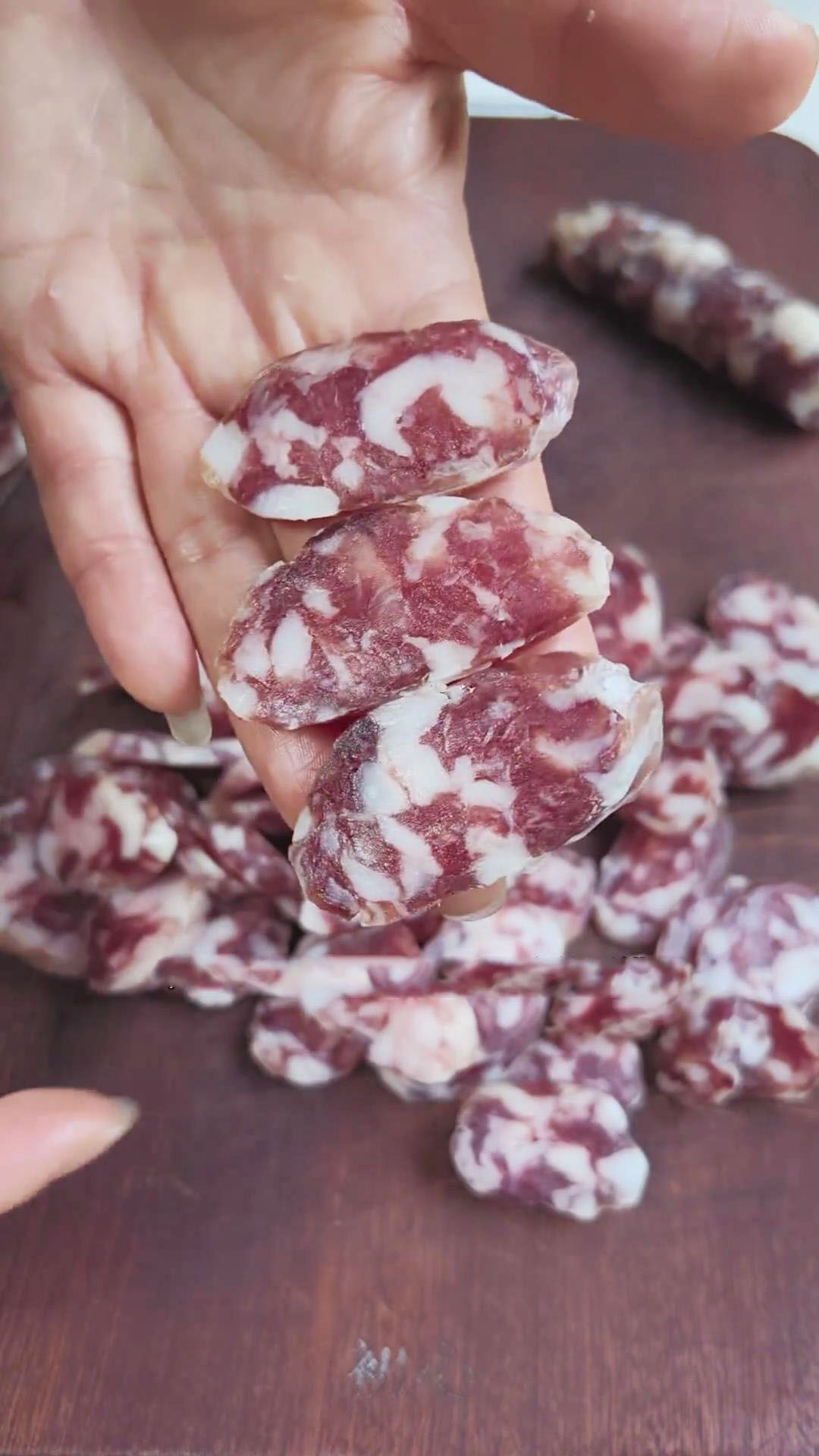
Today, I’m excited to share my recipe for this sweet sausage.
Another popular variety is Sichuan sausage, which adds its own regional twist to this beloved dish.
Why homemade Chinese Sausage
If you ask me what’s always in my fridge, it has to be Chinese sausage (腊肠). It’s a staple in my kitchen, and its long shelf life makes it perfect for quick meals or when I don’t have time to run to the market.
Just take out a few sausages, and you can whip up all sorts of dishes—sausage fried rice, clay pot rice, stir-fried glutinous rice with Chinese sausage, or even just steam them for a simple yet flavorful meal. It’s a true lifesaver on busy days.
A few years ago, I never would have thought of making my own Chinese sausage. Like many people, I used to just buy them from the store.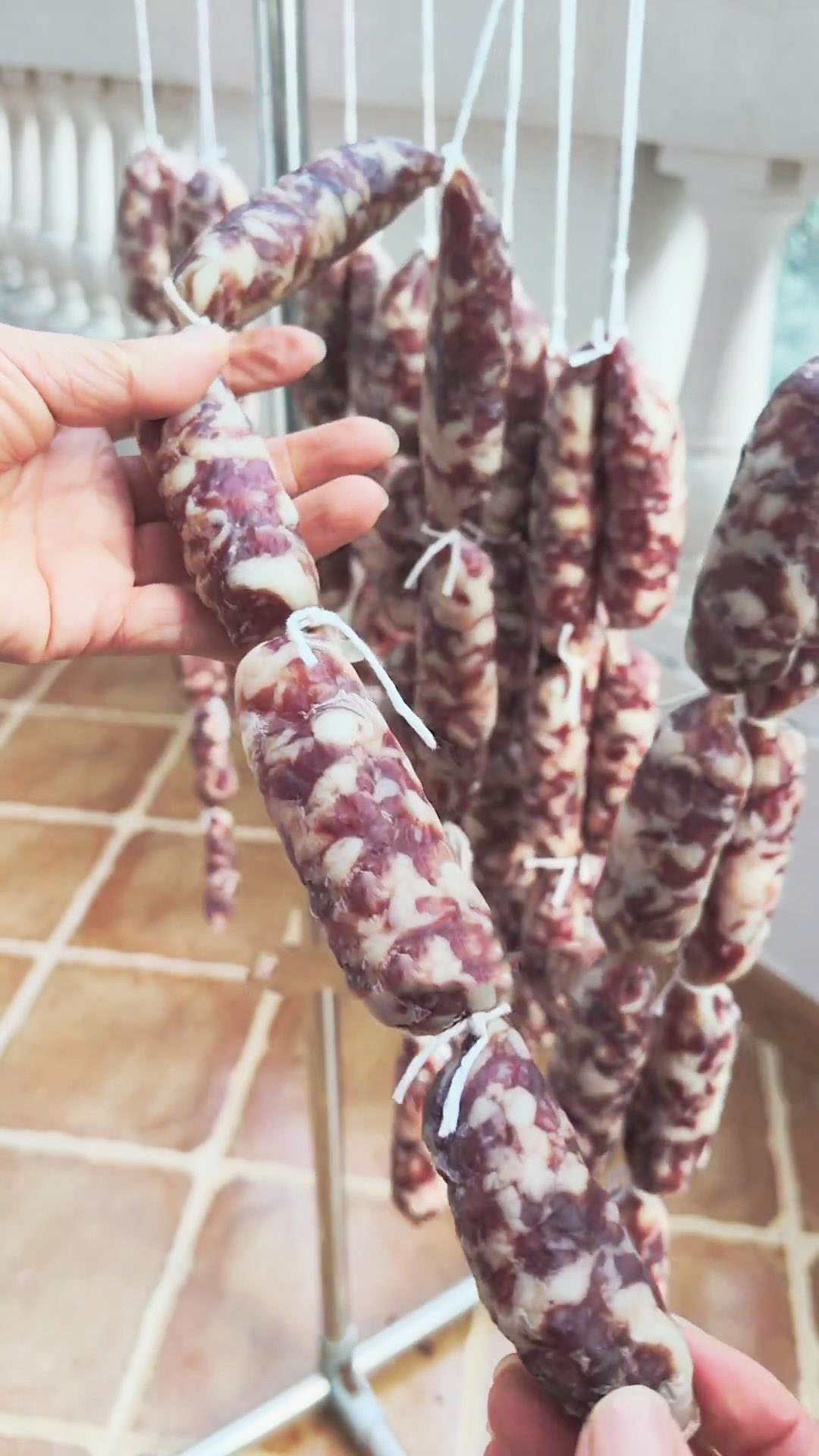
But then, my neighbor shared a secret with me—homemade Chinese sausage isn’t just more economical, but it’s also fresher, tastier, and you have full control over the ingredients.
With store-bought sausages, you can’t always be sure what’s been added. The quality varies, and there’s no way to know how fresh the meat is or what preservatives might be in it.
Once I made my first batch of homemade Chinese sausage, I was hooked. The flavor was richer, and I loved knowing exactly what I had put into it.
From that point on, I rarely bought sausages from the store again.
Now, every winter when the weather starts to cool, I know it’s the perfect time to make my yearly batch.
When I make Chinese sausage, I always go big.
This time, I used 5kg of pork, which will almost cover my sausage needs for the whole year. Making a large batch at once saves time and effort, plus it means I’ll always have some on hand, ready to use for whatever dish I want to make.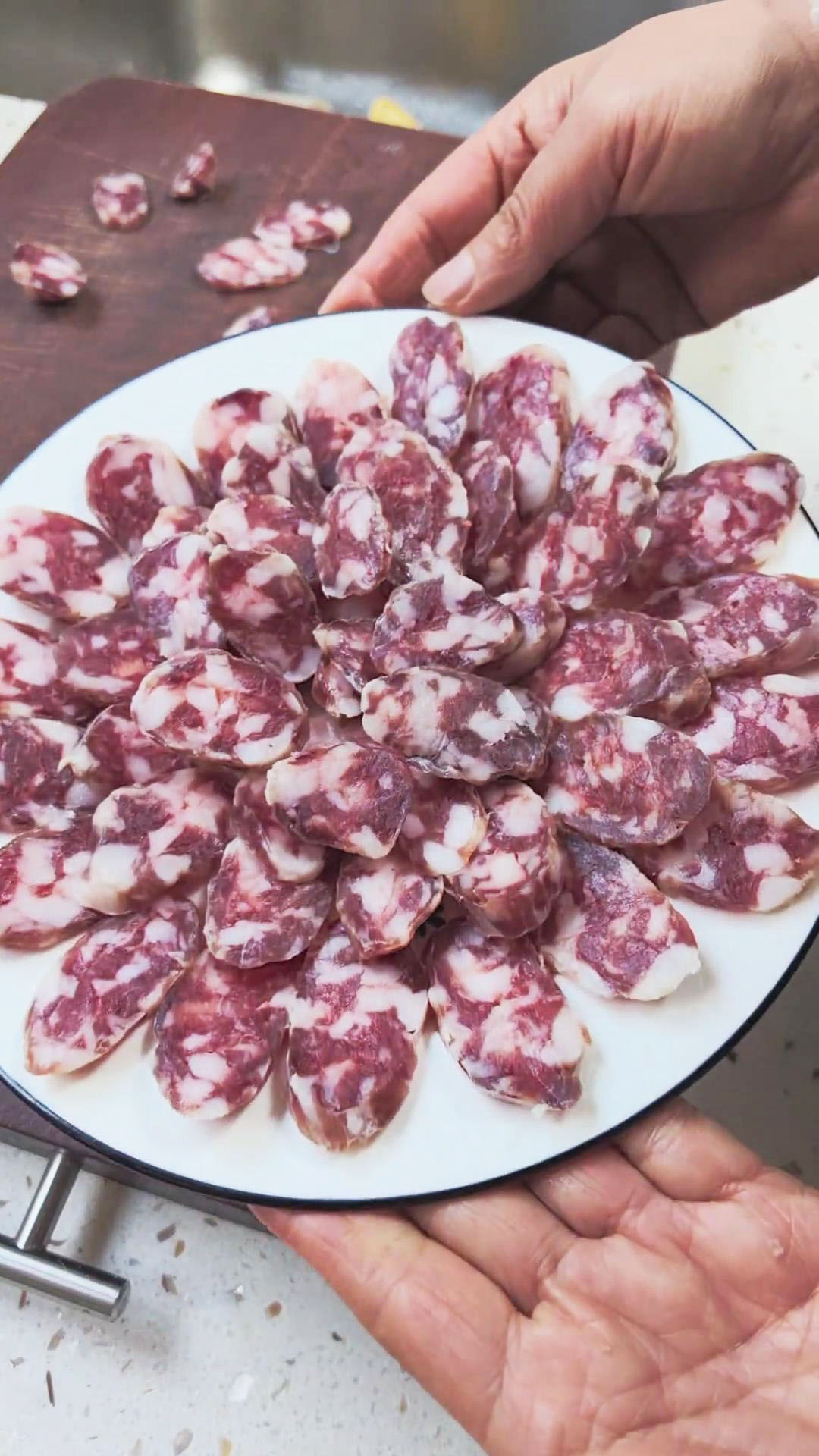
What Cut of Meat to Use:
For the best texture and flavor, I like to use pork shoulder (前腿肉). It has the perfect balance of about 80% lean meat and 20% fat, which gives the sausages a great texture—not too dry, and not too fatty.
For recipes like Steamed Minced Pork with Preserved Vegetables and Steamed Minced Pork with Lotus Root, the pork needs to be minced finely to achieve the right texture.
However, when making Chinese sausage, you don’t need to mince the pork as finely; a coarser texture works just as well and enhances the dish’s overall character.
Some people prefer to hand-mince the meat, saying it gives a better texture, and while that might be true, with a large batch like 5kg, I find that as long as the pork isn’t ground too fine, the texture is very close to hand-chopped.
It saves a lot of time without sacrificing quality, and the final result is still delicious and full of texture.
The beauty of making Chinese sausage at home is that you can adjust the recipe to suit your own taste. Whether you want it a bit sweeter, saltier, or spicier, it’s all up to you. Plus, homemade sausages are fresher and free of preservatives, making them a healthier option for your family.
If you haven’t tried making your own Chinese sausage yet, now’s the perfect time to start!
Note: You can easily find sausage stuffers and pork casings on Amazon.
Ingredients:
Main Ingredient:
- 5kg pork (pork shoulder recommended)
Seasoning:
- 100g salt
- 100g chicken bouillon powder
- 300g sugar
- 160g white liquor (high-proof liquor recommended) + 2 tbsp for soaking the casings
- 8g red yeast rice powder (optional, for color)
Casings:
- Pork casings: enough to fit the amount of meat (usually natural small intestines)
Instructions:
- Prepare the Pork:
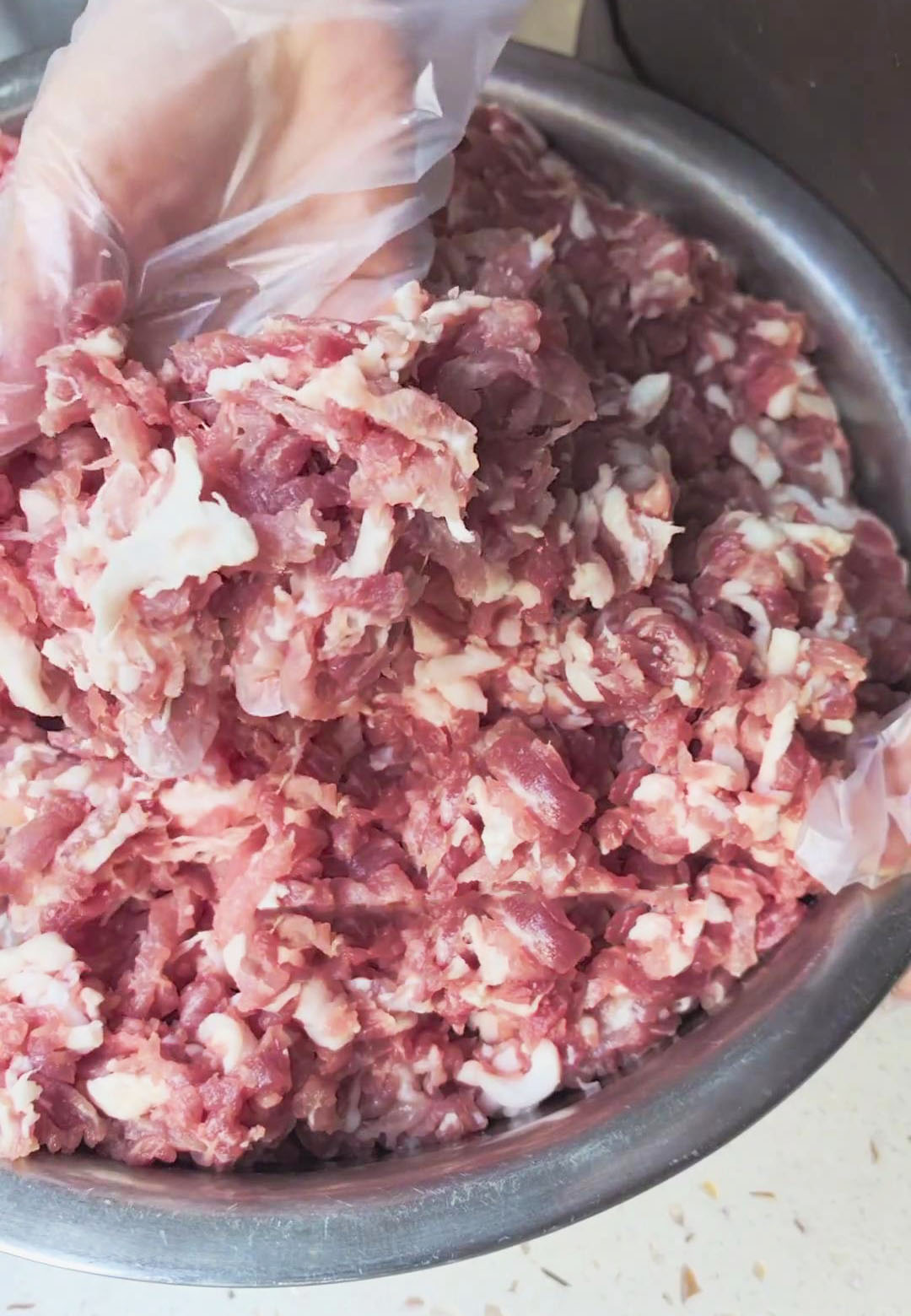
- If you’re having the butcher grind the pork, ask them not to grind it too fine. The meat should have a bit of texture with some small chunks remaining.
- If you prefer to cut the meat by hand, slice the pork into small cubes or thin slices, making sure they are uniform in size to ensure even seasoning and drying.
- Season the Meat:
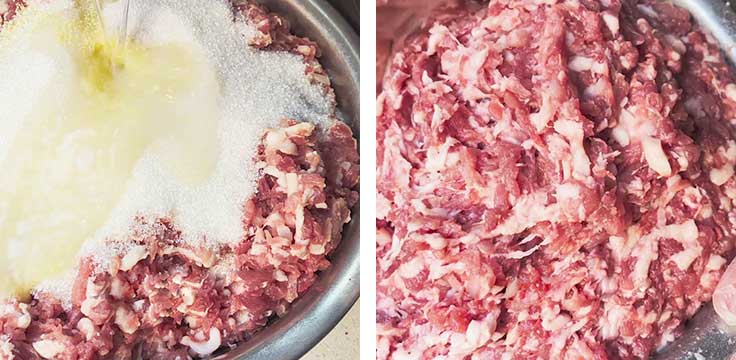
- Place the cut or ground pork in a large mixing bowl.
- Add 100g salt, 100g chicken bouillon powder, 300g sugar, 160g white liquor, and 8g of red yeast rice powder (optional) to the pork.
- Mix the ingredients thoroughly with your hands, kneading the meat slightly to help the seasonings penetrate. This step ensures the flavors are evenly distributed.
- Let the mixture marinate for 20–30 minutes to allow the pork to absorb the seasonings fully.
- Prepare the Casings:
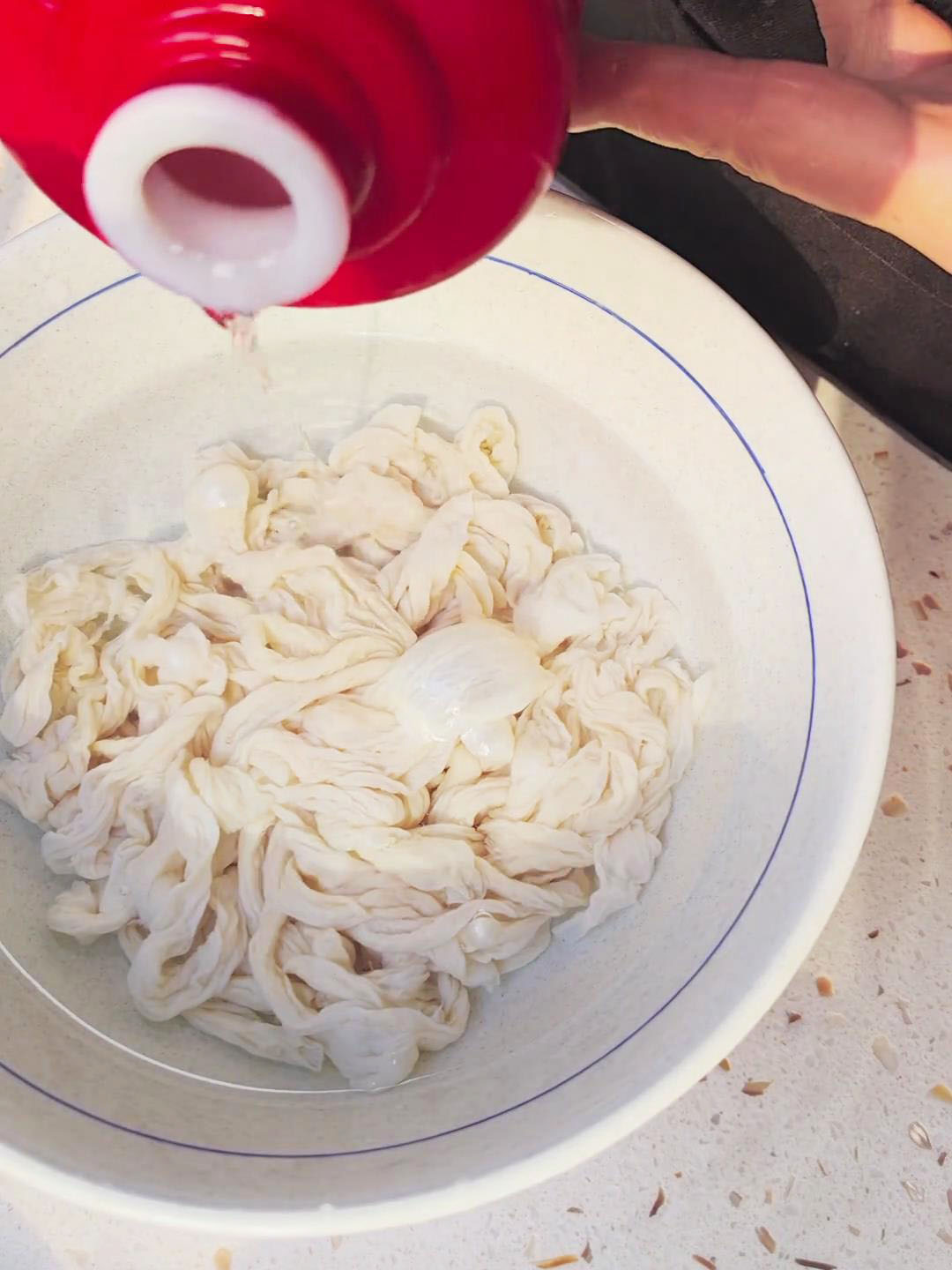
- Rinse the pork casings under running water to remove any salt if they were salt-preserved.
- After rinsing, soak the casings in clean, running water, thoroughly cleaning the inside to remove any impurities or unwanted odors.
- Finally, soak the casings in a mixture of 2 tbsp white liquor and water for 10–15 minutes to sterilize them.
- Stuff the Sausages:
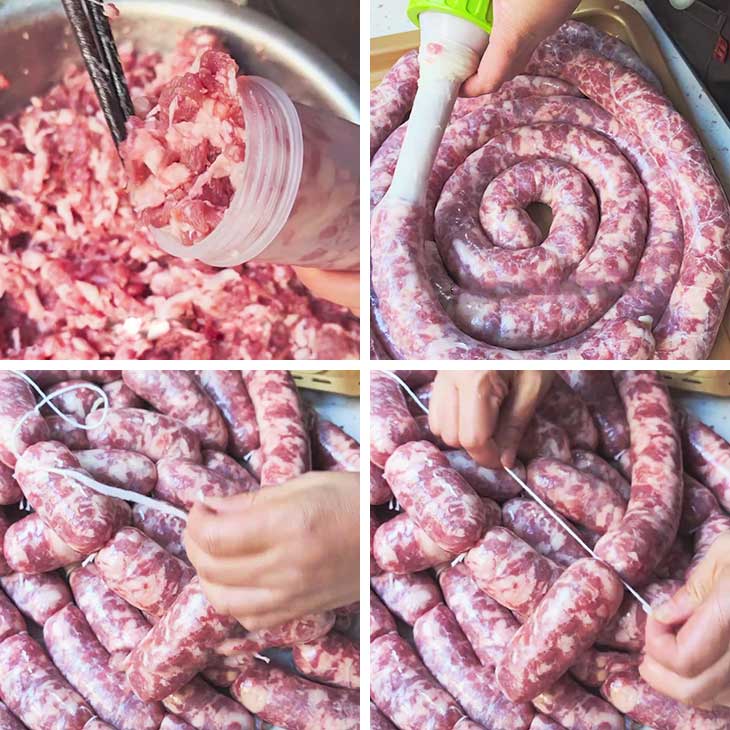
- Fill a sausage stuffer with the seasoned pork.
- Take the soaked casings and slip one end onto the sausage stuffer’s outlet. Push a little meat through the stuffer first to make fitting the casing easier, and then tie a knot at the other end of the casing.
- Slowly stuff the pork into the casings, being careful not to overfill them. Leave some space in the casings to prevent bursting during drying.
- Once a length is filled, use kitchen string to tie the sausages into links, typically 10–15 cm long, but adjust according to your preference.
- Prick and Tighten:
- Soak the sausages in warm water for a few minutes. This tightens the casings and helps you check for any air pockets.
- Use a toothpick to prick small holes along the sausages to release any trapped air. This prevents the sausages from expanding and bursting during the drying process.

- Dry the Sausages:
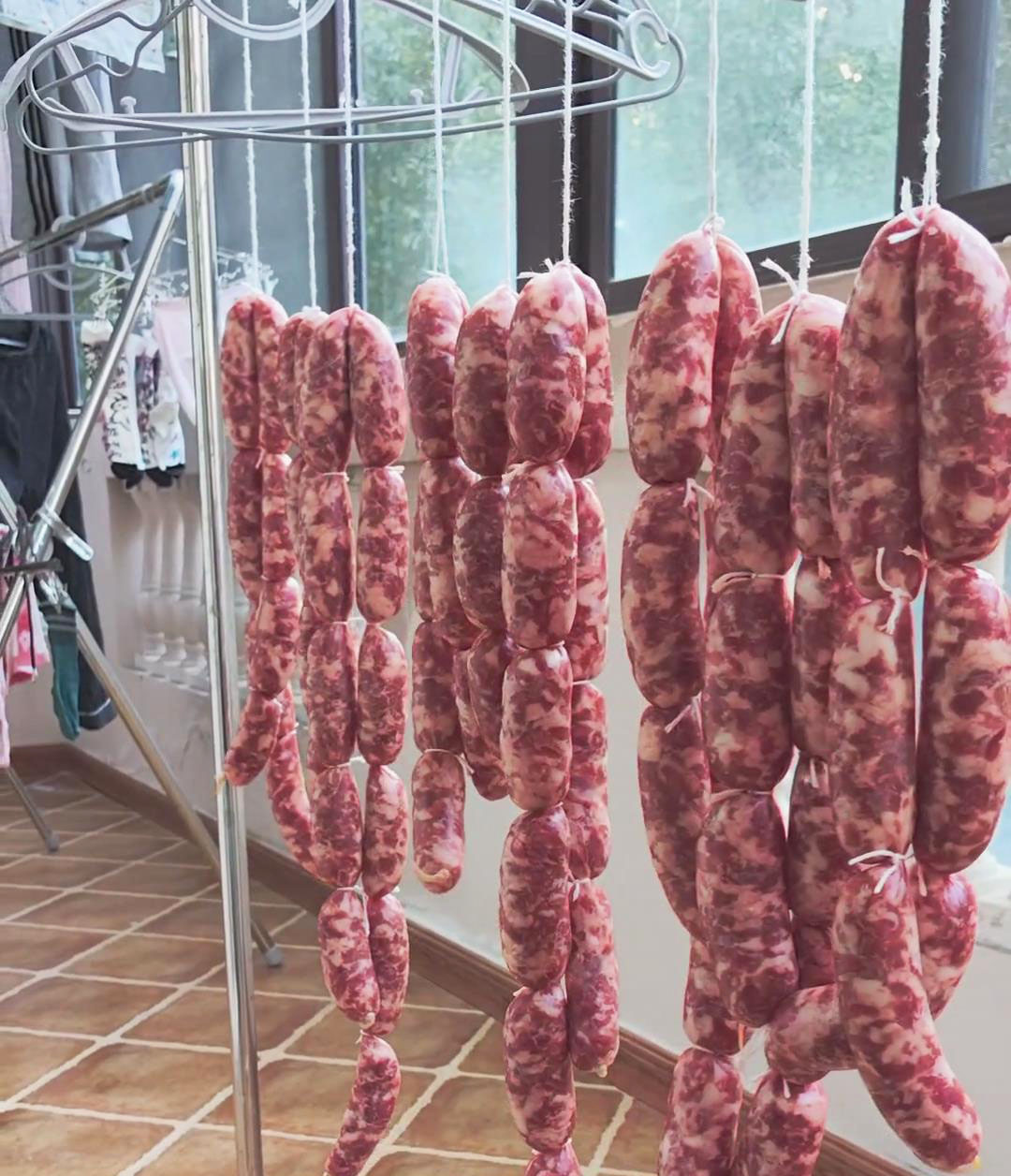
- Hang the sausages in a well-ventilated, sunny spot. If the weather doesn’t allow for sunlight, you can hang them in a cool, well-ventilated area.
- Check the sausages daily and adjust the drying time depending on the weather. The sausages usually take 7–10 days to dry, but once they are about 70–80% dry, they are ready to be stored.
- Storage:
- Once the sausages are dry, cut them where you tied them into individual links.
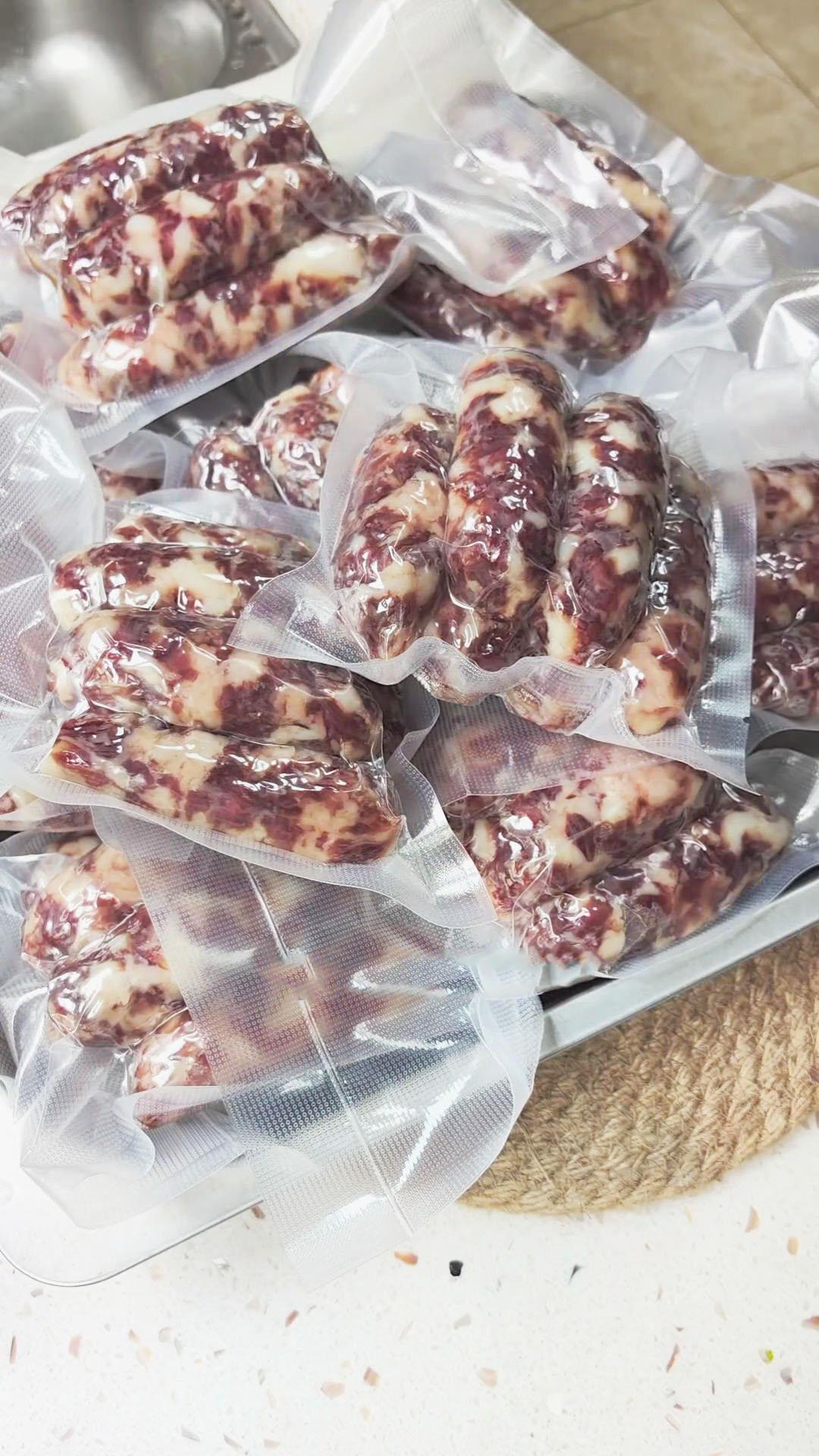
- For long-term storage, vacuum-seal the sausages or wrap them in plastic wrap and store them in the fridge or freezer.
If you plan to eat them within a short period, you can store them in a cool, dry place without vacuum sealing.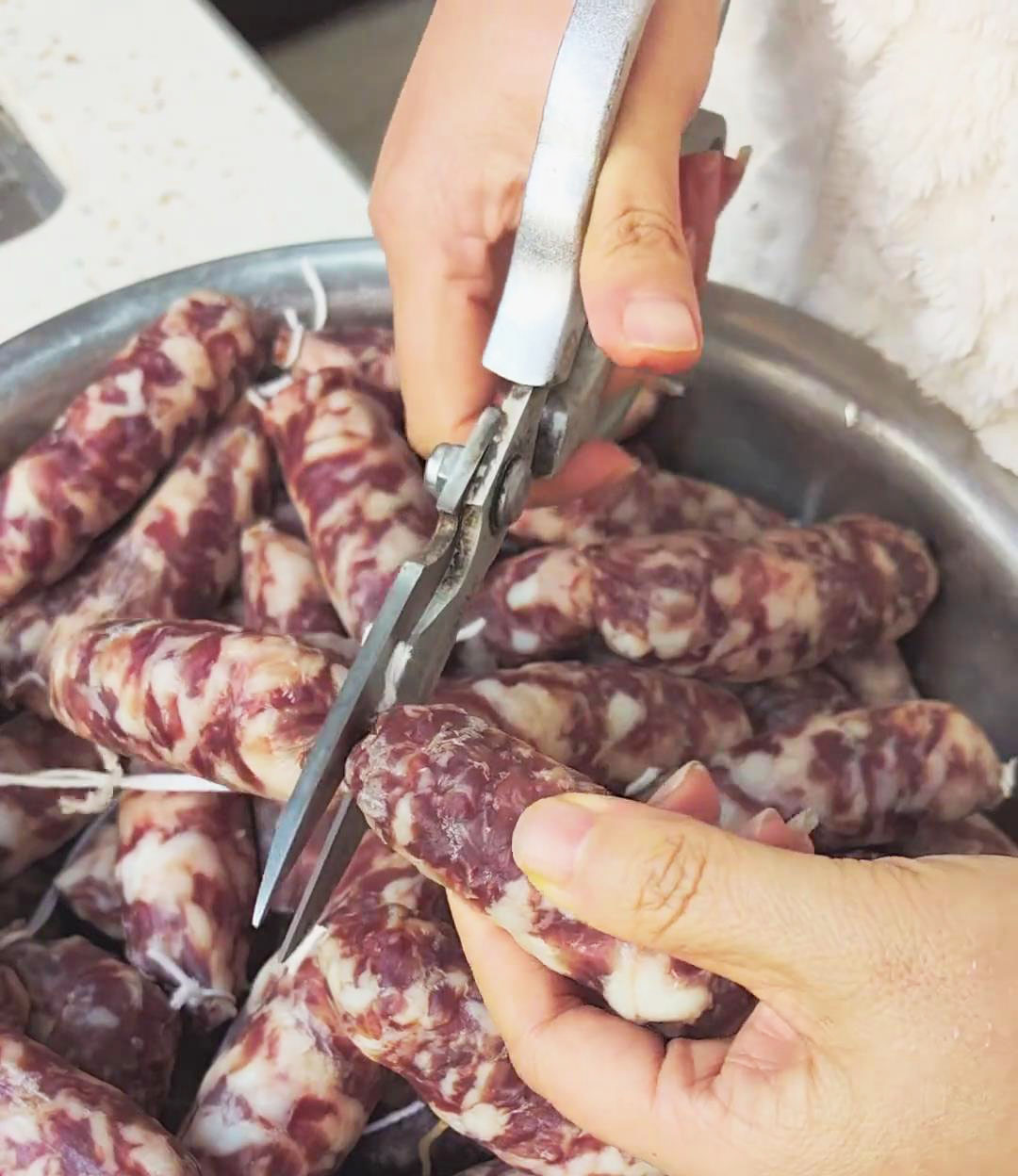
Notes:
- Red yeast rice powder is optional but adds a traditional red color to the sausages. You can skip this if you prefer a more natural look.
- Adjust the length of the sausage links based on your cooking preferences.
How to Make Chinese Sausage
Making homemade Chinese sausage is easier than you might think! With just a few simple ingredients, you can create your own flavorful sausages that will have you wondering why you ever bought store-bought versions.Servings 20Calories 747kcalIngredients
Main Ingredient:
- 5 kg pork pork shoulder recommended
Seasoning:
- 100 g salt
- 100 g chicken bouillon powder
- 300 g sugar
- 160 g white liquor high-proof liquor recommended + 2 tbsp for soaking the casings
- 8 g red yeast rice powder optional, for color
Casings:
- Pork casings: enough to fit the amount of meat usually natural small intestines
Instructions
Prepare the Pork:
- If you're having the butcher grind the pork, ask them not to grind it too fine. The meat should have a bit of texture with some small chunks remaining.
- If you prefer to cut the meat by hand, slice the pork into small cubes or thin slices, making sure they are uniform in size to ensure even seasoning and drying.
Season the Meat:
- Place the cut or ground pork in a large mixing bowl.
- Add 100g salt, 100g chicken bouillon powder, 300g sugar, 160g white liquor, and 8g of red yeast rice powder (optional) to the pork.
- Mix the ingredients thoroughly with your hands, kneading the meat slightly to help the seasonings penetrate. This step ensures the flavors are evenly distributed.
- Let the mixture marinate for 20–30 minutes to allow the pork to absorb the seasonings fully.
Prepare the Casings:
- Rinse the pork casings under running water to remove any salt if they were salt-preserved.
- After rinsing, soak the casings in clean, running water, thoroughly cleaning the inside to remove any impurities or unwanted odors.
- Finally, soak the casings in a mixture of 2 tbsp white liquor and water for 10–15 minutes to sterilize them.
Stuff the Sausages:
- Fill a sausage stuffer with the seasoned pork.
- Take the soaked casings and slip one end onto the sausage stuffer's outlet. Push a little meat through the stuffer first to make fitting the casing easier, and then tie a knot at the other end of the casing.
- Slowly stuff the pork into the casings, being careful not to overfill them. Leave some space in the casings to prevent bursting during drying.
- Once a length is filled, use kitchen string to tie the sausages into links, typically 10–15 cm long, but adjust according to your preference.
Prick and Tighten:
- Soak the sausages in warm water for a few minutes. This tightens the casings and helps you check for any air pockets.
- Use a toothpick to prick small holes along the sausages to release any trapped air. This prevents the sausages from expanding and bursting during the drying process.
Dry the Sausages:
- Hang the sausages in a well-ventilated, sunny spot. If the weather doesn't allow for sunlight, you can hang them in a cool, well-ventilated area.
- Check the sausages daily and adjust the drying time depending on the weather. The sausages usually take 7–10 days to dry, but once they are about 70–80% dry, they are ready to be stored.
Storage:
- Once the sausages are dry, cut them where you tied them into individual links.
- For long-term storage, vacuum-seal the sausages or wrap them in plastic wrap and store them in the fridge or freezer.
- If you plan to eat them within a short period, you can store them in a cool, dry place without vacuum sealing.
Video
Nutrition
Calories: 747kcal | Carbohydrates: 16g | Protein: 43g | Fat: 54g | Saturated Fat: 20g | Polyunsaturated Fat: 5g | Monounsaturated Fat: 24g | Cholesterol: 181mg | Sodium: 3272mg | Potassium: 734mg | Sugar: 16g | Vitamin A: 18IU | Vitamin C: 2mg | Calcium: 46mg | Iron: 2mg




While the sausages look delicious, it is extremely irresponsible to post a recipe for cured meats without explaining the risk of botulism when not using curing salt or nitrate free alternative (eg EcoCure made with plant extracts). Botulism is a rare but deadly experience of food poisoning from cured foods. It is tasteless, odourless and colourless, so it is impossible to tell which foods developed the contamination and which didn’t.
It is okay for people to know about the risk and choose not to use curing salts or plant extract alternatives, but not educating people about the risk while providing a recipe that has a risk of killing people is unconscionable.