
A jiggly, ultra-moist Castella cake made with a foolproof scalded flour + water bath method for a melt-in-your-mouth texture. This tall, crack-free cake uses simple ingredients and step-by-step techniques to ensure success—perfect for kids, tea time, or gifting!
Homemade Castella Cake – Perfectly Moist & Fluffy!
“Why buy a tiny overpriced slice when you can bake a whole tray at home?”
Today, I made this jumbo-sized Castella cake for less than the cost of a store-bought box!
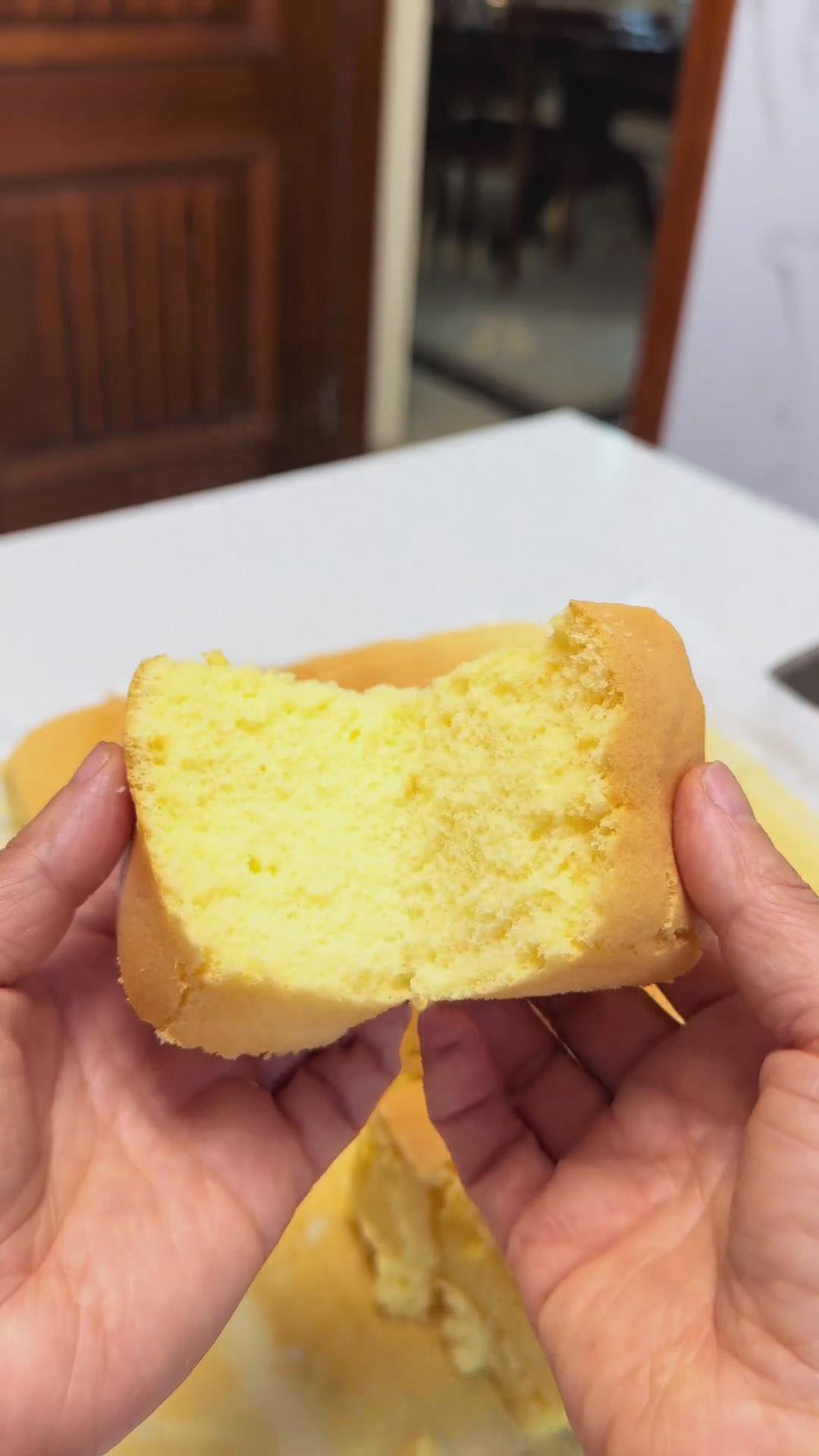
Just look at that tall, golden perfection—no sinking, no cracks, just a cloud-like crumb so tender it melts on your tongue.
My children absolutely love this Castella cake. They often beg me to make it, and today, I finally gave in and baked one just for them. I’m so glad I did because it brought so much joy to the table. The best part is that it’s really easy to make, and the results are always so rewarding.
This foolproof recipe has been taped to my fridge for years—it’s a no-fail ratio with pantry staples. Follow the steps, and you’ll nail it on your first try! Ideal for breakfast, tea time, or celebrations.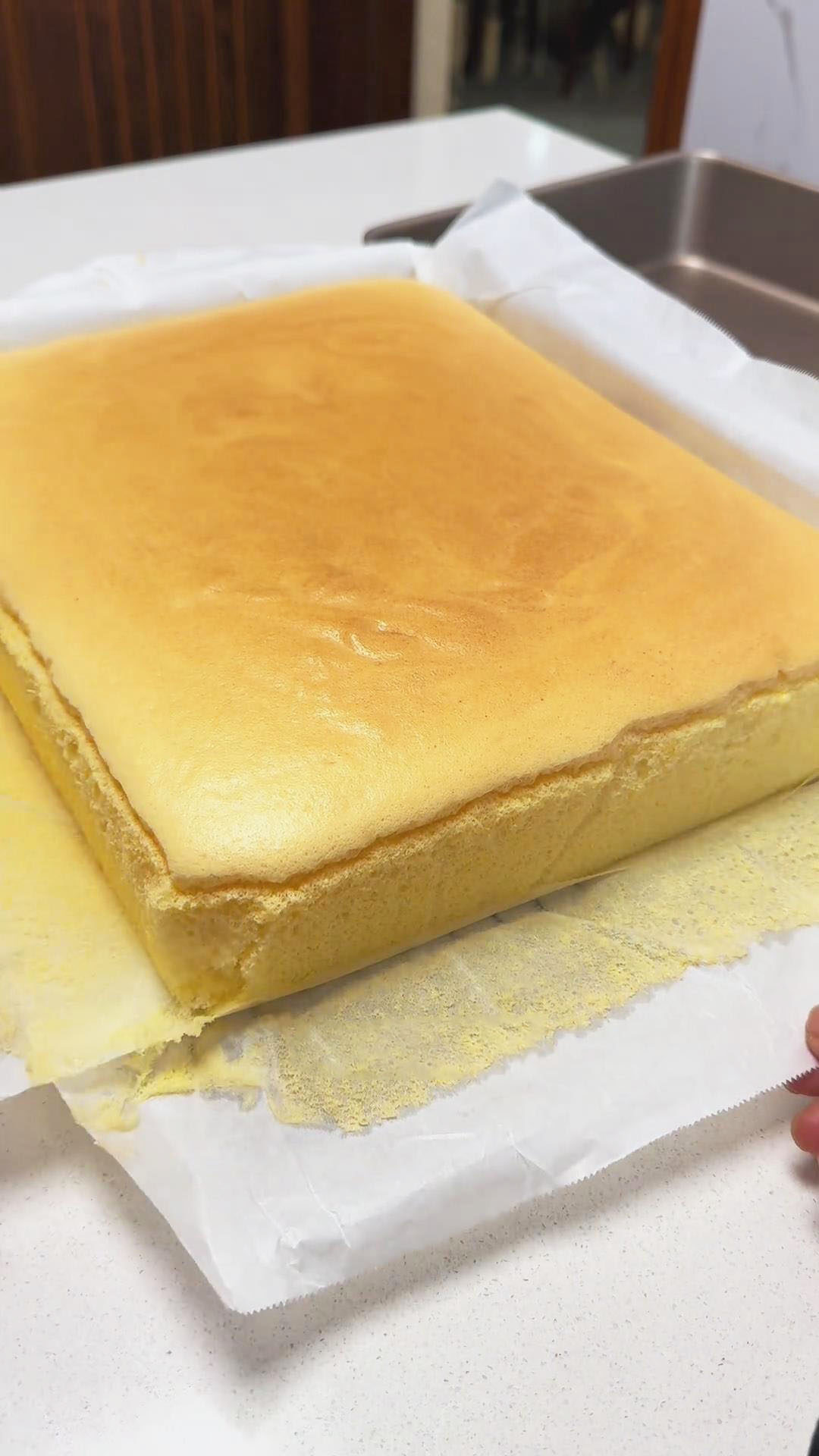
Why This Castella Cake Wins Hearts
- Silky texture – The scalded flour + water bath method locks in moisture.
Kid & elder-friendly – Light, airy, and easy to chew.
Budget-friendly – No fancy ingredients!
Visually stunning – Tall, jiggly, and Instagram-worthy.
What Is Water Bath Baking?
The secret to Castella’s ultra-soft texture lies in the water bath (or bain-marie):
Place the cake mold inside a larger tray.
Pour warm water (40–50°C) into the outer tray until it reaches 1/3–1/2 of the mold’s height.
The water gently conducts heat and creates steam, preventing the cake from drying out or cracking—unlike direct oven baking, which can be harsh and uneven.
Result: A humidity-controlled bake for that iconic jiggly, moist crumb Castella is famous for!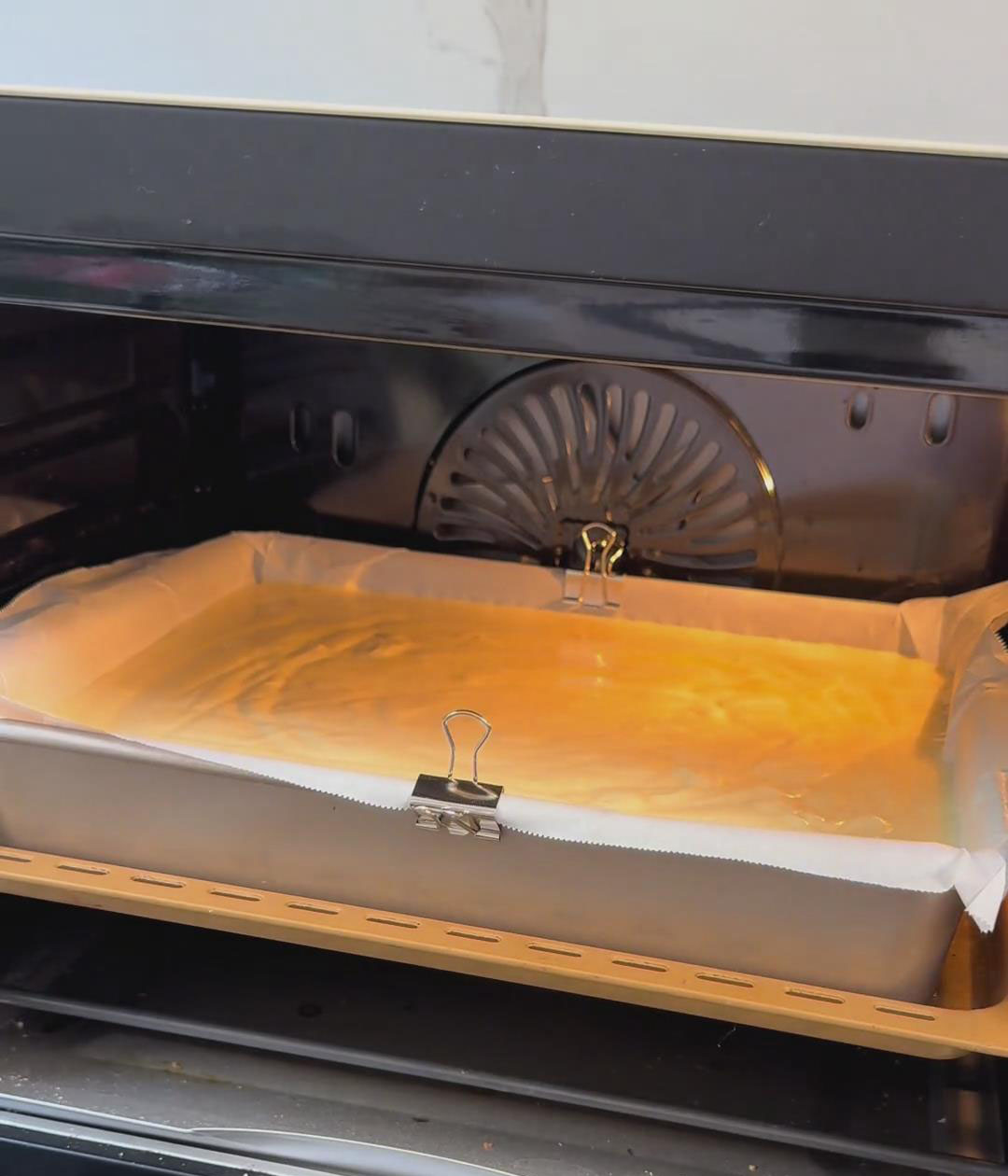
Ingredients:
- 140g corn oil (must be heated to 70-80°C)
- 185g cake flour (sifted twice)
- 130g whole milk (room temperature, added in portions)
- 12 egg yolks (approx. 180g, from 12 eggs)
- 12 egg whites (approx. 360g)
- 140g granulated sugar (divided into 3 portions)
- 2g salt
- 5-6 drops lemon juice or white vinegar
- 300ml warm water (for water bath)
Instructions:
1. Preparation:
Separate and Chill Eggs: Separate the egg whites and yolks. Place the egg whites in a clean, dry bowl (no water or oil) and refrigerate. Put the egg yolks into another bowl.
Sift Dry Ingredients: Sift the cake flour twice to ensure there are no lumps and to make the batter smooth.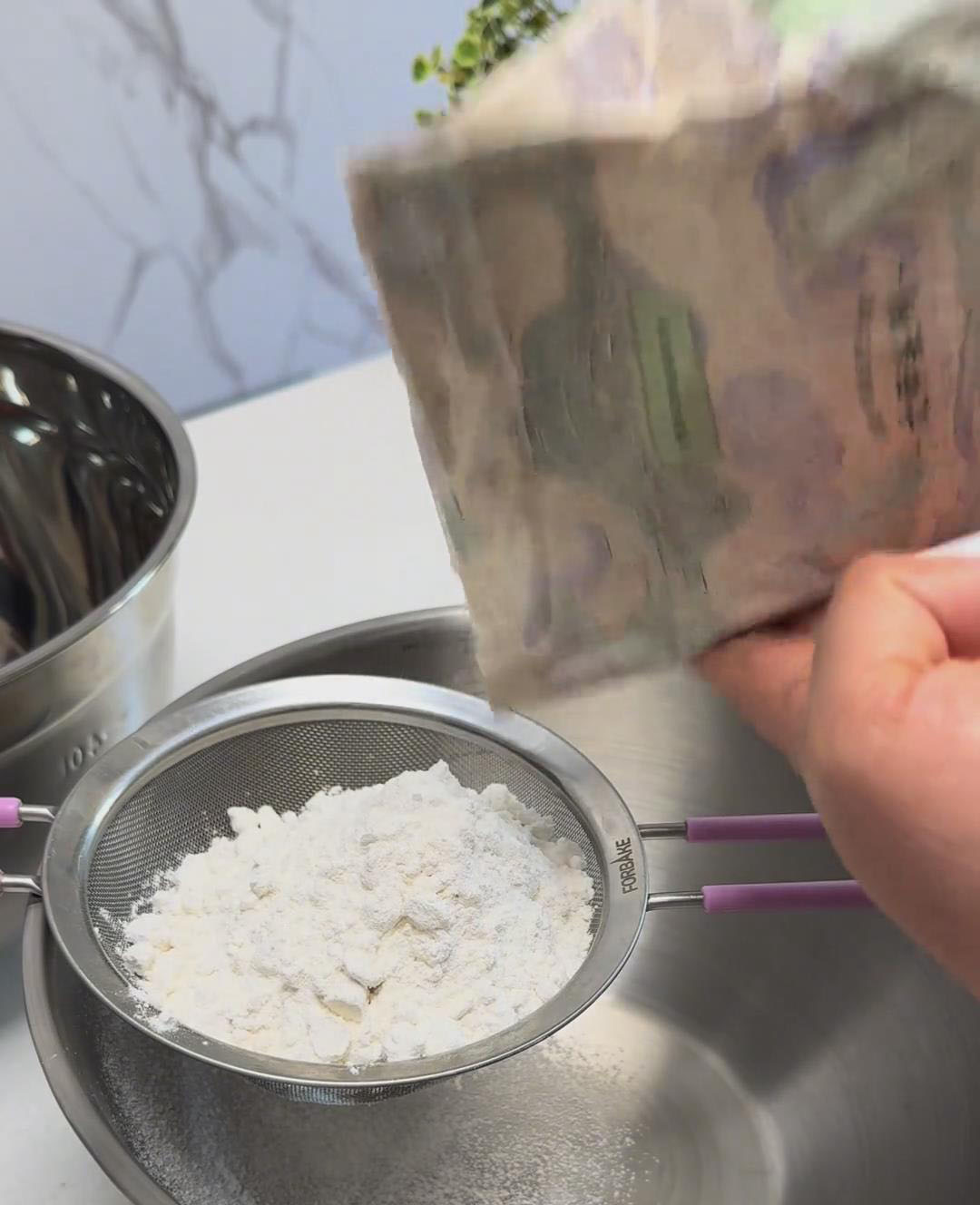
Preheat Oven and Prepare Water Bath: Preheat your oven to 140°C (top and bottom heat) and prepare the water bath. Pour warm water into a larger tray (300ml).
2. Make Egg Yolk Mixture (Hot Dough Method):
Heat the Corn Oil: In a pan, heat the corn oil over low heat until small bubbles form around the edges (70-80°C). Use a thermometer for accuracy, then immediately remove from heat.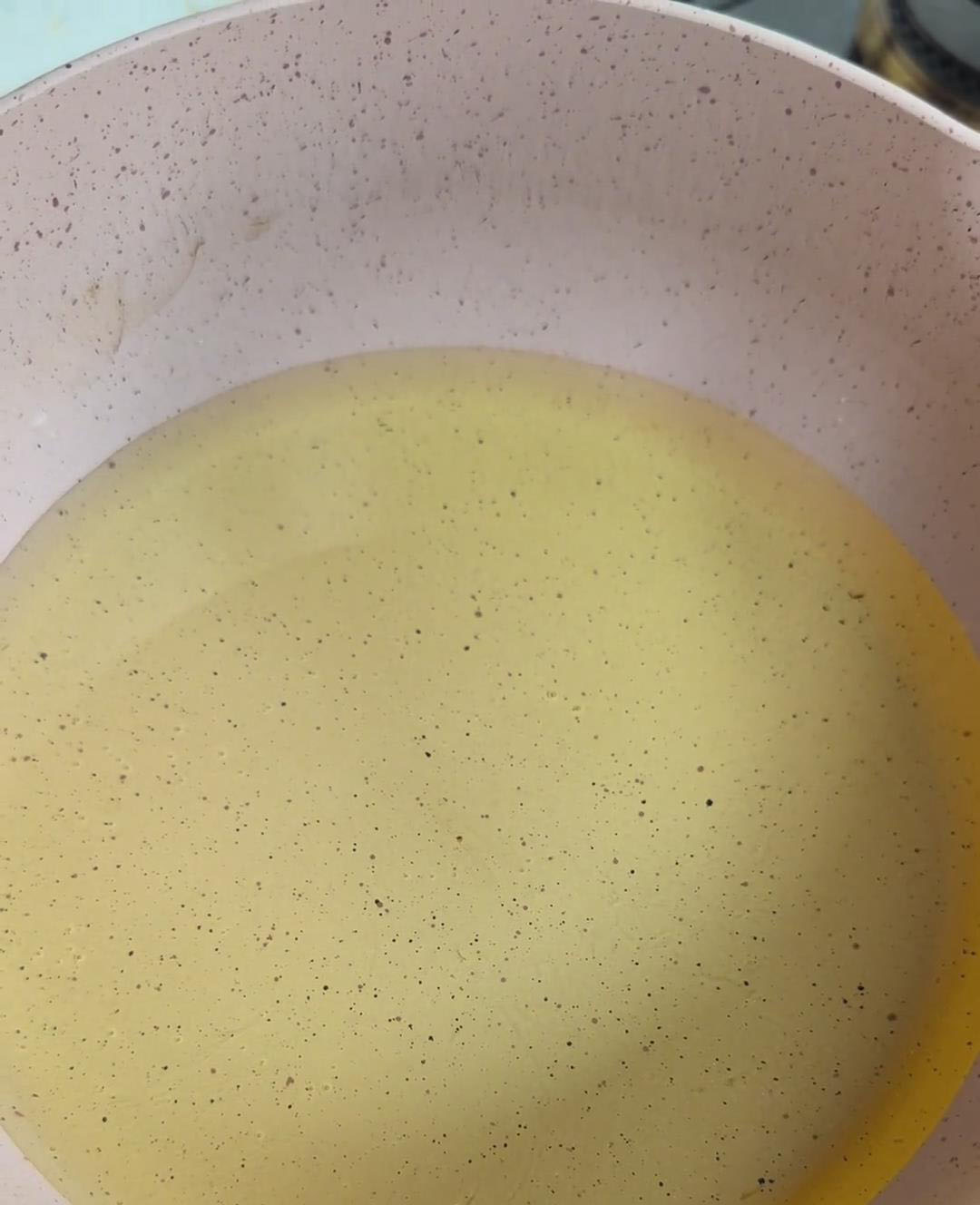
Mix the Hot Dough: Pour the heated oil into the sifted cake flour. Use a spatula to stir rapidly in a “Z” motion until no dry flour remains, creating a smooth, thick dough with a light yellow color.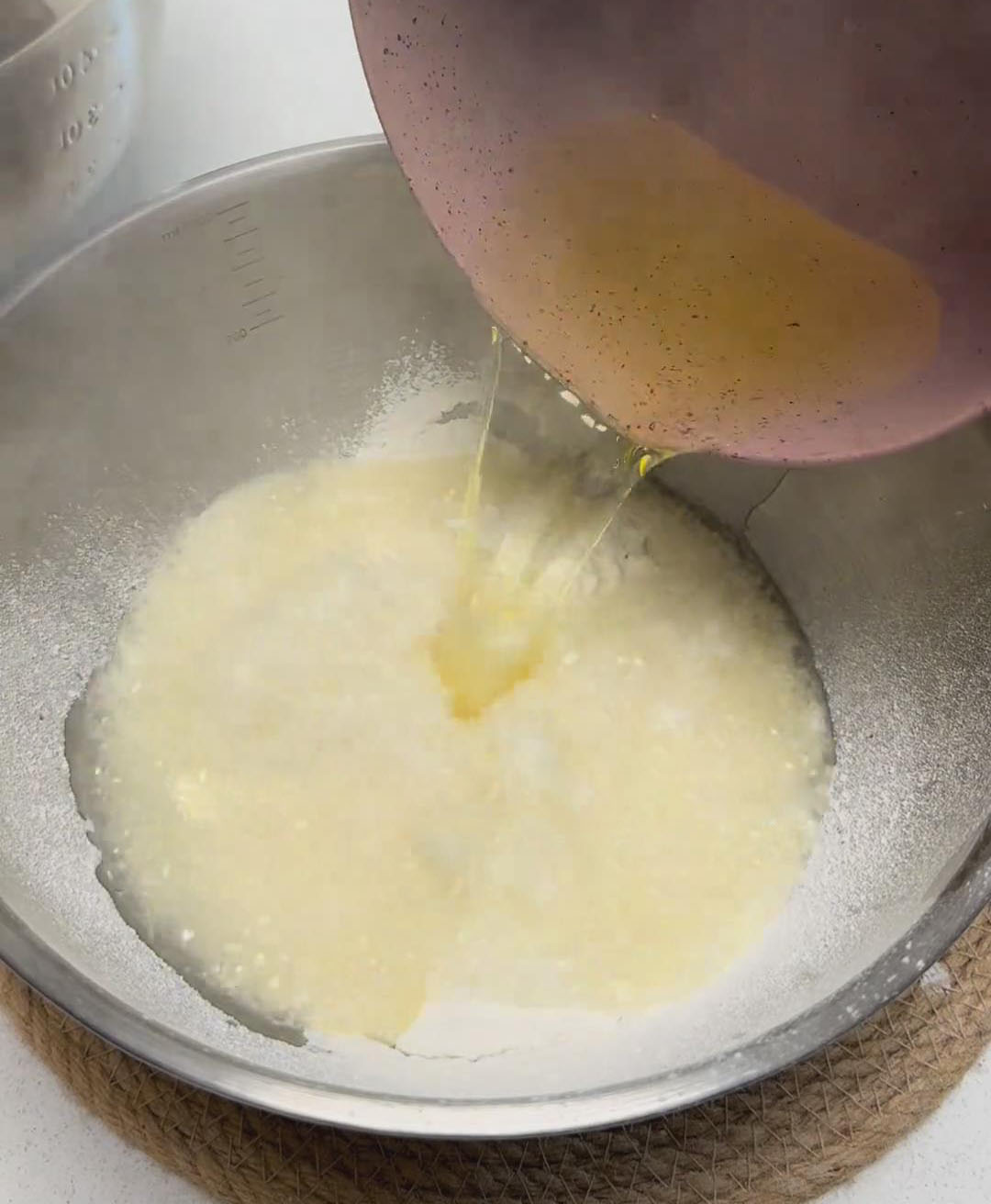
Add Milk and Egg Yolks: Gradually add the milk to the dough, mixing until smooth. Then, add the egg yolks and continue stirring in a “Z” motion until the batter is smooth and free of lumps. Set aside.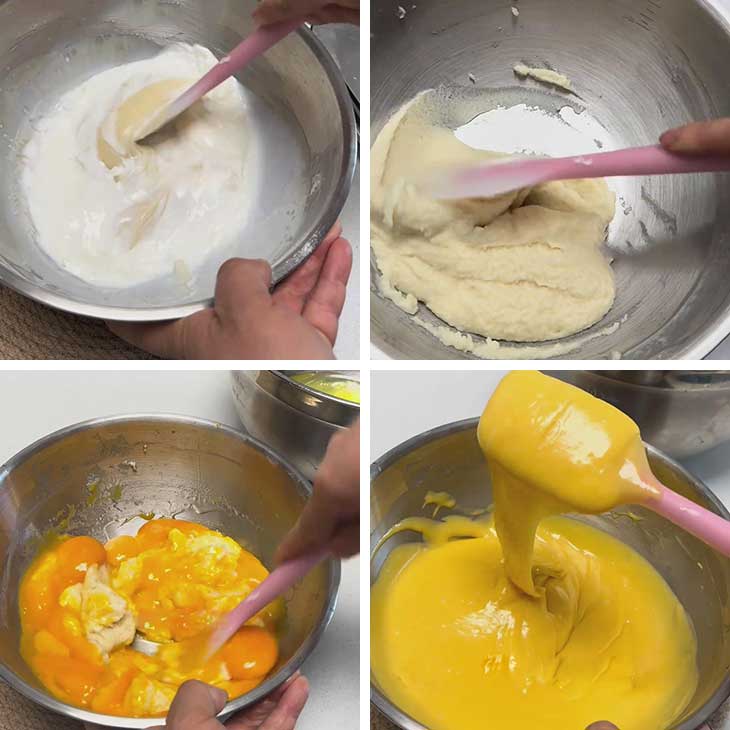
3. Whip Egg Whites into Meringue (Soft Peak Stage):
Pre-whip on Low Speed: In the chilled egg whites, add salt and lemon juice (or vinegar). Whip on low speed for about 30 seconds until “fish-eye” bubbles appear.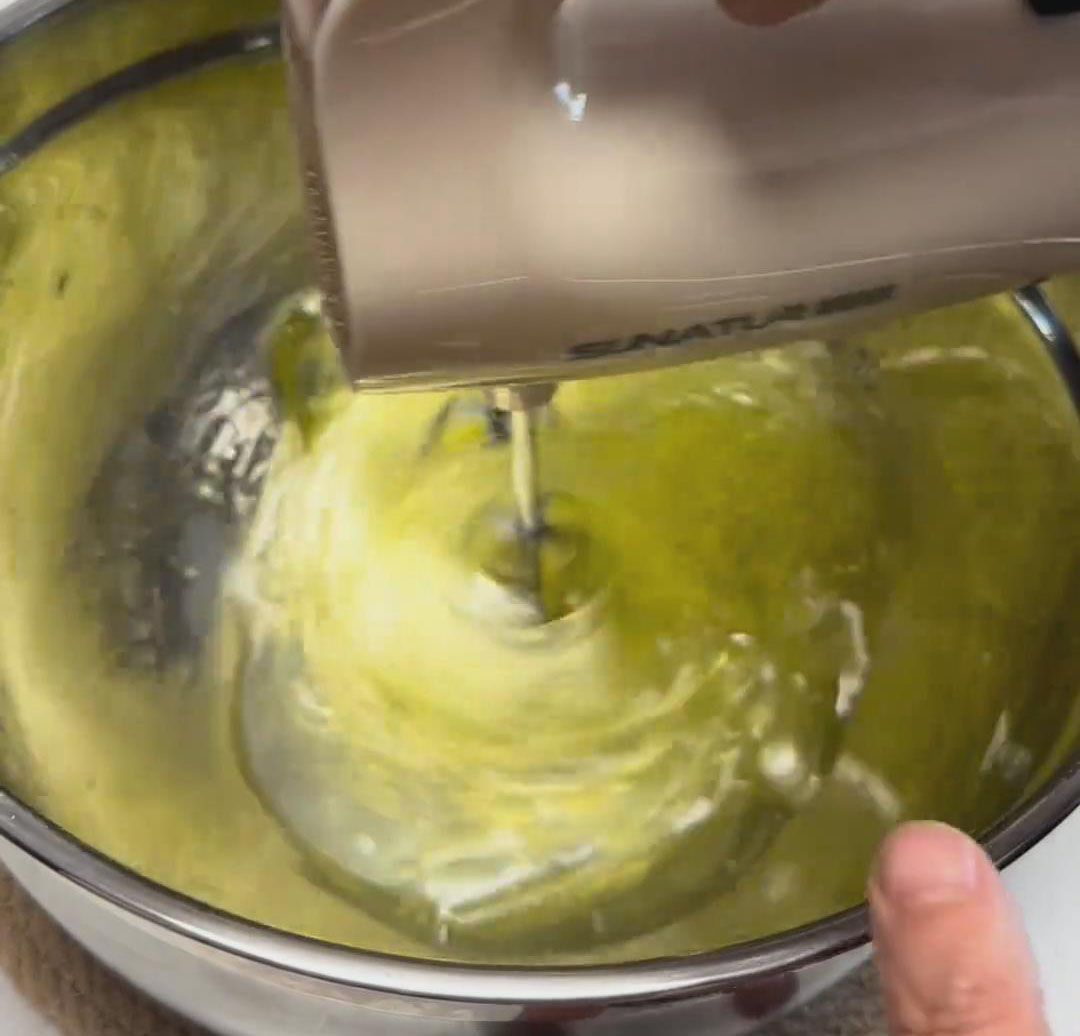
Gradually Add Sugar: Add 1/3 of the sugar (47g) and whip on medium speed until the foam becomes fine and smooth. Add the second batch of sugar (47g) and continue whipping until the meringue is thick and forms short curved peaks.
Add the remaining sugar (46g) and whip on high speed until the meringue is glossy and forms long curved peaks (soft peak stage). The meringue should not flow when the bowl is tilted.
4. Combine Batter (Prevent Air Loss):
First Mixing: Take 1/3 of the meringue and gently fold it into the egg yolk mixture using a spatula. Stir in an up-and-down motion (like stir-frying) until no large meringue chunks remain. About 20 folds.
Second Mixing: Pour the mixture back into the remaining meringue and gently fold with a cutting and folding motion (insert the spatula in the center, scoop from the bottom, and fold over). Mix until completely combined, creating a smooth, glossy batter.
Note: Avoid stirring in circles or over-folding, as this could deflate the meringue and cause the cake to collapse.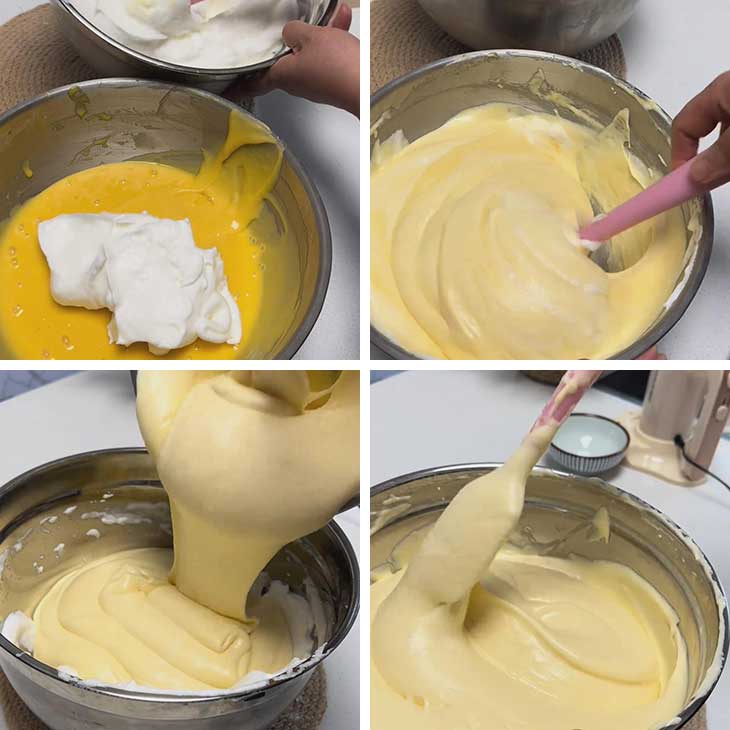
5. Bake and Demold (Water Bath to Prevent Cracking):
Pour into Pan and Tap Out Air Bubbles: Line the baking pan with parchment paper. Pour the batter from a height (about 20cm) into the pan to help release air bubbles. Smooth the top with a spatula. Tap the pan gently to release any remaining air bubbles.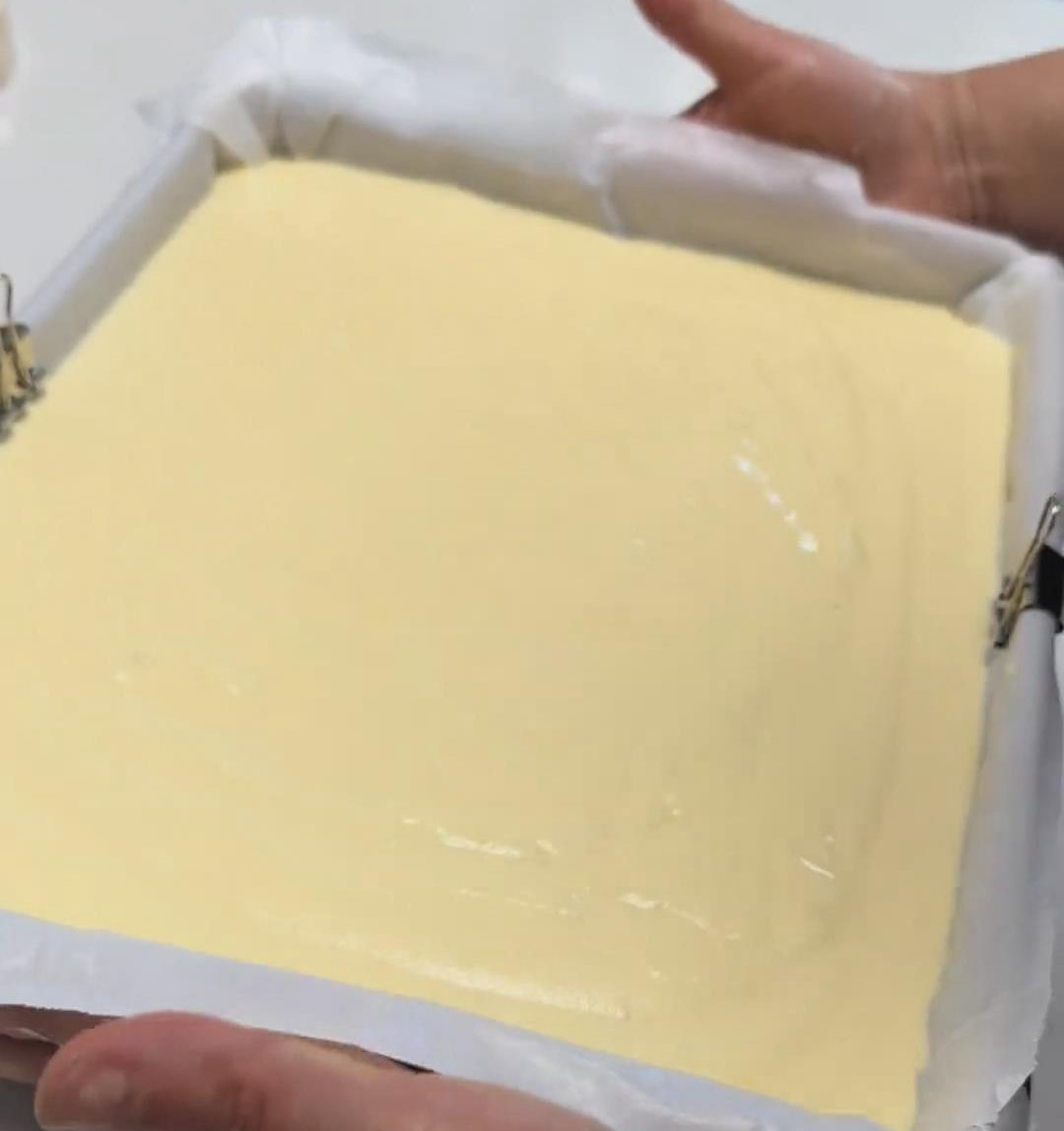
Water Bath Baking: Place the cake pan into a larger tray and pour hot water into the tray. Put the cake into the middle of the oven and bake at 140°C for 65 minutes. When the cake surface turns light golden, cover with foil to prevent over-browning, then continue baking.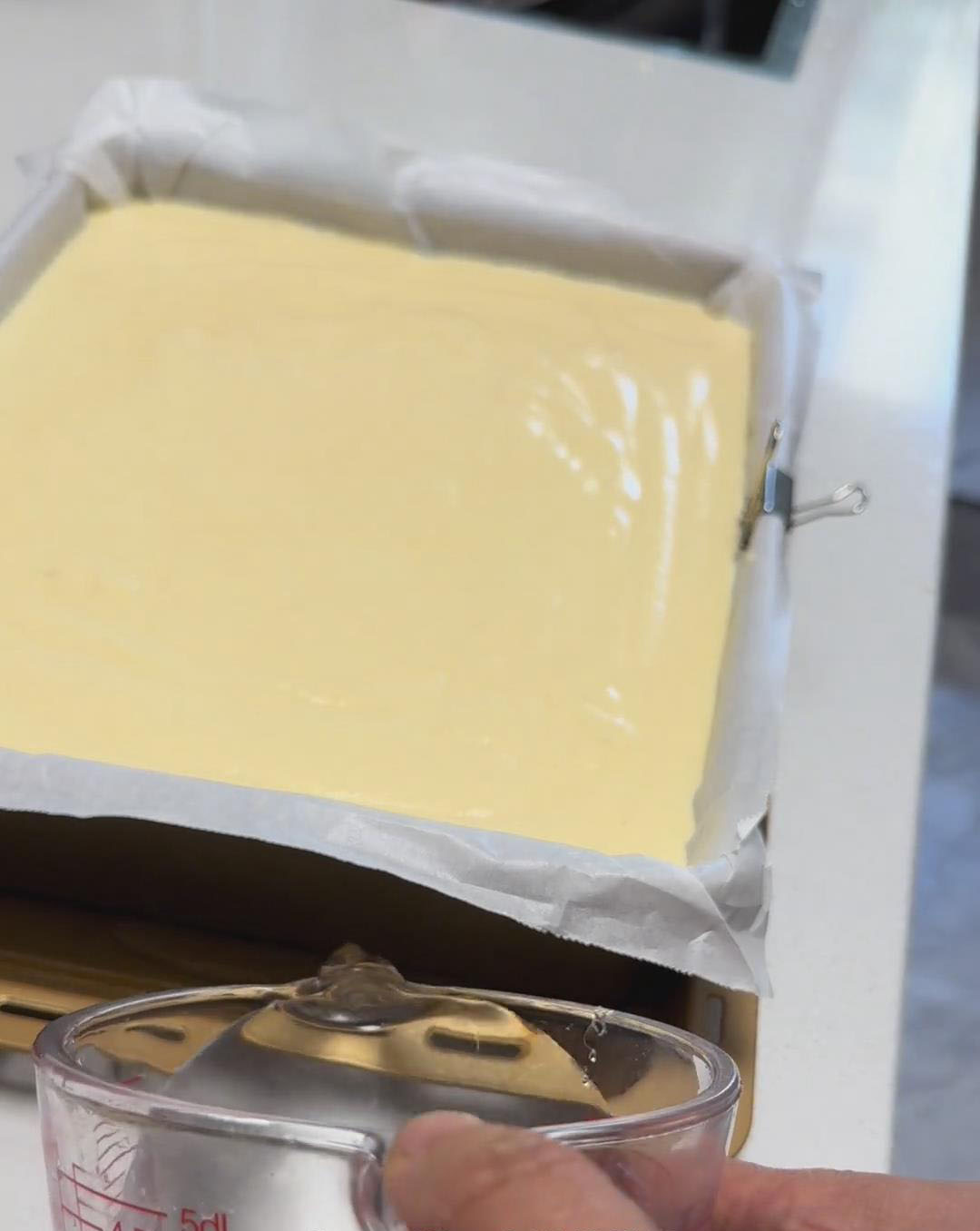
Check for Doneness: Lightly press the surface of the cake; it should spring back. Insert a skewer into the center—if it comes out clean, the cake is done.
Cool and Demold: After baking, gently tap the pan to release steam and cool it on a wire rack for about 1 hour. Once completely cooled, peel off the parchment paper and invert the cake to remove it from the pan. Cut it into squares to serve.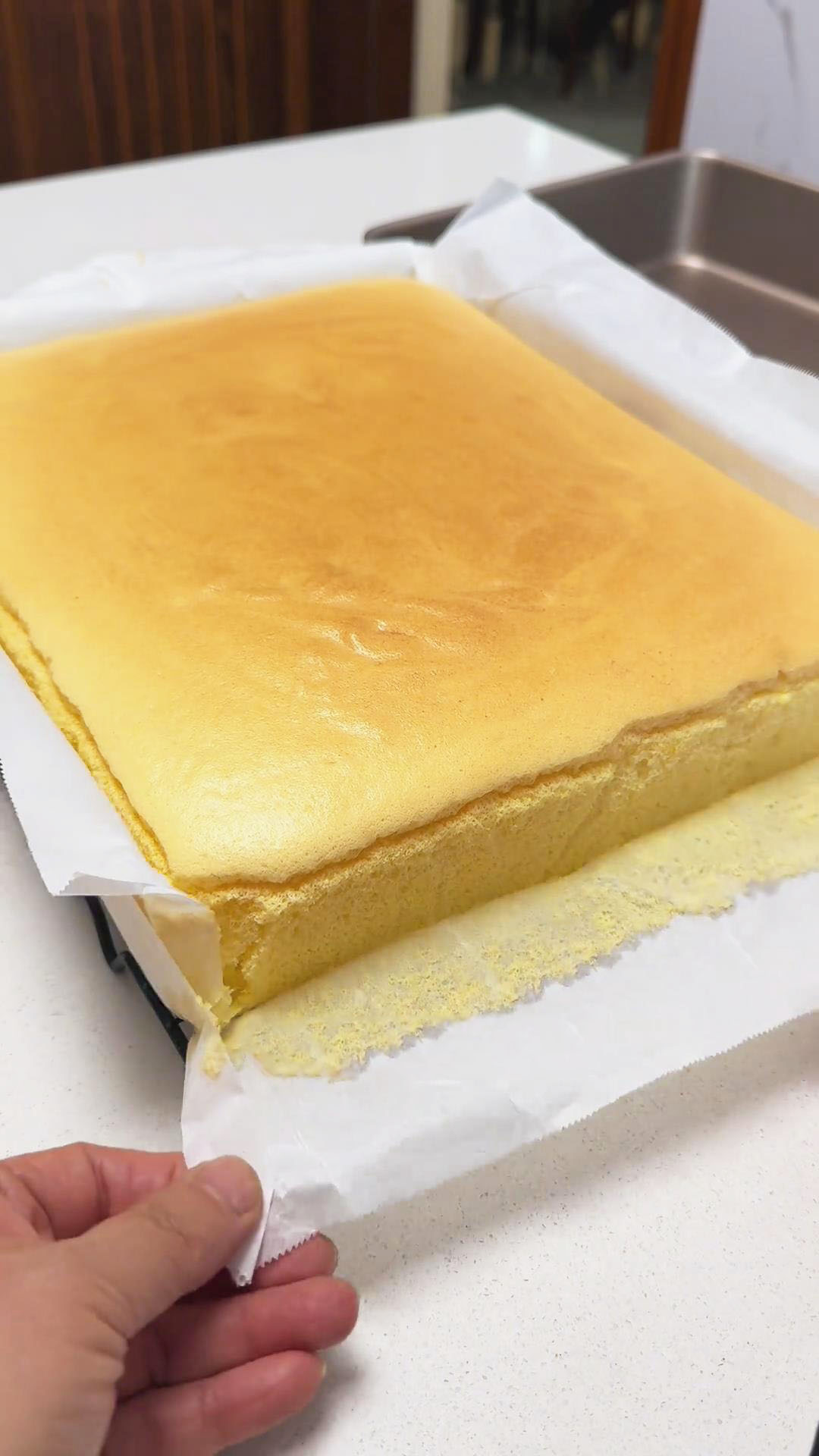
Frequently Asked Questions
Why does the cake shrink or collapse?
Reason 1: The meringue may not have been whipped enough or may have been over-whipped.
Solution: Ensure the meringue reaches soft peak stage (long curved peaks), checking frequently while whipping.
Reason 2: The hot dough temperature was too low, or the batter was overmixed.
Solution: Ensure the corn oil is heated to at least 70°C and mix quickly, avoiding circular stirring.
How do I prevent surface cracks?
The water bath method ensures moisture in the oven, preventing the surface from drying too quickly.
If cracks still appear, the oven temperature may be too high. Lower it to 130-140°C.
Can I replace the corn oil with other oils?
You can substitute with melted unsalted butter for a richer, buttery flavor. Ensure the butter is fully melted and at a similar temperature to the batter to avoid clumping.
Can I halve the recipe?
Yes! For smaller portions, use 6 eggs (70g corn oil, 92g cake flour, 65g milk). This will reduce costs and minimize failure risks.
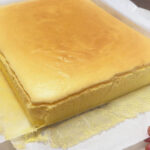
Easy Castella Cake (Water Bath Method for Perfect Results Every Time)
Ingredients
- 140 g corn oil must be heated to 70-80°C
- 185 g cake flour sifted twice
- 130 g whole milk room temperature, added in portions
- 12 egg yolks approx. 180g, from 12 eggs
- 12 egg whites approx. 360g
- 140 g granulated sugar divided into 3 portions
- 2 g salt
- 5-6 drops lemon juice or white vinegar
- 300 ml warm water for water bath
Instructions
Preparation:
- Separate and Chill Eggs: Separate the egg whites and yolks. Place the egg whites in a clean, dry bowl (no water or oil) and refrigerate. Put the egg yolks into another bowl.
- Sift Dry Ingredients: Sift the cake flour twice to ensure there are no lumps and to make the batter smooth.
- Preheat Oven and Prepare Water Bath: Preheat your oven to 140°C (top and bottom heat) and prepare the water bath. Pour warm water into a larger tray (300ml).
Make Egg Yolk Mixture (Hot Dough Method):
- Heat the Corn Oil: In a pan, heat the corn oil over low heat until small bubbles form around the edges (70-80°C). Use a thermometer for accuracy, then immediately remove from heat.
- Mix the Hot Dough: Pour the heated oil into the sifted cake flour. Use a spatula to stir rapidly in a "Z" motion until no dry flour remains, creating a smooth, thick dough with a light yellow color.
- Add Milk and Egg Yolks: Gradually add the milk to the dough, mixing until smooth. Then, add the egg yolks and continue stirring in a "Z" motion until the batter is smooth and free of lumps. Set aside.
Whip Egg Whites into Meringue (Soft Peak Stage):
- Pre-whip on Low Speed: In the chilled egg whites, add salt and lemon juice (or vinegar). Whip on low speed for about 30 seconds until "fish-eye" bubbles appear.
- Gradually Add Sugar: Add 1/3 of the sugar (47g) and whip on medium speed until the foam becomes fine and smooth. Add the second batch of sugar (47g) and continue whipping until the meringue is thick and forms short curved peaks.
- Add the remaining sugar (46g) and whip on high speed until the meringue is glossy and forms long curved peaks (soft peak stage). The meringue should not flow when the bowl is tilted.
Combine Batter (Prevent Air Loss):
- First Mixing: Take 1/3 of the meringue and gently fold it into the egg yolk mixture using a spatula. Stir in an up-and-down motion (like stir-frying) until no large meringue chunks remain. About 20 folds.
- Second Mixing: Pour the mixture back into the remaining meringue and gently fold with a cutting and folding motion (insert the spatula in the center, scoop from the bottom, and fold over). Mix until completely combined, creating a smooth, glossy batter.
- Note: Avoid stirring in circles or over-folding, as this could deflate the meringue and cause the cake to collapse.
Bake and Demold (Water Bath to Prevent Cracking):
- Pour into Pan and Tap Out Air Bubbles: Line the baking pan with parchment paper. Pour the batter from a height (about 20cm) into the pan to help release air bubbles. Smooth the top with a spatula. Tap the pan gently to release any remaining air bubbles, then use a toothpick to pop any small ones on the surface.
- Water Bath Baking: Place the cake pan into a larger tray and pour hot water into the tray. Put the cake into the middle of the oven and bake at 140°C for 65 minutes. When the cake surface turns light golden, cover with foil to prevent over-browning, then continue baking.
- Check for Doneness: Lightly press the surface of the cake; it should spring back. Insert a skewer into the center—if it comes out clean, the cake is done.
- Cool and Demold: After baking, gently tap the pan to release steam and cool it on a wire rack for about 1 hour. Once completely cooled, peel off the parchment paper and invert the cake to remove it from the pan. Cut it into squares to serve.



Thank you for sharing, may I ask the size of the cake pan you used, for both large and small recipes please, thank you.
Hi Mary,
I used a 28.5 × 28.5 × 3.5 cm pan for this recipe. I’m not sure what you mean by the large and small recipes—could you clarify?
Thank you for the reply.
Small recipe is the smaller portions you mentionedabove, using 6 eggs (70g corn oil, 92g cake flour, 65g milk).
Thank you for the reply.
Small recipe is the smaller portions you mentionedabove, using 6 eggs (70g corn oil, 92g cake flour, 65g milk).